Introduction
Owning a home is a significant investment that requires ongoing care. Neglecting maintenance can lead to costly repairs, reduced property value, and potential safety concerns. Residential property maintenance is a proactive strategy. It aims to preserve your home’s structural integrity, ensure habitability, and extend the lifespan of critical systems. For instance, consistent attention to services like HVAC installation and repair helps maintain comfort and efficiency.
In this extensive guide, we will delve into residential property maintenance. We will explain its importance and outline the most common services. We will also cover how often routine tasks should be performed and the benefits of recurring maintenance plans. Our goal is to equip you with the knowledge to choose reliable service providers, understand maintenance contracts, and prioritize seasonal tasks. Discover how effective property upkeep can enhance home safety, energy efficiency, and overall asset preservation.
Understanding Residential Property Maintenance and Upkeep Models
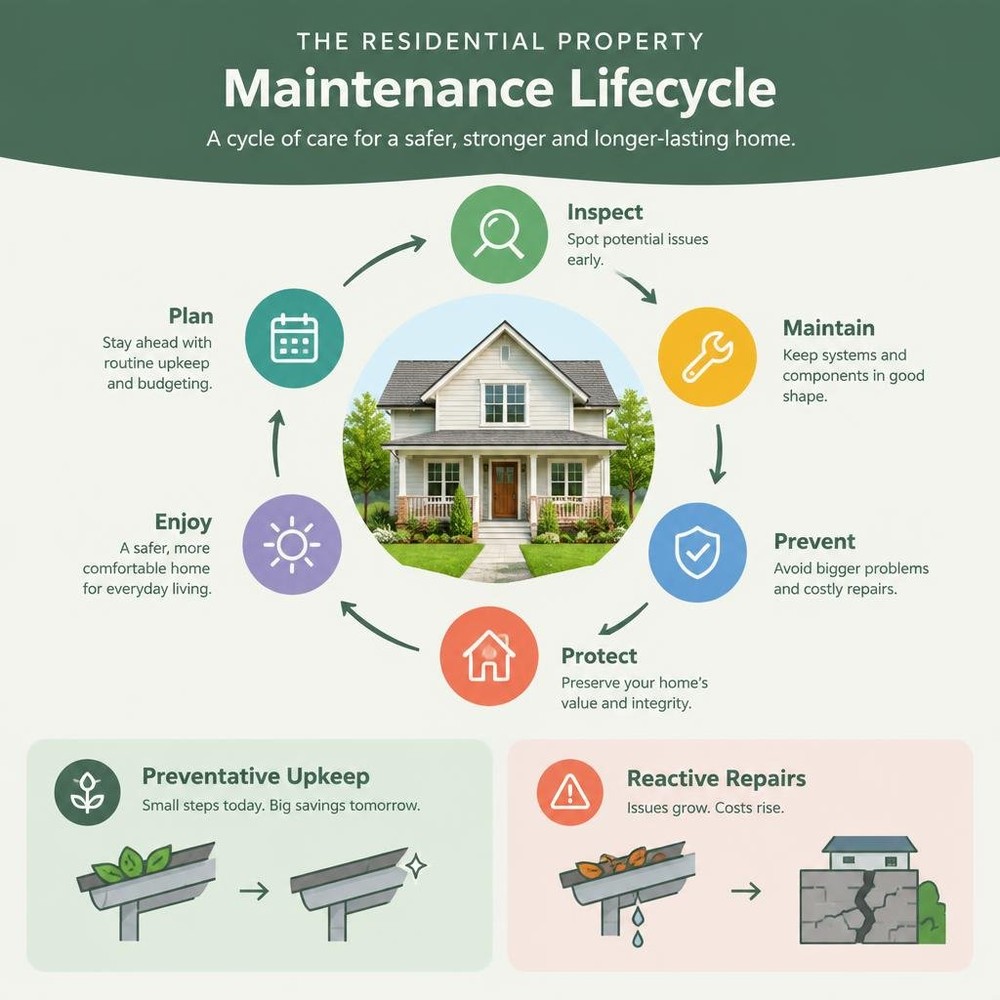
Residential property maintenance encompasses a wide array of activities designed to keep a home functional, safe, and aesthetically pleasing. It fundamentally involves two primary approaches: preventative upkeep and reactive repairs. While reactive maintenance addresses issues after they arise, often leading to emergency surcharges and increased asset depreciation, preventative maintenance is a forward-thinking strategy. It focuses on identifying and mitigating potential problems before they escalate, safeguarding foundation stability, and enabling long-term budgeting.
For example, ignoring a clogged gutter through the fall might seem minor, costing around $125 to clear. However, the subsequent foundation repair it could necessitate can range from $3,000 to $8,000. This stark contrast highlights the financial prudence of proactive measures. By investing in regular checks and minor fixes, homeowners can avoid much larger, unforeseen expenses, preserving their home’s value and structural integrity.
Evaluating Preventative Versus Reactive Approaches
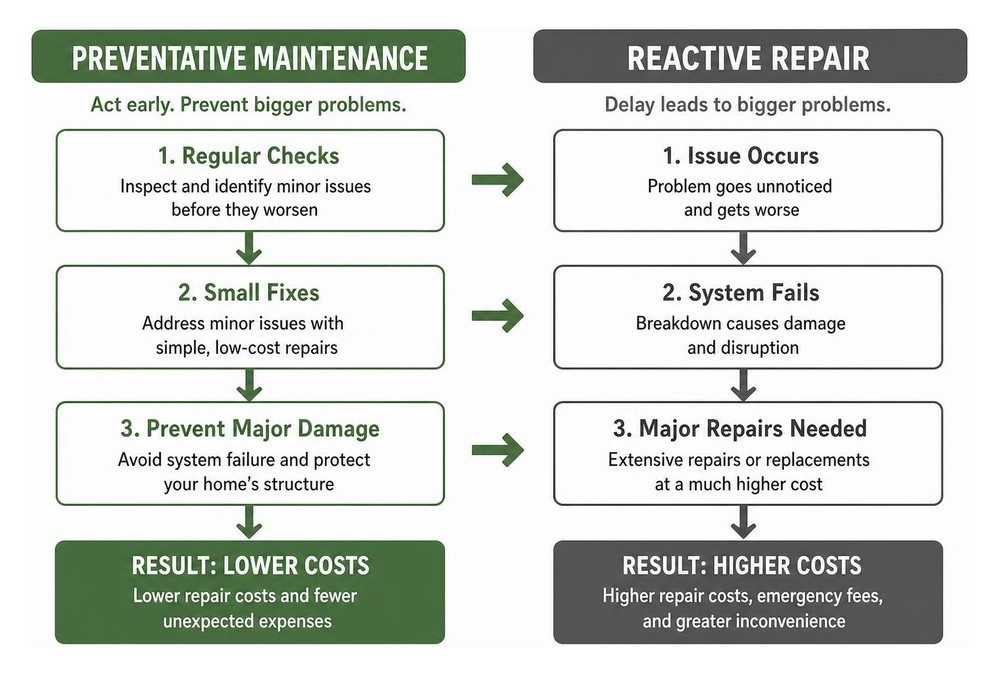
The choice between preventative and reactive maintenance significantly impacts a property’s longevity and an owner’s financial outlay. Preventative maintenance, by its nature, emphasizes early detection. Regular inspections can uncover minor issues like hairline cracks, loose shingles, or small leaks before they compromise major systems. This approach extends system lifespans, such as HVAC units or roofing materials, by ensuring they operate under optimal conditions. Techniques like thermal imaging can pinpoint hidden issues like insulation gaps or water intrusion, allowing for targeted repairs that minimize overall damage.
In contrast, reactive maintenance typically involves addressing component failure after it has occurred. This often means emergency call-outs, higher labor costs, and the potential for more extensive damage. For instance, an irrigation head that goes unchecked before summer could lead to a 30% to 40% increase in a monthly water bill across a large property portfolio. Such scenarios underscore how delayed attention can rapidly inflate operational costs. By prioritizing preventative actions, homeowners can significantly reduce the frequency and severity of emergency repairs, ensuring their home remains in excellent condition year-round.
Structuring Recurring and Monthly Service Plans
For many homeowners, managing a comprehensive preventative maintenance schedule can be daunting. This is where recurring or monthly service plans offer a compelling solution. These service subscriptions provide routine visits from dedicated professionals, ensuring that critical tasks are performed consistently without the homeowner needing to track every detail. Such plans offer predictable budgeting, as costs are typically spread out over the year, avoiding sudden, large expenditures.
A monthly service package might include a set number of hours of handyman service, allowing for a variety of small repairs and inspections. This could cover hardware checks, filter replenishment (such as furnace filters or water softener salt), and addressing minor work orders that accumulate over time. For example, some plans offer up to four hours of service per month from a dedicated professional, including annual supplies like furnace filters and softener salt. This structured approach helps prevent small issues from becoming major problems, ensuring the home remains well-maintained and comfortable. It’s a convenient way to delegate the “honey-do” list to experts, freeing up homeowners’ time and peace of mind.
Essential Interior and Exterior Maintenance Services
Effective residential property maintenance covers every aspect of your home, from its foundation to its roofline. On the exterior, attention to the building’s envelope is crucial. This includes regular inspections and repairs of roofing materials, siding, windows, and doors to prevent water intrusion and maintain insulation. Roofline repairs, such as fixing loose shingles or damaged flashing, are vital for protecting the home from the elements. Gutter blockages, if ignored, can lead to fascia damage, foundation issues, and landscape erosion. Regular cleaning prevents these costly problems. Beyond the structure, the surrounding landscape also requires consistent care. For robust outdoor spaces, considering expert guidance on landscape design and tree services can significantly enhance curb appeal and property health.
Inside the home, maintenance extends to plumbing lines, ensuring there are no leaks or blockages that could lead to water damage. Drywall patching addresses aesthetic imperfections and structural integrity issues. Regular checks of electrical systems, appliances, and general wear and tear contribute to a safe and functional living environment. A comprehensive approach ensures that both the visible and hidden components of your home are well-cared for, preventing minor issues from escalating into major structural concerns.
Heating, Ventilation, and Air Quality Management
One of the most critical aspects of residential property maintenance is the care of your heating, ventilation, and air conditioning (HVAC) systems. These systems are central to maintaining comfort, healthy indoor air quality, and energy efficiency. Regular maintenance ensures optimal airflow efficiency, preventing strain on the unit and reducing energy consumption. This includes routine duct inspection to check for leaks or blockages that can hinder performance and distribute allergens.
Thermostat calibration ensures that your system is accurately controlling indoor temperatures, avoiding unnecessary energy waste. Seasonal tuning, typically performed in spring for cooling and fall for heating, prepares the unit for the demands of changing weather, enhancing its reliability and lifespan. Addressing moisture balancing within the home, often managed by HVAC systems, is also vital to prevent mold growth and maintain a comfortable humidity level. Engaging professional HVAC system specialists for these tasks is a wise investment, as their expertise ensures your system operates at peak performance, providing consistent comfort and efficiency.
Seasonal Residential Property Maintenance Checklist
The changing seasons bring unique maintenance demands, making a seasonal approach to property upkeep essential. Adapting your maintenance schedule to these shifts can prevent weather-related damage and ensure your home remains comfortable and efficient year-round.
Critical Seasonal Property Checks:
- Winterization Steps (Late Fall): Prepare plumbing by draining outdoor spigots and insulating exposed pipes. Ensure your heating system is serviced, and check for drafts around windows and doors, sealing them as necessary. Clean gutters one last time before heavy snow and ice.
- Spring Tune-ups (Early Spring): Inspect the roof for winter damage, including loose or missing shingles. Clean gutters thoroughly to ensure proper drainage. Check the exterior for any signs of wear or damage. Service your air conditioning unit, ensuring it’s ready for warmer temperatures.
- Drainage Audits (Spring/Fall): Walk around your property during or after rain to observe how water flows. Ensure downspouts direct water away from the foundation and that there are no standing water issues.
- Irrigation Testing (Spring): Before summer heat sets in, test your sprinkler system for proper function, checking for leaks, broken heads, or inefficient watering patterns. An unchecked irrigation head can significantly increase water bills.
- Weatherproofing Seals (Fall): Inspect and repair any cracked caulk or weather stripping around windows and doors to prevent heat loss in winter and cool air escape in summer.
- Damp Surveys (Fall/Winter): Conduct surveys to identify any areas of dampness, especially in basements or crawl spaces, to prevent mold growth and structural damage.
Adhering to a comprehensive seasonal checklist like this helps homeowners stay ahead of potential problems, saving money and stress in the long run.
Home Safety, Energy Efficiency, and Risk Prevention
Residential property maintenance is not just about aesthetics or functionality; it’s fundamentally about safety and efficiency. A well-maintained home is a safer home. Regular checks of fire barriers, smoke detectors, and carbon monoxide alarms are non-negotiable. Ensuring dryer vents are clear of lint is crucial, as clogged vents are a leading cause of house fires. Addressing these small details can prevent catastrophic incidents.
Furthermore, maintenance plays a significant role in a home’s energy efficiency. Proper thermal insulation in attics and walls, combined with intact seals around windows and doors, prevents heat loss in colder months and heat gain in warmer ones. This directly translates to lower utility bills. Regular inspections of electrical panels can identify potential hazards and ensure efficient power distribution. An irrigation head that wasn’t checked before summer can add 30% to 40% to a monthly water bill across a large portfolio, illustrating how even minor oversights can impact utility efficiency. By prioritizing these elements, homeowners not only protect their families but also contribute to a more sustainable and cost-effective living environment.
Selecting a Qualified Service Provider and Service Agreements
Choosing the right property maintenance company is paramount to ensuring your home receives the care it deserves. We recommend looking for providers with verifiable licensing and a strong reputation for reliability. Companies with multi-trade skills can offer a comprehensive solution, handling everything from plumbing and electrical work to carpentry and roofing, often under a single point of contact. This streamlines communication and project management.
A crucial indicator of quality is a workmanship guarantee. For example, some reputable companies offer a 12-month workmanship guarantee on all completed works, providing peace of mind. We also advise evaluating their quote turnaround times; some providers pride themselves on delivering quotes within 48 hours, which is significantly faster than the typical 3 to 10 business days often experienced with individual contractors. Transparent scope definition in their proposals is also vital, ensuring you know exactly what services are included. Finally, verify their adherence to regulatory compliance, particularly for structural alterations or specialized installations, to ensure all work meets current building standards.
Budgeting for Residential Property Maintenance Costs
Understanding the financial aspect of residential property maintenance is key to effective homeownership. Costs can vary widely depending on factors such as the size and age of the property, the specific services required, and regional labor rates. For instance, a monthly service package from some providers starts around $200 per month, varying with square footage. This type of plan helps homeowners budget predictably for ongoing upkeep.
It’s essential to allocate funds for both routine maintenance and potential emergency repairs. Deferred maintenance, the act of postponing necessary repairs, almost always leads to higher costs down the line. We saw earlier how a clogged gutter ignored through fall could result in a $3,000 to $8,000 foundation repair. Similarly, an unchecked irrigation head could add a significant percentage to monthly water bills. Establishing a dedicated reserve allocation for maintenance and an emergency fund is a prudent financial strategy. For properties within Homeowners Associations (HOAs), understanding specific HOA guidelines for exterior maintenance is also critical to avoid potential fines. By proactively budgeting and addressing issues promptly, homeowners can mitigate the financial impact of property upkeep.
Frequently Asked Questions About Residential Maintenance
How often should routine residential maintenance tasks be scheduled?
The frequency of residential maintenance tasks depends on the specific item and its criticality. Generally, we recommend a multi-tiered approach:
- Monthly Inspections: Simple visual checks of plumbing for leaks, testing smoke and carbon monoxide detectors, and inspecting general wear and tear. For example, some monthly service plans include dedicated handyman visits for these routine tasks.
- Quarterly Tune-ups: Tasks like cleaning dryer vents, checking HVAC filters (and replacing them as needed), and inspecting appliance functionality.
- Seasonal Preparation: Comprehensive checks and adjustments in spring and fall to prepare for extreme weather. This includes gutter cleaning, roof inspections, and weatherproofing.
- Annual Professional Servicing: HVAC system tune-ups, water heater flushing, and professional pest control.
Maintaining a consistent filter cadence for HVAC systems and water softeners is also crucial, with replacements often needed every 1-3 months for filters and regularly for softener salt. Proactive upkeep, rather than waiting for problems to arise, is always the most cost-effective strategy.
What key clauses should be reviewed in a property maintenance agreement?
When entering into a property maintenance agreement, a thorough review of the contract clauses is essential to protect your interests. We advise paying close attention to:
- Scope Inclusions and Exclusions: Clearly define what services are covered and what falls outside the agreement. This prevents misunderstandings and unexpected charges.
- Response Times: Understand the guaranteed response times for routine requests and, more critically, for emergency situations. Some services pride themselves on rapid dispatch and resolution.
- Labor Guarantees and Warranties: Look for clauses that outline the quality of workmanship and any guarantees provided, such as a 12-month workmanship guarantee on completed works.
- Dispatch Protocols: How are work orders submitted and managed? What happens if an assigned provider doesn’t show up? Some advanced systems offer a re-dispatch guarantee, ensuring continuity of service without restarting the entire process.
- Emergency Coverage: Clarify what constitutes an emergency, how it’s handled, and any associated costs or limitations.
A well-defined contract provides clarity and accountability, ensuring a smooth and reliable maintenance experience.
How does consistent maintenance impact property value and efficiency?
Consistent property maintenance significantly impacts both property value and operational efficiency. From a value perspective, regular upkeep ensures appraisal retention. A well-maintained home presents better during appraisals and inspections, leading to higher valuations compared to properties with visible signs of deferred maintenance. This also boosts buyer confidence, making the property more attractive on the market and potentially commanding a higher selling price.
In terms of efficiency, routine maintenance directly translates to utility reductions. For instance, properly maintained HVAC systems, sealed windows, and adequate insulation reduce energy consumption. Addressing issues like leaky plumbing or inefficient irrigation systems prevents water waste. This proactive approach extends the structural lifespan of the home and its components, delaying the need for costly replacements. Consistent maintenance is a powerful tool for depreciation prevention, safeguarding your investment and ensuring your home remains a valuable asset for years to come.
Conclusion
Residential property maintenance is far more than a series of chores; it’s a strategic imperative for every homeowner. By adopting a proactive strategy, we can ensure the ongoing preservation of our most significant asset. Routine management, from seasonal checks to monthly service plans, not only prevents costly emergency repairs but also contributes to significant operational savings over time. Embracing this comprehensive approach to property upkeep ensures a safe, efficient, and comfortable living environment, securing lasting value for our homes in September 2026 and beyond.