Key Takeaways
- Read the full product label. Check the product format, complete ingredient list, serving information, net contents, manufacturer details, and package warnings before comparing mushroom and botanical blends.
- Look beyond marketing claims. Review blend composition, disclosed ingredient amounts, and available batch-specific laboratory reports to understand what the product information actually confirms.
- Verify age restrictions and local rules. Adults age 21 and older should check current state and local requirements, product-specific restrictions, and retailer policies before purchasing.
Mushroom and botanical products now come in several forms, including gummies, disposable vapes, syrups, and tablets. For adults age 21 and older, the packaging can be eye-catching, but the most useful details are usually found in the product identity, ingredient information, serving directions, and testing materials.
For example, many 21+ online retailers organize mushroom and botanical blends by formats such as gummies, vapes, syrups, and tablets. Shoppers can look for product-page details and available manufacturer lab reports, which show how a retailer presents product information. Brands such as Enchanted Cap may be evaluated using the same general approach: review the available product details and supporting documentation rather than relying on marketing language alone. Shipping rules may vary by location, but each product still deserves its own label and rule check.
Why Label Skills Matter
Two products may use similar colors, flavor names, or front-label language while containing different ingredients, serving sizes, and added materials. A careful label review helps separate what is actually disclosed from what is simply emphasized in marketing.
This guide is intended for adults age 21 and older. It is not medical advice, and it does not make claims about how any mushroom or botanical product may affect a person. Instead, it offers a practical method for comparing product information before making a purchase decision.
Start With The Product Identity
Begin with the basic question: what is this product? The front and back label should make the product name, format, and amount in the package easy to identify. A shopper should not have to guess whether an item is a gummy, syrup, tablet, inhalable product, food, or dietary supplement.
- Product name and product format
- Net contents, such as piece count, fluid volume, or device size
- Manufacturer or distributor name and contact information
- Serving size or suggested use, when provided
- Clear age statement and any package warnings
If a product is marketed as a dietary supplement, the FDA’s dietary supplement labeling guide provides useful background on common label elements, including statements of identity, net quantity, ingredient labeling, and Supplement Facts panels.
Read The Ingredient Information From Top To Bottom
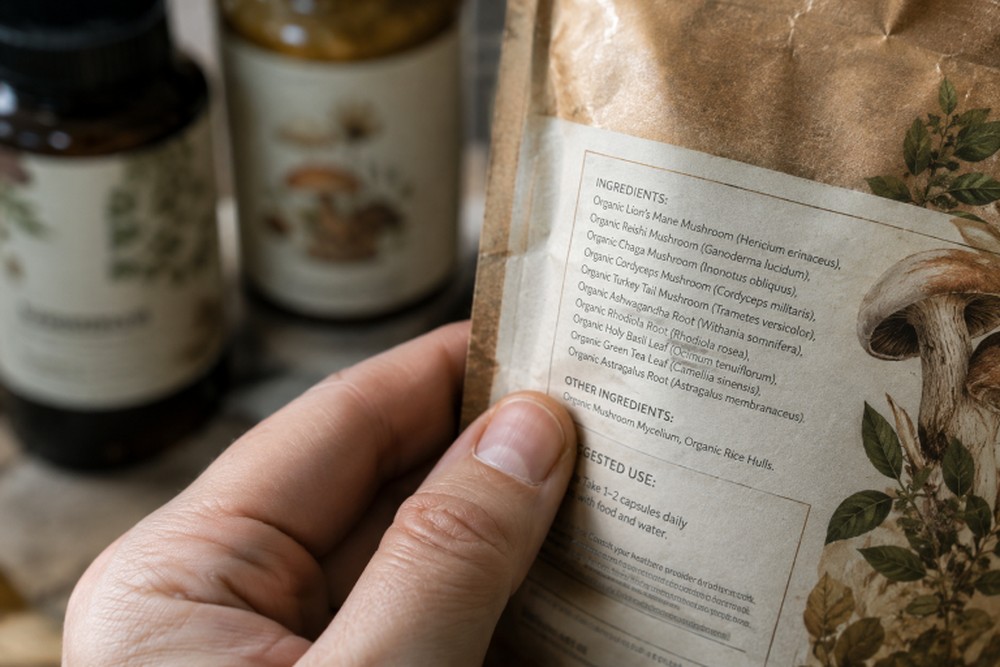
Do not stop at the first ingredient highlighted on the front. Turn the package around and read every listed ingredient. Look for the common name of each mushroom, plant, herb, flavoring, sweetener, carrier, or other material included in the product.
For products with a conventional ingredient list, ingredients are generally listed in descending order by weight. A Supplement Facts panel works differently, so review both areas when both are present. A long list does not automatically mean a more useful formula. It may simply reflect flavors, colors, sweeteners, coatings, or other added ingredients.
Depending on personal preferences, shoppers may want to note added sugars, sugar alcohols, caffeine, artificial colors, allergens, preservatives, or other inactive ingredients. For inhalable products, the carrier ingredients and hardware details are especially important to locate.
Know What A Blend Label May Leave Unclear
A blend is a group of ingredients placed under one combined name. Sometimes a label identifies the total amount for the blend but does not specify the amount of each ingredient within it. That does not automatically make the product unacceptable, but it can limit direct comparisons.
More informative labels commonly make it easier to identify the following:
- Each mushroom or botanical included in the blend
- The plant or mushroom part used, when disclosed
- Whether the ingredient is a powder, extract, or another form
- The amount per serving or the total blend amount
- Any extraction, processing, or standardization details the brand provides
Clear labeling is valuable because it gives shoppers more information to compare. It does not, by itself, prove that one product is better than another or predict a particular experience.
Compare Formats With Practical Questions
Gummies
Check the number of pieces in the package, serving size, sweeteners, food allergens, flavorings, and whether the listed amount applies to each gummy or the full serving.
Vapes
Look for the device type, net contents, carrier ingredients, manufacturer details, age restriction, warnings, and any batch-specific information. Avoid assuming that a broad phrase on the package explains every component of the formula.
Syrups
Review the serving measurement, bottle volume, sweeteners, preservatives, ingredients, and storage instructions. Confirm whether a measuring cap, cup, or other serving tool is included or recommended.
Tablets
Check the tablet count, suggested serving, inactive ingredients, coating materials, and whether individual botanicals are identified clearly. Small tablets can still contain several ingredients, so the back label matters.
Separate Facts From Marketing Language
Words such as “premium,” “clean,” “strong,” “natural,” and “advanced” may describe a brand’s positioning, but they do not explain the formula on their own. Treat them as prompts to inspect the details, not as substitutes for ingredient transparency.
The FDA distinguishes among health claims, nutrient content claims, and structure or function claims in its overview of label claims for foods and dietary supplements. That distinction is useful when reviewing broad promotional language. Focus on what the package actually names, measures, and explains.
- What exact ingredients are included?
- Are individual amounts or a total blend amount disclosed?
- Is the product format stated clearly?
- Are testing details available and understandable?
- Does the package identify the responsible company?
Look For Quality And Testing Information
A certificate of analysis, often called a COA, can provide added context when it is available for the specific product or batch. Check whether the document identifies the product, lot or batch number, testing date, and laboratory. A report is most useful when those details match the item in hand.
A vague “tested” statement provides less information than a report that explains what was tested and when. If a brand makes testing information difficult to locate or understand, consider asking the company for clarification before purchasing.
Check Age Rules And Local Requirements
These products are intended for adults age 21 and older. Rules may vary by state, city, format, ingredient type, and retailer policy, and they can change over time. Review current requirements in your location before purchasing, possessing, or using a product.
- Check applicable state requirements.
- Review local city or county rules where relevant.
- Read all package warnings and age statements.
- Confirm the retailer’s age-verification policy.
A Five-Step Label Review
- Confirm the format. Identify whether the item is a gummy, vape, syrup, tablet, or another product type.
- Scan all ingredients. Look beyond the featured botanical or mushroom name.
- Review blend details. Note what is named, measured, and left unspecified.
- Check testing information. Match available reports to the product or batch when possible.
- Confirm age and local rules. Make sure the purchase is appropriate for your area.
Conclusion
Reading a mushroom and botanical blend label does not need to be complicated. Start with the product identity, read every ingredient, assess the blend details, review testing information, and check current age and local requirements. Slow comparison is usually more valuable than bright packaging or oversized front-label claims.