Early Life and Identity
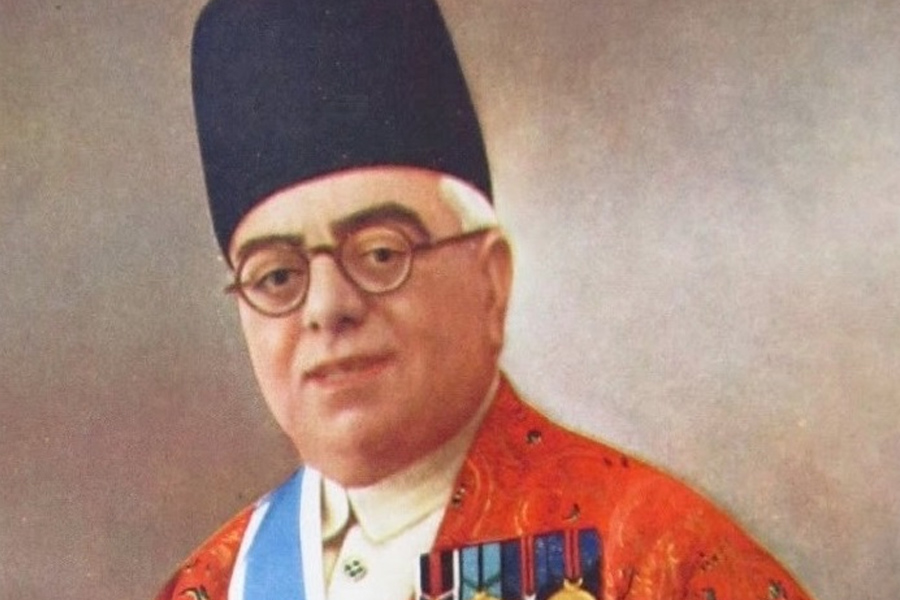
When I look at the life of Aga Sultan Mahomed Shah Aga Khan, also known as Aga Khan III, I see a figure who moved through history like a lantern in a long corridor. Born in Karachi in 1877, he inherited a spiritual office that was immense in weight and reach. He became the 48th Imam of the Nizari Ismaili Muslims at only seven years old in 1885, after the death of his father. That single fact says much about the arc of his life. Childhood ended early. Responsibility arrived like a tide.
His full name, Sultan Mahomed Shah, appears often in historical records, but the title Aga Khan III is the one that became most closely tied to his public life. He was not only a religious leader. He was a political voice, a reformer, a writer, a diplomat, and a man of international stature. He lived across worlds, from British India to Europe, from community leadership to global politics. That range gave his life both polish and pressure.
I think what makes him especially memorable is the way he combined tradition with movement. He carried an ancient mantle, yet he was never frozen in it. He understood that leadership had to breathe.
Parents, Origins, and Family Lineage
His father was Aga Khan II, also known as Aqa Ali Shah. His mother was Shams al-Muluk, a Persian princess from the Qajar line. Through them, Aga Sultan Mahomed Shah Aga Khan inherited a lineage that connected spiritual authority, aristocratic heritage, and deep historical continuity.
That family background was not decorative. It shaped his world from the start. He was raised within a lineage of Imams, and that continuity gave his role legitimacy in the eyes of his followers. He was the grandson of Aga Khan I, and his place in the succession made him part of a long chain of authority that stretched across generations.
Family history can sometimes feel like a tree with thick roots. In his case, the roots were visible in public life. His ancestry mattered to community identity, political standing, and the way later generations understood themselves.
Wives and Personal Relationships
Aga Khan III married four times, and each marriage belonged to a different chapter of his life.
His first wife was Shahzadi Begum. Their marriage took place in 1896 or 1897. She was his cousin and part of the same broader family network. The union reflected the customs and alliances of elite families in that period.
His second wife was Cleope Teresa Magliano, also known in some records as Teresa or Theresa Maglioni. This marriage began in 1908. It was a deeply important relationship because it produced two sons. She remained connected to his life until her death in 1926. Her presence in his story is central, because through her came Aly Khan, one of the most well-known members of the family line.
His third wife was Andrée Joséphine Carron. They married in 1929. Their marriage produced one son, Sadruddin Aga Khan, born in 1933. This relationship brought another branch into the family tree, one that later became important in diplomacy and humanitarian work.
His fourth and last wife was Om Habibeh Aga Khan, born Yvonne Blanche Labrousse. They married in 1944. She remained with him through the later years of his life and cared for his mausoleum after his death. Her role was quieter than the public roles of some others in the family, but it was still significant. She stood at the edge of his final chapter like a steady flame.
Children and Descendants
His offspring continued his heritage.
Born to Cleope Teresa Magliano, his son Giuseppe Mahdi Khan died in infancy in 1911. He is remembered in the family despite his short life.
Prince Aly Khan, his second son, was born in 1911. After becoming Pakistan’s UN ambassador, he became a famous figure. His descendants continued the line. Aly Khan fathered Prince Karim IV, Prince Amyn Muhammad, and Princess Yasmin.
Andrée Joséphine Carron had his third son, Sadruddin Aga Khan, in 1933. He became UN High Commissioner for Refugees and a respected worldwide leader. He never had children, but his career elevated the family name through diplomacy and humanitarian work.
Aga Khan III’s descendants were famous. Imam Prince Karim Aga Khan IV succeeded him in 1957. Prince Amyn was involved in culture and institutions. Princess Yasmin was a notable humanitarian and advocate. Andrew Ali Aga Khan Embiricos, a great-grandchild, originated from Yasmin.
The family is more than names. It’s relay. A generation passed the torch to another.
Career, Leadership, and Public Achievements
Aga Khan III’s career was wide, layered, and remarkably modern for his time. He became Imam in 1885, but his leadership expanded far beyond religious administration.
He was deeply involved in Muslim political organization in British India. He became a founding member and first permanent president of the All India Muslim League. That placed him in the middle of a major political current that shaped the future of South Asia.
He also helped raise educational standards. He supported schools, encouraged learning, and backed the transformation of Muslim education in India. He played an important role in the movement that helped turn the Aligarh Muslim College into Aligarh Muslim University in 1920. That was not a small achievement. It was a hinge in history.
He was active in international diplomacy as well. In 1937, he served as president of the League of Nations. That role gave him global visibility and confirmed that his influence extended far beyond the Ismaili community.
He was also an author. In his writings, especially India in Transition and his memoirs, he reflected on politics, identity, governance, and the future. He was not a silent ruler. He was a thinking leader.
And then there was his work in horse racing. He became one of the great racehorse owners and breeders of his age. That world of stables, championships, and bloodlines may seem far removed from spiritual leadership, but it fits him oddly well. He understood discipline, prestige, and the long game.
Financial Legacy and Institutions
More than personal figures, Aga Khan III’s financial legacy is institutional architecture. He helped develop long-lasting structures.
Community organizations, cooperative finance, and insurance companies grew under his direction. These efforts enabled marginalized groups to participate in the economy. His leadership went beyond intellect. He assisted with system building.
He promoted charity giving and educational endowments. His Diamond Jubilee changed community investment. School and social enhancement funds were allocated. This is one of his most distinctive traits. Wealth wasn’t ornamental to him. He used scaffolding.
Extended Timeline of a Remarkable Life
1877, born in Karachi.
1885, became Imam at age seven after the death of Aga Khan II.
1896 or 1897, married Shahzadi Begum.
1905, helped advance early community education and constitutional organization.
1908, married Cleope Teresa Magliano.
1911, his sons Giuseppe Mahdi Khan and Aly Khan were born, though Giuseppe died in infancy.
1918, published India in Transition.
1920, supported the elevation of Aligarh Muslim College to university status.
1926, Cleope Teresa Magliano died.
1929, married Andrée Joséphine Carron.
1933, his son Sadruddin Aga Khan was born.
1937, served as president of the League of Nations.
1944, married Om Habibeh Aga Khan.
1954, published his memoirs.
1957, died in Versoix, Switzerland.
1959, was reburied in Aswan, beside the Nile.
FAQ
Who was Aga Sultan Mahomed Shah Aga Khan?
He was Aga Khan III, the 48th Imam of the Nizari Ismaili Muslims, as well as a political leader, reformer, writer, and international figure.
Who were his parents?
His father was Aga Khan II, and his mother was Shams al-Muluk.
How many times did he marry?
He married four times. His wives were Shahzadi Begum, Cleope Teresa Magliano, Andrée Joséphine Carron, and Om Habibeh Aga Khan.
Who were his children?
His children were Giuseppe Mahdi Khan, Aly Khan, and Sadruddin Aga Khan. Giuseppe died in infancy, while Aly Khan and Sadruddin became notable public figures.
Who succeeded him?
His grandson, Prince Karim Aga Khan IV, succeeded him as Imam.
Why is he historically important?
He shaped religious leadership, Muslim political organization, education, finance, and international diplomacy. His influence touched communities, institutions, and generations.