Biographical snapshot
| Field | Detail |
|---|---|
| Full name | Alastair Grahame |
| Nickname | “Mouse” |
| Birth | 12 May 1900 |
| Death (body found) | Early May 1920 (discovered 7–8 May 1920; burial on 12 May 1920) |
| Parents | Kenneth Grahame (father), Elspeth “Elsie” Thomson Grahame (mother) |
| Education | Preparatory school; brief and unhappy spells at Rugby and Eton; matriculated at Christ Church, Oxford, 1918 |
| Health | Congenital cataract in one eye (blind in that eye); described as physically fragile |
| Notable connection | Recipient of the childhood letters and stories that became The Wind in the Willows |
| Burial | Holywell Cemetery, Oxford (buried 12 May 1920) |
A child at the heart of a story
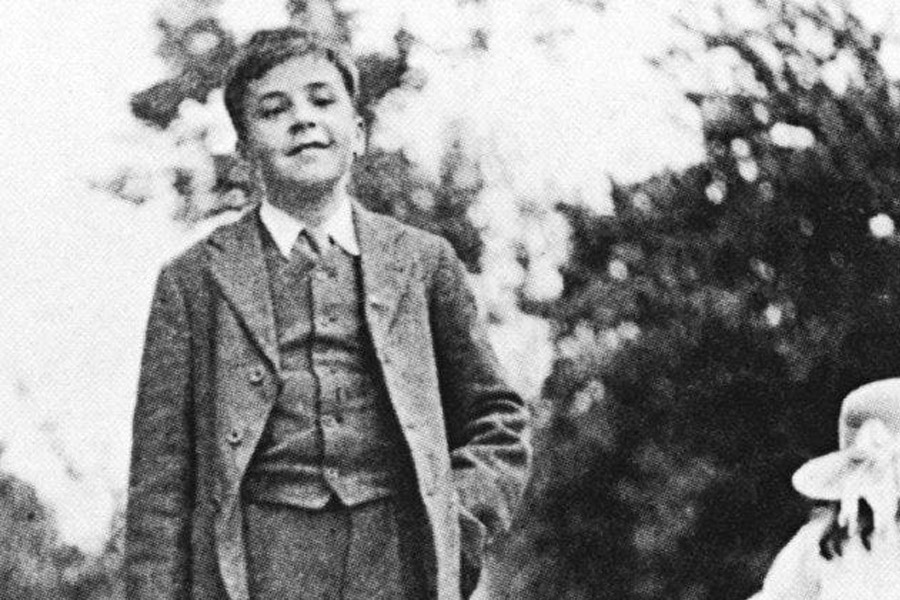
Alastair Grahame arrived into the Grahame household on 12 May 1900, prematurely and fragile, nicknamed “Mouse” by those close to him. He was born with a congenital cataract in one eye and carried, throughout his short life, a map of vulnerability that shaped the way others protected him and, perhaps, the stories that were told for him. The intimate tales and letters composed by his father in 1907, addressed to a small, curious boy, grew like saplings into a now-famous work of fiction; the original bedtime fragments acted as seed and scaffold for a book that traveled far beyond the nursery.
To think of Alastair is to picture the small, domestic stage that gave rise to a larger literary world: a father at leisure to invent, a nanny and neighborhood children who helped craft a child’s homemade journal, and a household that turned private play into art. Those child-made pages—scribbles, sketches, and small theatrics—remain a fragile testament to a boy whose adult life never unfurled.
Family and the web around him
Kenneth Grahame, the father, provided both the imaginative engine and the social shelter for Alastair. Born in the nineteenth century, Kenneth retired from the Bank of England and found himself inhabiting the quieter, story-rich corners of life. His wife, Elspeth (“Elsie”) Thomson Grahame, was the child’s mother and the steady domestic presence whose life would be forever altered by the loss of their only child. Extended family—sisters, brothers, aunts, uncles—hover in the background of the household narrative. A governess named Naomi Stott appears in the record as a practical collaborator in the child’s upbringing and in the production of the homemade journal that captured Alastair’s youthful imagination.
The family dynamic had the intimacy of a small stage play: characters known, roles fixed, reactions intense. When the central actor was lost, the scene could not continue as before.
Education, health, and the unfinished promise
Alastair’s formal education followed a familiar, uneven path. Preparatory school gave way to unhappy periods at Rugby and at Eton—places where a delicate health and sensitive temperament did not fit easily with the rougher expectations of the time. He matriculated at Christ Church, Oxford, in 1918, a date that marks both a coming-of-age and a parenthetical pause in a life that would not reach its adult pages.
Medical and wartime circumstances intersected: his eyesight likely prevented active military service during the First World War. He never accrued an adult career; he never had the chance. The records, sparse and steady, indicate no independent professional achievements—only the quiet accumulation of schooling, of small juvenile texts, and of the relationship to his father’s work.
A death that echoed and a verdict that divided
The discovery of Alastair’s body on the Oxford railway line in early May 1920—with reported discovery dates of 7 or 8 May—is an event that transformed private grief into enduring public speculation. The coroner’s jury returned an official verdict of accidental death, yet rumors and whispered conjectures spoke of a different possibility. The tension between recorded verdict and rumor is itself a kind of narrative: two versions of an event competing in memory.
He was buried on 12 May 1920, his twentieth birthday, in Holywell Cemetery, a date that stitches together the beginning and the immediate end of life in the same calendar square. The timing deepened the family’s sorrow; it made the personal loss feel geometric, almost symbolic.
Cultural footprint and inheritance
Alastair’s direct achievements are modest by any traditional measure—no published books under his own name, no long career, no public offices. Yet his presence is threaded through a major cultural work. The letters and stories his father wrote to him in 1907 served as the germination point for a tale that has since become a fixture of children’s literature. In that sense, Alastair’s role is peculiar: he is simultaneously a minor historical figure and a silent collaborator in a book that would outlive both him and his immediate family.
That legacy is not measured in monetary terms or in career milestones; it is measured in the way stories travel. The private narratives addressed to a child became public property. The small journal he helped produce as a youngster, assembled with a governess and friends, exists as a kind of emblem of early creativity—tender, rough, and human.
Timeline of key dates
| Year | Event |
|---|---|
| 1900 | Birth on 12 May (premature; nicknamed “Mouse”) |
| 1907 | Series of about 15 letters/stories written to young Alastair — seeds of later book |
| 1908 | Publication of the expanded material as The Wind in the Willows |
| 1914–1918 | World War I period; Alastair rejected for active service (likely due to eyesight) |
| 1918 | Matriculation at Christ Church, Oxford |
| 7–8 May 1920 | Alastair’s body discovered on a railway line in Oxford |
| 12 May 1920 | Burial at Holywell Cemetery (his 20th birthday) |
The shape of memory
Alastair’s story is a study in contrasts. Numbers and dates mark the boundaries: 12 May 1900 to May 1920. Within those lines lie fragile scenes: a child’s journal, bedtime letters, a nickname that signals affection, and a premature end that prompted questions rather than answers. There is a peculiar symmetry—birth and burial share a date—that composes the life into a brief, bittersweet circle.
His is a life that refracts outward. Like a drop in a still pond, the disturbance he made—the small person to whom stories were told—sent ripples far beyond his years. The ripples are the book, the exhibitions, the archival pages; they are the way a private act of parental storytelling became an object of public affection. In that way, Alastair remains present: not as a completed life but as the hinge of a story that continues to open for readers, generation after generation.