A life shaped by labor, faith, and motion
I think of David Jacob Eisenhower as one of those men who rarely stand in the spotlight, yet help hold the whole stage together. Born in Pennsylvania in 1863 and later rooted in Kansas, he lived through a period when America was still building its rails, towns, and ambitions. His life was not decorated with grand public office or celebrity. Instead, it was built from work, responsibility, and a stubborn kind of endurance that feels almost elemental, like stone set into a riverbank.
He belonged to a River Brethren family, a religious and cultural thread that ran through the nineteenth century with discipline and simplicity. In 1878, the family moved west to Dickinson County, Kansas, joining the long pull of migration that carried so many families toward the prairie. That move matters because it frames everything that came after. David Jacob Eisenhower did not become a man in isolation. He became one inside a household that knew migration, labor, and adaptation as ordinary facts of life.
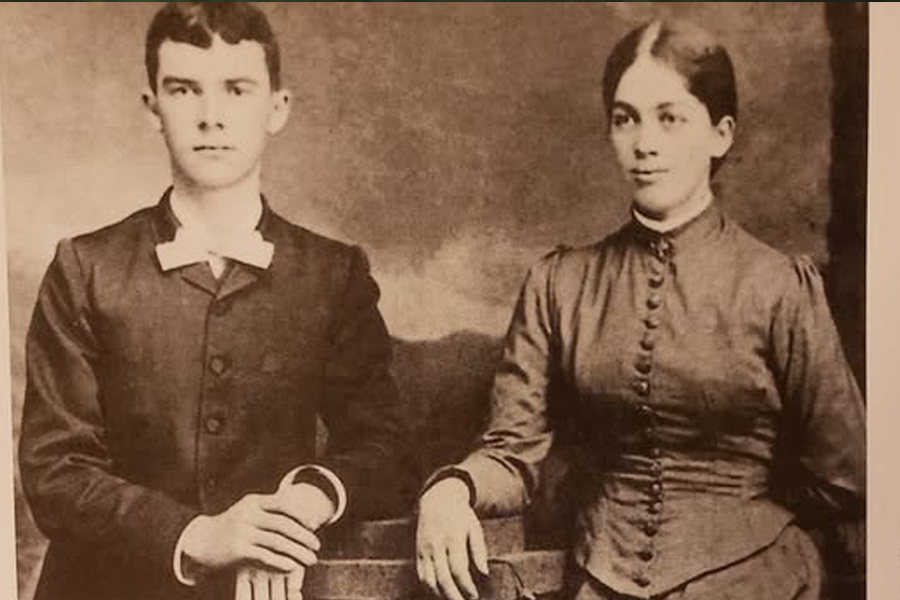
He married Ida Elizabeth Stover on 23 September 1885 at Lane University in Lecompton, Kansas. That marriage became the center of his adult world. Together they built a family large enough to feel like a small republic, full of boys, chores, ambition, and noise. I picture their home as a place where the days had little room for stillness. There were meals to stretch, work to chase, and children to guide.
The Eisenhower household and the people inside it
The family of David Jacob Eisenhower is best understood not as a single line, but as a cluster of lives moving outward from one pair of parents. He and Ida had seven sons, though one died in infancy. That detail matters because it reminds me how often family history is written by both presence and absence.
Here are the immediate family members as they fit into David Jacob Eisenhower’s story:
| Family member | Relationship | Notes |
|---|---|---|
| Ida Elizabeth Stover Eisenhower | Wife | Married David in 1885 |
| Arthur Bradford Eisenhower | Son | One of the elder sons |
| Edgar Newton Eisenhower | Son | Part of the six surviving brothers |
| Dwight David Eisenhower | Son | Later became the 34th President of the United States |
| Roy Jacob Eisenhower | Son | One of the middle sons |
| Paul Dawson Eisenhower | Son | Died in infancy |
| Earl Dewey Eisenhower | Son | One of the younger sons |
| Milton Stover Eisenhower | Son | Later became a major university and public leader |
I also think about the wider family orbit. David Jacob Eisenhower was the son of Jacob Frederick Eisenhower and Margareta Rebecca Matter. That makes him part of a larger Eisenhower line that stretches back through generations of Pennsylvania and earlier family history. He was one of many children in a large sibling group. The names tied to his brothers and sisters, as they appear in family records, include John Henry, Mary Ann, Catherine Ann, Jacob Frederick Jr., Samuel F., Susannah Matter, Peter A., Lydia A., Emma Jane, Amanda Hanna, Abraham Lincoln, Clinton, and Ira A. That list gives his family the texture of a crowded farmhouse, where every name carried weight and every child had a place at the table.
The children of David Jacob Eisenhower built their own branches, and those branches eventually became part of the public record too. Arthur, Edgar, Dwight, Roy, Earl, and Milton each lived distinct adult lives. Dwight became the most famous by far, but the other brothers matter as much as family members because they reveal the shape of the household David and Ida raised. They show a family that did not produce one isolated star, but a whole constellation.
Work, money, and the hard arithmetic of survival
David Jacob Eisenhower’s career was realistic, dynamic, and rooted in late nineteenth-century work. He studied engineering at Lane University, indicating a technical curiosity and interest in systems, machinery, and mechanics. The route from studies to stability was difficult. In 1885, he and Milton Good ran a Hope, Kansas, general store. The shop failed. That setback threw the Eisenhowers into uncertainty, which changed their family story.
I think that element really telling. Many family histories portray success as linear. Not this one. It bends, breaks, and starts.
After the store fell, the family visited Texas before returning to Kansas. Some versions suggest they returned with little money, which seems like a myth until one considers how many American families have rebuilt themselves from nothing. David didn’t freeze in defeat. His movement continued. He worked.
He cleaned engines, worked on railroads, and worked at Belle Springs Creamery after the family moved to Abilene in 1892. Later, he advanced to technical and supervisory work. He worked as a refrigeration engineer in management and utility positions, including gas plant and employee savings. His career arc shows that he was adapting, not just surviving. He went from labour to skilled labour, from uncertainty to competence, from fragility to stability.
Ida, the sons, and the family atmosphere he helped build
David Jacob Eisenhower’s family balanced scarcity with dignity. Ida Elizabeth Stover Eisenhower was a constant supporter. Their marriage survived hard and good times. Their lads grew up in a disciplined and resilient home.
Since 1886, Arthur Bradford Eisenhower was the first of the children. E. N. Eisenhower followed in 1889. Dwight David Eisenhower, the world-famous son, came in 1890. Roy Jacob and Paul Dawson Eisenhower arrived in 1892 and 1894, respectively, but Paul died young. Earl Dewey and Milton Stover Eisenhower were born in 1898 and 1899. Six of seven sons become adults. A busy family rhythm is like a human orchestra with numerous notes.
A father like David would expect work, order, and persistence. Structure, not absolute sternness. Structure is merciful in large families. Keeps the day from slipping away. It shapes children’s growth.
Sons went various ways. Dwight joined the Army and became president. Milton was a famous academic. Arthur, Edgar, Roy, and Earl lived less renowned American lives but were still members of the family. Thus, David’s legacy goes beyond fathering a president. He created a family strong enough to generate numerous men.
What David Jacob Eisenhower left behind
David Jacob Eisenhower died in 1942 in Abilene, Kansas. By then, his family name had already become part of American history through Dwight, but his own life remains worth careful attention because it shows the quieter foundation beneath public greatness. He was a son, husband, father, worker, and migrant, all at once. He lived through business loss, relocation, technical labor, and the steady demands of raising a large family.
I am struck by how his story resists ornament. It is not gilded. It is not theatrical. It is the kind of story that feels like a well used tool, worn smooth by hands that did not seek applause. His life offers a view of American family history at close range, where survival and aspiration sit side by side at the kitchen table.
FAQ
Who was David Jacob Eisenhower?
David Jacob Eisenhower was a Pennsylvania born American man who later lived in Kansas and became the father of seven sons, including Dwight D. Eisenhower. He is remembered as the husband of Ida Elizabeth Stover Eisenhower and as the steady center of a large and historically important family.
Who were David Jacob Eisenhower’s parents?
His parents were Jacob Frederick Eisenhower and Margareta Rebecca Matter. He came from a large family and was one of many siblings, which shaped the broader Eisenhower family network around him.
Who was David Jacob Eisenhower’s wife?
His wife was Ida Elizabeth Stover Eisenhower. They married on 23 September 1885 in Lecompton, Kansas, and built their home life together through years of financial strain, relocation, and steady work.
How many children did David Jacob Eisenhower have?
He had seven sons. Their names were Arthur Bradford Eisenhower, Edgar Newton Eisenhower, Dwight David Eisenhower, Roy Jacob Eisenhower, Paul Dawson Eisenhower, Earl Dewey Eisenhower, and Milton Stover Eisenhower. Paul died in infancy, while the other six grew to adulthood.
What kind of work did David Jacob Eisenhower do?
He worked in several practical fields, including storekeeping, railroad related mechanical labor, creamery work, and later technical and supervisory roles. He also studied engineering, which fits the pattern of a man drawn to systems, machinery, and skilled work.
Why is David Jacob Eisenhower historically important?
He matters because he was the father of Dwight D. Eisenhower, but his importance goes beyond that single link. He represents the kind of parent whose labor, discipline, and persistence make later public achievement possible. His life is a bridge between ordinary work and national history.