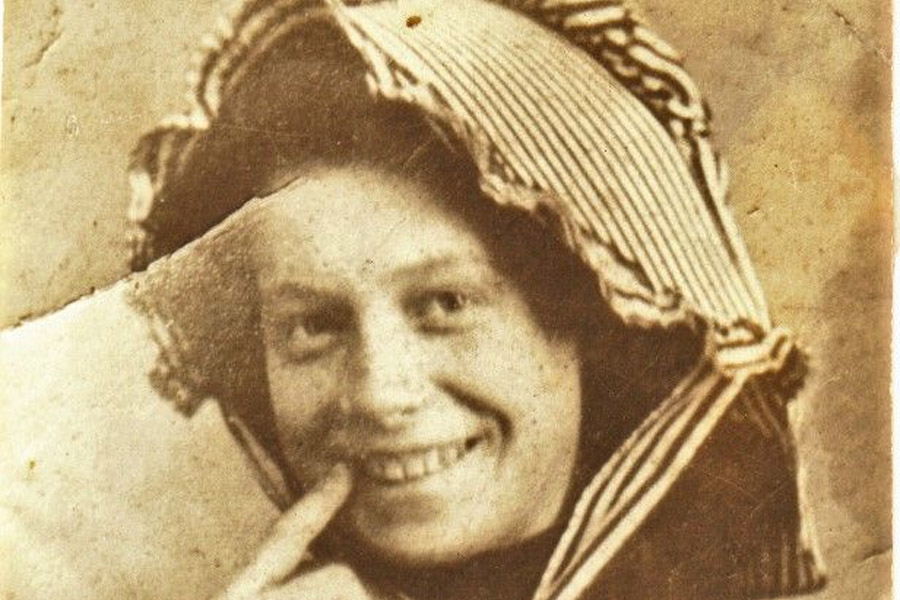
Quick Facts
| Field | Information |
|---|---|
| Full name (public record) | Gertrude Jackson McKenzie Trammell |
| Known as | Gertrude Trammell |
| Birth | May 8, 1905 |
| Death | January 28, 2000 |
| Age at death | 94 years |
| Burial | Woodlawn Memorial Park, Greenville, South Carolina |
| Primary residence | Greenville, South Carolina |
| Spouse | Raymond Trammell (predeceased) |
| Public role | Family memory-keeper; interviewed by local historians and preservationists |
| Notable family connection | Younger sister of Major League outfielder Joseph “Shoeless Joe” Jackson (b. July 16, 1887 — d. 1951) |
Family and kin: names, numbers, relationships
The Jackson household produced a cluster of siblings whose lives traced the arc of small-town mill-country America into the twentieth century. Gertrude occupied a particular, quiet place in that constellation: born nearly two decades after her famous older brother, she became the human hinge between a legendary baseball career and the local memories that kept it alive.
| Relationship | Name | Notes |
|---|---|---|
| Brother (famous) | Joseph Jefferson “Shoeless Joe” Jackson — b. July 16, 1887 | Major League outfielder; career and scandal shaped family legacy |
| Parents | George Jackson; Martha Jackson | Mill-town roots; parents of a large family |
| Sisters / brothers (selected) | Lula Mae Jackson (Ellis); David M. “Dave” Jackson; Lee Earl Jackson; Earnest (Ernest) Jackson; Jerry Jackson Sr.; Luther (Archie) Jackson; Gertrude | Family lists include multiple siblings; spellings and dates vary in records |
| Husband | Raymond Trammell | Listed as predeceased in obituaries and public notices |
Numbers here matter because they mark time and proximity. Gertrude was born in 1905 — 18 years after Joe — and lived through much of the twentieth century, witnessing 94 winters and summers, wars, economic turns, and the slow transformation of Greenville from mill-town to modern city.
A life described by relation and memory
Gertrude Trammell was not a figure who sought the headlines. She did not have a public résumé of offices held, businesses run, or awards collected. Instead, her recorded presence in the public record is relational: she is named by kin, encountered by researchers, and remembered in the small print of obituaries and museum histories. That positional biography — sister, daughter, widow, resident — is nonetheless capacious. It kept an entire family’s collective memory intact at moments when that memory might have faded.
She lived most of her life in Greenville, South Carolina, and into advanced age. By the 1990s she was described by acquaintances and visitors as elderly and living in care, a private person who nevertheless became a touchstone for those trying to translate oral family stories into public history. People came to her with questions about a life that had been cast into legend decades earlier: the baseball feats, the Milwaukee of small-town ballparks, the shadow of scandal. Gertrude’s role was simple and profound — she told what she remembered.
Two numbers suggest the contours of that role. First: her lifespan, 1905–2000, which placed her as a direct, living bridge to the generation that knew the early days of professional baseball. Second: the 1990s, when museum founders and local historians were collecting artifacts, moving a family house to create a museum, and seeking living witnesses. In that decade Gertrude was one of the surviving relatives who could authenticate memories, offer names, and consign certain anecdotes to oral history rather than rumor. Memory is fragile; a person who holds it is therefore important.
Timeline of public milestones and family intersections
| Year / Date | Event |
|---|---|
| July 16, 1887 | Joseph Jefferson “Shoeless Joe” Jackson is born. |
| May 8, 1905 | Gertrude Jackson (later Trammell) is born. |
| 1908 – 1920s | Joe Jackson’s professional baseball career rises to national prominence. |
| 1919 – 1921 | The Black Sox scandal unfolds (1919 World Series; bans enacted 1920–1921) with long-term effects on the family’s public narrative. |
| 1951 | Death of Joseph “Shoeless Joe” Jackson. |
| 1990s | Local preservationists and museum organizers engage surviving family members; Gertrude appears as a living source of family recollection. |
| January 28, 2000 | Gertrude Jackson McKenzie Trammell dies in Greenville at age 94. |
This timeline is not an exhaustive life history; rather, it shows the points at which public events and family life intersect. Gertrude’s own life is threaded through these dates as a quiet presence: born after her brother’s arrival into the world and outliving him by nearly half a century.
The texture of memory: what Gertrude represented
Think of family memory as an old reel of film: the images fade with time, frames curl at the edges, but a single careful hand can keep the reel from cracking. Gertrude’s hand was one of those careful hands. She did not write memoirs. She did not appear on national television series. And yet when the house that once sheltered a baseball star became a museum, when townspeople and visitors wanted not only artifacts but human context, Gertrude’s recollections supplied grain and tone.
Her presence also highlights a recurring pattern in American local history: those who are not nationally celebrated often become essential custodians of narrative. One person’s recollection can anchor a community’s understanding of a controversial life; one voice can distinguish event from embellishment. In this case, Gertrude functioned less as a public actor and more as a living archive.
Numbers and places that matter
- 94 — the number of years Gertrude lived, a long arc through the twentieth century.
- May 8, 1905 — birthdate, a fixed point in the family chronology.
- January 28, 2000 — the day her life record ends, at the threshold of a new century.
- Woodlawn Memorial Park — the resting place that marks a permanent geographic tie to Greenville.
Family names that persist
Names carry weight across generations. The Jackson siblings — Lula Mae, David, Lee Earl, Earnest, Jerry, Luther, and Gertrude — form a roster that recurs in cemetery inscriptions, local rolls, and oral recollections. They function as shorthand for a wider social history: mill-town families, segmented work lives, domestic continuity, and the slow institutionalization of memory into museums and plaques.
Memory without spectacle
Not every public life needs theatrics. Some lives matter because they hold other lives together. Gertrude Trammell’s public trace is modest: a name on a cemetery register, an obituary line, memories recited to curious visitors. Yet modesty is not absence. It is steadiness. In a region that turned a complicated athletic career into civic heritage, she was one of the people who made that translation possible — a keeper of small facts, a living ledger of familial detail, a human archive whose testimony softened the harder edges of legend into lived human time.