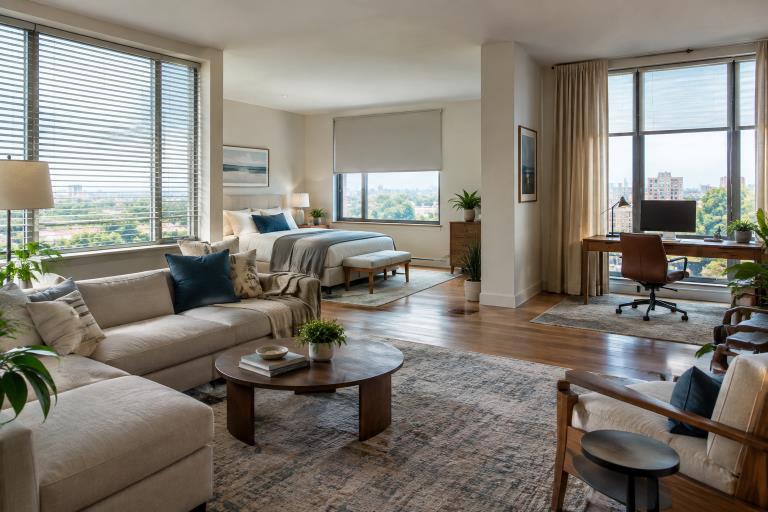
Key Takeaways
- Choose window treatments based on each room’s specific needs.
- Consider light, privacy, glare, comfort, and maintenance before style.
- Match materials and opacity to the room’s function.
- Use moisture-resistant options in kitchens and bathrooms.
- Consider cordless or motorized treatments for safety and convenience.
- Measure windows carefully and account for handles, trim, and furniture.
- Use layered treatments when both daylight and nighttime privacy matter.
- Window coverings can improve comfort but may not fix major window or sealing problems.
- Compare mounting options, operation, materials, and total cost before buying.
Window treatments do more than finish a room. They influence daylight, privacy, glare, temperature comfort, cleaning routines, and how easily a window can be used every day. A thoughtful plan starts with the needs of each space rather than choosing a single look for the entire house. Whether you are comparing blinds, shades, shutters, or drapery, begin by defining the problem each treatment should solve. Working with a local window-covering specialist, such as Windo VanGo, can also help homeowners evaluate materials, mounting options, and operation before making a final selection.
Start with Windows
Before shopping, study the window itself. Its direction, size, shape, height, and relationship to neighboring homes all affect the best choice. Watch the room at different times of day, especially when sunlight is strongest. Note glare on screens, fading near the glass, afternoon heat, drafts, street-facing views, and windows that are difficult to reach. Create a short window brief for each opening: when light is a problem, when privacy matters most, whether the room gets damp, and how often the treatment will be adjusted. Style matters, but it is easier to choose colors and fabrics after the functional priorities are clear.
Match the Treatment to the Room
Living Rooms and Dining Areas
These shared spaces often benefit from light-filtering shades, sheers, or adjustable blinds that soften direct sun without making the room feel closed off. If the view is important, consider a treatment that raises fully or allows slats or vanes to be adjusted. Layering a shade with drapery offers flexibility for changing light and evening privacy.
Bedrooms
Bedrooms usually need stronger nighttime privacy and greater control over early-morning light. Room-darkening shades reduce much of the light, while blackout designs offer greater darkness when coverage and mounting are planned carefully. Drapery with a lining can add a softer appearance and provide an extra layer near cold glass.
Home Offices
Office windows should minimize monitor glare while still allowing enough daylight for a comfortable workspace. Solar shades and adjustable blinds can be useful where direct sun hits a desk. Position screens perpendicular to windows when possible, then use the covering to fine-tune glare instead of blocking all natural light.
Kitchens and Bathrooms
Moisture resistance and easy cleaning are priorities in kitchens and bathrooms. Choose materials that can withstand steam, splashes, and cooking residue, and avoid placing delicate fabrics directly in frequent moisture. Ground-floor bathrooms also need dependable privacy, even when the room is bright during the day.
Compare Light-Control Levels
Light-control labels are useful, but the final result depends on fabric, fit, and gaps around the treatment.
- Sheer: Softens sunlight while maintaining a bright, open feeling.
- Light-filtering: Reduces glare while allowing usable daylight to enter.
- Room-darkening: Blocks much of the incoming light for bedrooms or media spaces.
- Blackout: Provides the strongest darkness when the treatment covers the opening effectively.
An inside-mounted shade can leave small light gaps at the sides, while an outside mount can provide broader coverage. Neither approach is automatically better. The right choice depends on the trim, window depth, privacy needs, and the desired level of darkness.
Protect Privacy Without Losing Daylight
Privacy changes from day to night. A treatment that obscures views into a room during daylight may not provide the same level of privacy once the interior lights are switched on. For street-facing rooms, layered coverings provide practical flexibility: use a light-filtering layer during the day and a more opaque layer at night. Top-down and bottom-up shades can be particularly helpful where eye-level privacy is a concern. For example, a front living room can cover the lower part of a window to screen pedestrians while leaving the upper section open for daylight. Consider sightlines from sidewalks, driveways, and nearby windows before choosing opacity.
Improve Year-Round Comfort
Window coverings can reduce glare and help manage direct solar heat, but they are not a replacement for repairing damaged windows, failed seals, or major air leaks. Cellular shades, lined drapery, shutters, and solar shades are all worth comparing based on the room’s exposure, climate, glazing, and daily use. For a broader view of how glazing, frames, and window orientation affect performance, review energy-efficient window guidance before assuming a new covering alone will solve a comfort problem. West-facing windows, for instance, may need more afternoon glare control than windows elsewhere in the home.
Choose Safer Operating Options
In homes where young children or pets live or visit, cordless options deserve careful consideration. The window-covering cord safety guidance from the U.S. Consumer Product Safety Commission explains the hazards associated with accessible cords and loops. Keep beds, cribs, and furniture away from operating cords. Motorized controls can be especially useful for tall, wide, or hard-to-reach windows. Before choosing them, ask practical questions about battery replacement or charging, wall controls, remotes, manual overrides, and compatibility with any existing smart-home system.
Measure and Install With Care
- Decide whether an inside or outside mount fits the window and desired coverage.
- Measure width at the top, center, and bottom.
- Measure height at the left, center, and right.
- Follow the product instructions for which measurement to use.
- Check handles, locks, trim, vents, and nearby furniture.
- Confirm the treatment can open fully without interfering with the window.
Accurate measuring affects appearance, operation, privacy, and light control. Measure more than once, record dimensions clearly, and avoid rounding until the product instructions tell you to.
Avoid Common Buying Mistakes
- Choosing a look before identifying the room’s main problem.
- Using the same opacity level in every room.
- Overlooking afternoon glare on west-facing windows.
- Using moisture-sensitive materials in damp spaces.
- Measuring only once or ignoring obstructions.
- Expecting blackout performance without planning for light gaps.
- Assuming coverings can fix severe drafts or failed window seals.
- Buying motorized products without considering power and controls.
Use a Simple Final Checklist
- What is the main problem this treatment must solve?
- How much daylight should the room keep?
- When is privacy most important?
- Does the window create glare or unwanted heat?
- Does the room need moisture-resistant materials?
- Are cords accessible to children or pets?
- Would cordless or motorized operation simplify daily use?
- Has the window been measured more than once?
- Does the selection support both function and the room’s style?
Conclusion
The best window treatment is not necessarily the most expensive or most fashionable option. It is the one that fits the window, suits the room, and addresses an everyday need. A room-by-room plan makes it easier to balance light, privacy, comfort, safety, maintenance, and personal style with confidence. Homeowners should also consider how each space is used throughout the day, including whether a room needs complete darkness for sleeping, filtered light for working, or added privacy in the evening. Window size, orientation, existing furniture, cleaning needs, and the amount of direct sunlight can also influence the most practical choice. By considering these details before selecting curtains, shades, blinds, or other treatments, homeowners can create a more comfortable and functional space while maintaining a consistent look throughout the home.