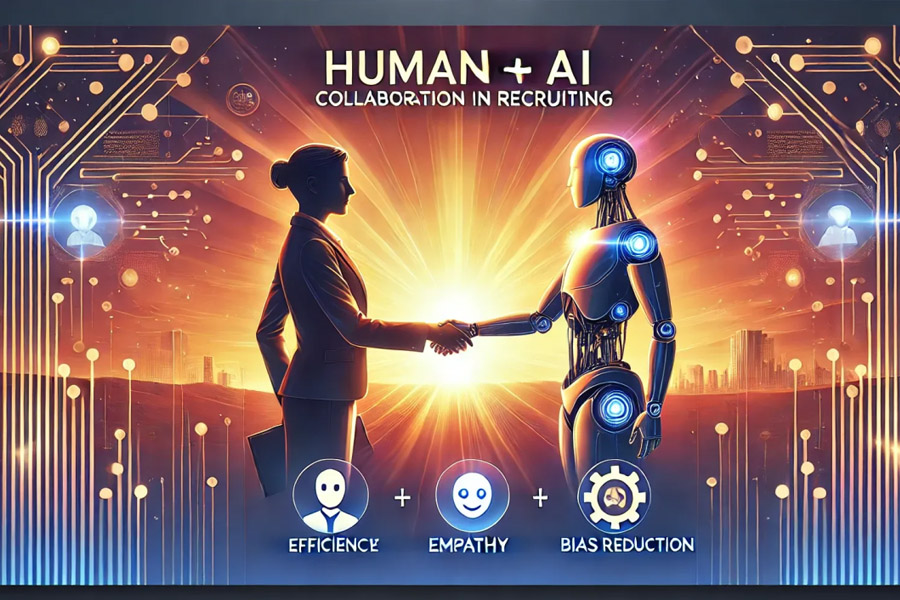
From Intake Meeting to Offer, A Modern Hiring Flow
Best hiring teams today handle recruiting like a production. Work begins before posting. Structured intakes define objectives, deliverables, and success signals, not merely experience. A recruiter and hiring manager assess a language model-drafted position profile for clarity and inclusiveness. Programmatic commercials target talent where they are. Fast, mobile-friendly careers sites grab attention in minutes.
A truth-telling applicant tracking system accepts applicants. Early skill screens look for must-have skills, not resume brands. Scheduling automation gives candidates calendar slots instantaneously, and assessments adjust to the role. Structured scorecards and calibrated rubrics coordinate panel evaluations during interviews. Real-time insights reach the recruiting manager. For consistency, offer creation uses compensation bands and equality principles. References, background checks, and onboarding start automatically. The candidate feels led, not juggled. The team sees the pipeline in one pane.
The New Tech Stack for Talent
A modern stack has a few essential layers that work in concert.
- System of record, the applicant tracking system hosts requisitions, workflows, compliance artifacts, and reporting.
- Talent relationship management houses warm leads, silver medalists, and alumni, with drip campaigns that keep relationships alive.
- Sourcing and advertising use programmatic tools, referrals, and marketplace connectors to expand reach with precision.
- Assessment includes work samples, technical evaluations, simulations, and job relevant games that measure skill in context.
- Video and virtual interviewing enable structured conversations with recording and secure sharing when policy allows.
- Scheduling connects to calendars and time zones, cuts back and forth emails, and respects interviewer load.
- Background and credentials integrate via standard APIs, with clear candidate consent and visibility.
- Offer and onboarding finalize the experience, with digital signatures, policy acknowledgments, and day one preparation.
- Talent intelligence and skills graphs synthesize internal and external data to map capabilities, career paths, and adjacent roles.
Key word: interoperability. Single sign on, open APIs, and webhooks eliminate swivel chair work. A schema links applicant profiles to apply, screen, interview, offer, and hiring events. When the stack is cohesive, recruiters focus on people, not spreadsheets.
Skills, Not Titles, The Rise of the Skills Graph
Resumes are rough maps. Skills graphs compasses. By providing a consistent language for capabilities, proficiency, and proof, firms may assess current skills and future learning speed. Sales may require discovery, negotiation, forecasting, and tooling. Engineering may evaluate problem decomposition, code quality, debugging speed, and security. These competencies can be translated to tests, interviews, employment outcomes, and training inventories.
Skills graphs provide internal mobility. Clear avenues to new positions that appreciate neighboring talents are seen by employees. Managers find hidden matches within the organization before lengthy external searches. Learning teams upskill where it counts. The ecosystem improves as hiring and development reinforce each other.
Measuring What Matters
Time to fill still matters, but it is only one note in the score. Leading teams track:
- Time to slate, the number of days to produce a qualified diverse shortlist.
- Submittal to interview ratio, signal quality of screening.
- Interview to offer ratio, alignment between criteria and reality.
- Offer acceptance rate, strength of employer value proposition and process.
- Quality of hire, reflected in early productivity, probation outcomes, and manager satisfaction at 90 and 180 days.
- Pipeline diversity rates by stage, to see where representation drops.
- Candidate experience scores, often a simple candidate net promoter score after key stages.
- Recruiter capacity and automation coverage, the share of repetitive actions handled by tools.
- Hiring manager satisfaction and adherence to service levels, such as feedback within two business days.
Metrics are mirrors. They show where the process shines and where it fogs. Review them in a weekly cadence with cross functional stakeholders. Adjust inputs, not just targets.
Guardrails That Keep Tech Fair and Compliant
Powerful tools need robust guards. Before launch and periodically, algorithmic systems should be fairness checked. Where legal, track selection rate parity and demographic score distributions. Document what a model includes, excludes, and was trained. Allow candidates to request human review. Give recruiters the reasoning behind a recommendation.
On privacy, collect only what you need, preserve it as long as policy allows, and disclose use. Using role-based access, audit trails, and encryption. Avoid sending sensitive data to external language model training sets. Create a prompt library with bias-free patterns and identifying details removed. Infrastructure is silent under good governance. Trust increases with it.
Scaling Without Losing the Human Touch
Tech should be like stage lights, enhancing the act without taking over. Recruiters develop relationships. They help candidates understand process, expectations, and culture beyond a careers site. They advise interviewers to utilize organized rubrics and allow follow-ups. They resist requirements and keep the search results-focused.
A personalized message trumps bulk blasts. References to open source projects or product case studies show respect for a candidate’s work. Short hiring manager videos develop connection. Early feedback, even a polite no with explanation, protects dignity. Human empathy makes a good process memorable.
What Changes by Company Size
Context shapes stacks. Integration of ATS, CRM, scheduling, and simple assessments in one contract benefits small teams. Keep implementation lean and adoption high to win. Mid-market companies add customized sourcing, evaluations, and onboarding to a basic ATS with little interaction. They succeed by choosing products that relieve high-volume pain points like scheduling or coding exams.
Complex workflows, global compliance, and diverse business divisions are managed by enterprises. Regional data controls, scalable APIs, and granular permissions are needed. They benefit by standardizing data, centralizing vendor governance, and giving local teams flexible workflows. The unlock is change management at all sizes. Playbooks, training, and feedback loops make software work.
Return on Investment in Plain Terms
Reduced risk, faster revenue coverage, and saved hours are the results. Each requisition can save 5–10 hours of human scheduling, follow-ups, and progress updates with automation. Faster slate time reduces manager downtime, which results in sales or engineering cash. Better screening and organized interviews decrease early attrition and bad hire costs. Positive applicant experiences increase offer acceptance and employer brand, reducing future advertising expense. Clear audit trails and consistent practices reduce compliance risk. Budget discussions shift when finance sees these gains on one dashboard.
Common Failure Modes
Overlapping features mislead users due to vendor sprawl. Integration debt silos data. Automation erodes empathy and complexity. Bad prompts feed language models rubbish, which polishes junk. Ticket-taking replaces partnership with hiring managers as customers. Teams chase vanity metrics as hiring quality stagnates. Each pitfall can be fixed with clarity of goal, a consistent design, and a culture that values speed and substance.
FAQ
How do large language models fit into recruitment without hallucinations?
Language models should aid drafting, not decide. Competencies and leveling guides should inform job descriptions, outreach templates, and interview questions. Keep prompts taxonomy-based and delete sensitive information. Must be reviewed by humans before applicants. Test utility with A or B response rates and clarity. Do not ship a model that cannot mention structured input behind a sentence.
What is the difference between an ATS and a talent CRM?
An application tracking system hires for open positions. Requisitions, candidate stages, and compliance data are stored. Talent CRMs maintain relationships with silver medalists, recommendations, and community members. Campaigns, talent pools, and long-term engagement are supported. They link yet have different transaction and interpersonal rhythms.
How can small teams start with recruitment tech on a tight budget?
Choose a platform that handles careers page, posting, filtering, messaging, and scheduling. Choose work samples that hiring managers can swiftly analyze and use built-in assessments sparingly. Set a straightforward interview rubric and two-stage approach for most roles. Use clear rewards for employee referrals. Clean the data model from the start with uniform fields and tags to scale without rework.
How do we reduce bias when using AI screening?
Set objective, job-related criteria first, then configure tools. If school names are not necessary, remove them from protected attributes. Look for stage-specific pass rate gaps and investigate why. Let applicants self-report accommodations and provide alternate assessments. Inform a human of final conclusions.
What metrics best indicate quality of hire?
Compare early production to ramp goals, manager satisfaction at checkpoints, and first-year retention. Add peer feedback for collaborative positions and customer outcomes for client-facing roles. Track these data by source, recruiter, and assessment path to determine which inputs lead to good results. A number doesn’t define quality.
How do candidate chatbots avoid feeling robotic?
Keep bots to low-risk jobs like answering process questions, sharing timelines, and confirming interview logistics. Write in brand-appropriate human tone. When the bot can’t help in a few turns, pass off to a person. Log conversations for recruiters to clarify. The bot should be a helpful concierge, not a gatekeeper.
Where does internal mobility fit in this stack?
Internal mobility tops your skills graph and performance statistics. Employees see positions and stretch projects that match their skills. Managers view talent and development strategies. Recruiters work with internal candidates early, define process expectations, and compare them to external applications. A robust internal marketplace minimizes fill time and boosts engagement, compounding value.