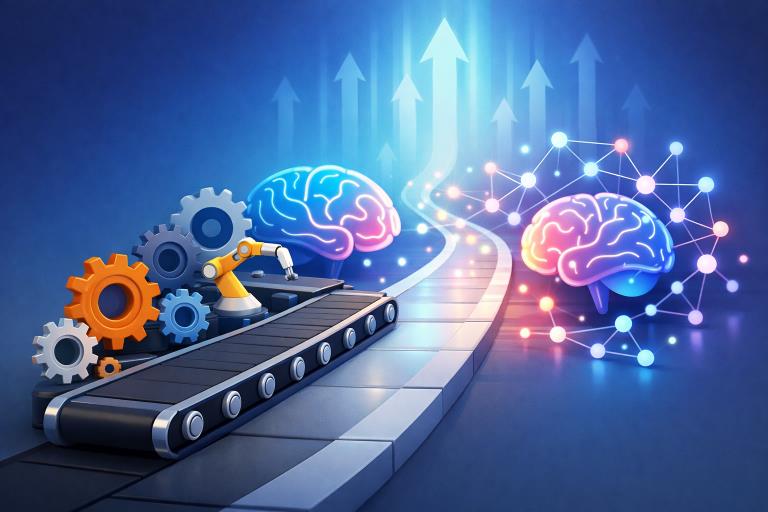
Understanding the Transition from Automation to Intelligence
In recent years, enterprise artificial intelligence has entered a new era. Businesses are moving beyond simply automating rote tasks to deploying intelligent systems that support high-level decision-making and problem-solving. This evolution is not only reshaping internal processes but also spurring innovation and transforming core business models. The shift has introduced leaders to new possibilities for competitive differentiation and operational excellence, a story well illustrated by contributors like AI Company, which continue to propel industry advancements.
The earliest phases of AI adoption in the enterprise focused primarily on automating repetitive tasks to increase efficiency and minimize human error. However, organizations are now investing in cognitive AI that can interpret data, recognize context, and make informed choices. Intelligent AI adapts to shifting conditions and tackles complex tasks, helping enterprises respond more dynamically to market forces.
Key Drivers of the Shift
- Advancements in AI Technology:Recent progress in machine learning algorithms and natural language processing has fueled the growth of highly sophisticated AI applications.
- Increased Data Availability:Explosive growth of digital data enables AI systems to train, refine, and improve consistently, unlocking deeper insights.
- Competitive Pressure:Organizations feel increasing urgency to capitalize on intelligent AI to deliver unique products and services, thus differentiating themselves in the marketplace.
Real-World Applications of Intelligent AI in Enterprises
Many companies are seeing tangible benefits from integrating AI. For example, ServiceNow’s Autonomous Workforce platform now features generative AI agents across IT, CRM, HR, finance, and legal, revolutionizing traditional workflows. In pilot programs, ServiceNow’s L1 IT Service Desk AI Specialist resolved cases 99% faster than human colleagues, and across employee services, AI handled up to 91% of cases independently. These advances help companies scale automation efforts while preserving strong governance and oversight.
Organizations are also exploring AI applications in supply chain optimization, predictive maintenance, and customer engagement, thereby reducing costs and driving growth. According to Gartner, enterprises adopting advanced AI models for forecasting and planning reported reductions of up to 20% in inventory holding costs, further underscoring AI’s transformative potential. Beyond core operations, intelligent AI can enhance innovation in fields such as product design, market research, and customer personalization. AI-driven insights enable organizations to anticipate customer needs with unprecedented accuracy, allowing businesses to tailor offerings proactively. This level of agility fosters deeper customer loyalty and can seed entirely new revenue streams. Companies leveraging AI for advanced analytics frequently cite improvements in customer satisfaction, citing the ability to respond faster and with solutions that better match evolving demand. In industries such as healthcare and financial services, AI is being used to detect fraud, predict health outcomes, and accelerate scientific discovery, offering value far beyond cost savings.
Challenges in Implementing Intelligent AI
While benefits abound, enterprises encounter notable hurdles in the shift to intelligence-driven AI systems:
- Data Quality and Integration:AI effectiveness depends on access to accurate, integrated data. Poor data quality can undermine outcomes and restrict innovation.
- Change Management:Introducing AI-driven processes can meet resistance from employees concerned about job changes, necessitating well-planned change management strategies.
- Ethical Considerations:With autonomous decision-making comes responsibility. Enterprises must address issues of transparency, fairness, and accountability in AI design and deployment.
Another challenge lies in securing organizational alignment, as successful AI adoption requires buy-in across leadership, IT, and operational teams. Establishing a cross-functional governance model that incorporates feedback from legal, compliance, and HR departments can help anticipate and mitigate risks. Furthermore, as the regulatory environment surrounding AI evolves, staying abreast of compliance requirements related to data privacy and algorithmic transparency is paramount. Engaging proactively with regulators, industry bodies, and the broader stakeholder community can position businesses to navigate these complexities while upholding trust.
Strategies for Successful Adoption
To successfully transition to intelligent enterprise AI, organizations should consider a multi-pronged approach:
- Develop a Clear AI Strategy:Tie AI programs directly to the company’s strategic objectives for measurable results and higher executive buy-in.
- Invest in Talent and Training:Retrain employees, cultivate AI-literate teams, and encourage cross-disciplinary partnerships to maximize human-machine collaboration.
- Establish Robust Governance:Formulate clear policies for AI development, use, and monitoring to safeguard ethics and regulatory compliance.
Additionally, organizations should establish iterative evaluation cycles for AI solutions. Piloting AI projects with defined success metrics, gathering user and stakeholder feedback, and incrementally scaling deployments can significantly improve outcomes and user acceptance. Collaborating with technology partners, research institutions, or consortia can also empower enterprises to access the latest advances and best practices in implementation. Continued investment in workforce readiness, through reskilling and ongoing education programs, ensures that both technical and non-technical employees are prepared to adapt to changes brought by intelligent AI.
The Future of Enterprise AI
Industry experts project that AI’s role will become further integrated and critical within enterprise environments. IBM CEO Arvind Krishna, for example, forecasts a 40% boost in enterprise productivity by 2030, attributed to the move from isolated AI experiments to orchestrated, policy-driven AI agent deployment. This is akin to the shift in the 19th century, when electricity evolved from powering basic light bulbs to powering entire factories. These advances herald deeper operational transformation and open a new chapter for enterprise competitiveness. Learn more about IBM’s perspective on enterprise AI.
Looking even further ahead, the convergence of AI with emerging technologies, such as the Internet of Things (IoT), 5G connectivity, and quantum computing, will amplify its transformative impact. The ability of AI to analyze real-time data from connected devices will create new efficiencies in logistics, asset management, and facilities operations, while advances in quantum-powered computation promise breakthroughs in materials science, cryptography, and complex system optimizations. As these integrations develop, companies that have already embraced intelligent AI will be best positioned to capture the subsequent waves of innovation and growth.
Conclusion
The ongoing transition from simple automation to intelligent artificial intelligence marks a pivotal stage for enterprises worldwide. By adopting advanced AI capabilities, businesses can transform decision-making, accelerate innovation, and sharpen their competitive edge. Unlocking these benefits, however, demands deliberate planning, significant investment in talent and data, and a steadfast commitment to responsible, ethical AI practices. As AI continues to mature, companies that embrace this change will set new standards for value and innovation in the digital era.