Key Takeaways
- Regular engagement with puzzles and brain games can enhance cognitive functions such as memory, focus, and problem-solving.
- Incorporating a variety of games, both digital and physical, can provide comprehensive mental stimulation.
- Combining brain games with physical activities and social interactions offers additional cognitive benefits.
Maintaining cognitive health is essential at any age. Whether you are looking to sharpen your mind or add some enjoyable structure to your daily life, engaging with puzzles and brain games is a fun and effective way to do so. Classic activities like coloring books, crosswords, and logic challenges are just some of the accessible ways to keep your mind active and resilient.
Puzzles can be seamlessly integrated into routines, both at home and on the go. Not only do they offer structured mental engagement, but they also present a break from screens and daily stressors. Creativity, focus, and social connection can all be enhanced through games and puzzle-based activities, fostering a robust environment for ongoing cognitive growth.
Diverse Puzzle Selection
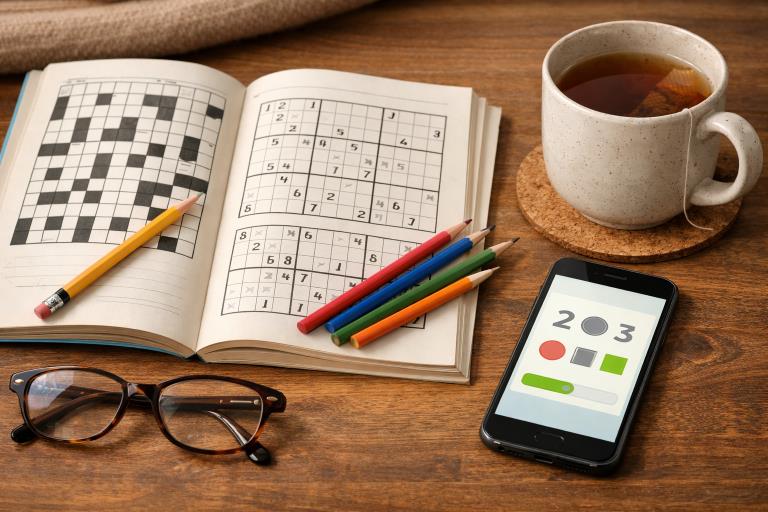
Integrating various types of puzzles into your life is a key first step in boosting cognitive capabilities. Classic puzzles like word searches, Sudoku, and crosswords test different regions of the brain, improving vocabulary, pattern recognition, and numerical agility. For those looking for new experiences, activities like geocaching or in-person escape rooms add a layer of movement, adventure, and social interaction that standard puzzles may lack. According to Harvard Health, combining creativity with movement is highly effective for supporting lifelong mental acuity.
Digital Brain Training Apps
Today’s technology offers a wealth of brain-training applications that can be accessed from your phone or tablet. Apps such as Wordle and Spelling Bee challenge language, reasoning, and memory through short, daily games that are easy to fit into any schedule. Research cited by Healthline shows how these games can sharpen your focus and attention, and may even help slow cognitive decline associated with aging.
Physical Activity Integration
Pairing physical activity with mental exercises maximizes brain benefits. Activities like orienteering or dance classes require navigation, quick decision-making, and memory, which keep both the body and mind active. Combining movement and brain games strengthens executive function and can reduce stress more effectively than sedentary puzzles alone. Studies from Mayo Clinic support the link between exercise and improved cognitive health in adults of all ages. Learn more on the Mayo Clinic site.
Social Engagement Through Games
Social connection is critical for mental health and brain function. Interactive games like chess, bridge, or even group tabletop games not only refine logic and strategy but also strengthen community. Virtual platforms now let people connect and play with others regardless of distance, extending the benefits of these activities. Social gaming prompts discussion, collaboration, and laughter, all of which are associated with better brain outcomes and a reduced risk of cognitive decline over time.
Creative Puzzle Design
Designing your own puzzles or modifying well-known games can be deeply rewarding. Create your own crosswords, invent new word games, or develop rule variations to old family favorites. Not only does this process stimulate creativity, but it also encourages innovative thinking and the ability to approach challenges from different angles. This hands-on engagement leads to continual cognitive growth and sustains interest in problem-solving.
Mindfulness and Relaxation
Puzzles can be more than just challenges; they can also be part of a broader mindfulness strategy. Settling in with a puzzle while practicing deep breathing or meditation techniques enhances your focus and reduces daily anxiety. Many people find that mindful puzzle-solving becomes a peaceful daily ritual that supports rest and mental clarity. Practicing mindfulness has been shown to improve cognitive flexibility and help manage stress-related cognitive problems, as the American Psychological Association discusses in depth.
Consistent Challenge and Progress
The value of brain games lies not only in initial engagement but also in gradually increasing difficulty to promote continued adaptation. Moving from basic puzzles to more complex challenges helps you avoid mental plateaus and builds cognitive resilience. Set personal goals, track progress, and seek out new types of puzzles to keep your brain continually learning and adapting.
Balancing Screen Time
While digital puzzles and games are convenient, finding balance with offline activities is crucial. Alternating between physical puzzle books, reading, hands-on crafting, or outdoor games minimizes eye strain and encourages greater variety in mental stimulation. This holistic approach to cognitive health keeps daily routines interesting and sustainable.
Introducing a blend of digital, physical, and social puzzles into your routine leads to well-rounded cognitive development. Whether you enjoy classic puzzle books, group games, or innovative apps, every bit of mental challenge contributes to your long-term brain health and overall well-being.