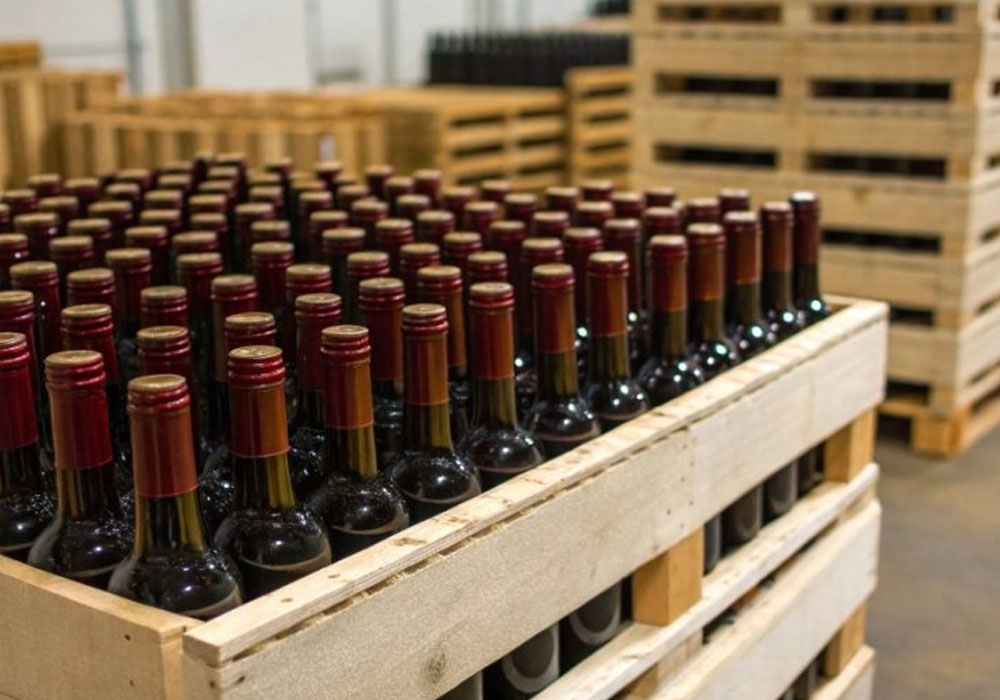
Choosing a bottle supplier is not simply using the company that offers you the best price per unit. The right bottle supplier will provide security to your production line and actually help drive down your total costs of production. The wrong supplier will ultimately cost you a fortune.
Here are five important questions that you must ask any prospective bottle supplier.
1. What are your MOQs, and how does tiered pricing work?
Do their MOQs accommodate your forecasted demand well – i.e., if you reorder every two months, does it line up so you’re getting fresh production every couple of months? Or would you have to reset the clock and be stuck with six months of inventory at the end of the year?
If you’re comfortable with some risk and have room to store extra inventory, a higher MOQ and lower per-unit price strategy could work for you. If you’re thinking about sustainability and cash flow and don’t want money tied up in product that sits in boxes, it won’t.
2. What are your lead times, and where is your inventory actually located?
Lead time discussions tend to be optimistic until something in the overall process is disturbed – then they immediately become accurate.
So be very sure you have their real lead times, not the rosy version. Ask them what happened with lead times over the last two years. This can give your lead time insights a helpful boost. If you use west coast manufacturing, a west coast warehouse, and a west coast supplier, you’re at a pretty serious potential risk you’ve got all your eggs in one geographic basket.
If they’re a US supplier, find out where their manufacturing facilities are. If they’re a global supplier, ask where their last staging point was for all shipped goods. If they send everything from the other side of the ocean, that’s a pretty significant risk. If those ocean lanes are impacted, you’re potentially out of product.
For beverage brands affected by the harvest or with seasonal launches, lead times can make or break a year. You don’t get to tell the grapes to hang on because your bottles are stuck in customs. Lead times matter most when you’re sourcing wholesale wine bottles. The cost-per-unit advantage of ordering in bulk can be overwhelmed by warehousing and delivery costs if your supplier doesn’t carry safety stock or if you’re unable to receive large shipments at your facility.
3. What do your quality control protocols actually look like?
Any supplier can claim that they perform quality control checks, but in reality, what does that actually entail?
In the case of glass bottles, even the smallest variation in dimensional tolerances can lead to product defects. For example, a neck finish that doesn’t quite meet the specifications can result in seal failures, issues with cork insertion, or even downtime for your bottling equipment. These tolerances may seem inconsequential in isolation, but can quickly compound when multiplied by the thousands of bottles you use each day.
When defects are so costly, you don’t want a supplier who isn’t catching them at the source. That’s why it’s important to ask potential suppliers for their specific defect tolerance rates. Reputable suppliers should also be able to tell you what they do with a production run that yields defects above those limits. Do they expect you to eat the loss, or will they replace or credit the affected stock?
It might also be useful to know whether they perform in-line quality control checks or rely solely on end-of-batch sampling.
4. Can you confirm closure compatibility for our specific format?
Here’s a question nobody ever seemed to bother asking, but doing so could save you a world of troubles and expenses.
Are the neck finish specifications of your bottle, determined by the diameter, thread profile, and sealing surface of the bottle opening, a perfect match to your closure? If they’re not, a little oxygen sneaks in past your cork each year. Torque specs are off on your screwcap, and you have a transport load loss with leakers. If you’re hot fill or pasteurized, you may as well dump out half your product right out of the bottling line.
The only way to know is to get the full technical sheet before you order samples. And you need to confirm the standards your closure source and your bottle suppliers are using actually match. If this is a new product or something new for you, don’t scale up to volume until you know for sure.
5. What are your sustainability metrics, specifically around recycled glass content?
This question isn’t just about the environment, it’s about how on top of their own costs your supplier is.
What % of post-consumer recycled glass (cullet) goes into their manufacturing? Every 10% increase in cullet usage reduces those costs by somewhere in the neighborhood of 2-3% and likewise lowers related CO2 emissions by roughly 5%. Suppliers who measure those things and look for additional ways to bring down costs along their entire production process are likely to be top-notch suppliers in other areas too.
Lightweighting is another one to ask about – reduced weight bottle options. The lighter the glass, the lower the freight costs on every single shipment, and those savings are huge when you start to look at it over the course of a full year.
Getting to the real answer
Many conversations with suppliers are kept at a superficial level. Price per unit, lead time in weeks, minimum order requirements, and a contract is eventually signed. The questions above go deeper into the operational details that determine whether the relationship will be successful.
Ask them these questions at least once. Observe how the supplier responds to them. A good supplier is likely to be prepared and know exactly why you are asking.