Small towns thrive when essential services work reliably every day. Safe streets, dependable water, effective drainage, accessible public spaces, and resilient emergency systems are not separate concerns. They are the foundation of community health, local business activity, and long-term confidence. Working with experienced technical partners, including an Idaho civil engineering firm, can help communities turn local priorities into practical plans that fit their budgets and character.
Community-centered infrastructure planning starts with a simple principle: residents understand how a place functions in ways that maps, budgets, and condition reports cannot always show. The strongest plans combine that firsthand knowledge with clear data, thoughtful project ranking, and a commitment to maintain what has already been built.
Why Local Input Matters in Infrastructure Planning
Residents often identify problems before they appear in an official report. A road may meet a basic condition standard, yet parents may know that poor lighting makes a crossing unsafe before school. Neighbors may recognize recurring drainage problems, changes in water pressure, blocked sidewalks, or emergency access challenges that are not obvious during a brief site inspection.
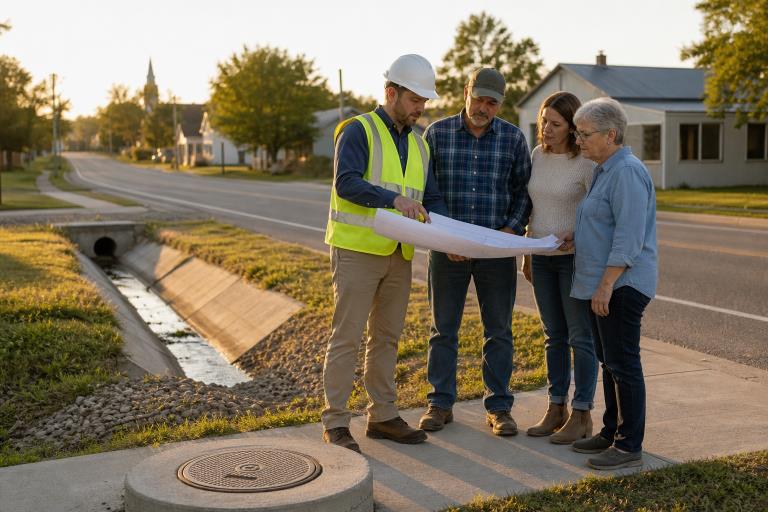
Useful engagement should go beyond a single public meeting. Communities can collect feedback through short surveys, online forms, town halls, workshops, site walks, and conversations with utility workers, school staff, first responders, and local business owners. The important step is closing the loop. Explain what was heard, what decision followed, and why some requests may need to wait.
Start With Daily Needs, Not Just Big Projects
Highly visible projects can create excitement, but less visible maintenance often protects more people. Replacing an aging water line, repairing a culvert, improving a curb ramp, or adding backup power at a critical facility may prevent expensive failures and improve daily life immediately.
Common Small-Town Priorities
- Safe walking routes, crossings, sidewalks, and lighting
- Reliable drinking water and water distribution systems
- Stormwater controls that reduce flooding and erosion
- Efficient wastewater collection and treatment
- Road, bridge, and pavement repairs
- Accessible public buildings and parks
- Emergency power, communications, and response access
Routine asset management helps leaders see these needs before an emergency forces their hand. The U.S. Environmental Protection Agency’s overview of asset management describes a useful approach for tracking infrastructure condition, service expectations, life-cycle costs, and long-term funding needs.
Use Data and Resident Stories Together
Good decisions need both evidence and context. Condition assessments, crash records, service calls, flood maps, water-loss data, population changes, and maintenance history can reveal patterns. Resident experience adds the details that numbers may miss, especially for older adults, children, people with disabilities, and households without reliable vehicles.
For example, residents may report that children walk in the street along a missing sidewalk near a school. The town can then confirm the concern with pedestrian counts, vehicle speed observations, and school arrival data. This creates a stronger case than either public comments or technical data alone.
Rank Projects by Value and Risk
A simple scoring method can help elected officials and staff compare very different proposals fairly. Each project can be reviewed using the same questions:
- Public safety:Does it reduce a clear hazard?
- Service reliability:Will it prevent outages, failures, or emergency repairs?
- Daily reach:How many people benefit directly or indirectly?
- Long-term cost:Does it reduce future maintenance or operating expenses?
- Equity:Does it improve access for people facing greater barriers?
- Readiness:Are the site, permits, design, and funding reasonably prepared?
The most expensive project is not automatically the best investment. A modest drainage repair may better protect homes, streets, and businesses than a larger project with limited daily benefit.
Build Systems That Can Handle Future Strain
Heat, drought, intense rainfall, wildfire, aging equipment, and population changes can strain local services. Resilience works best when it is built into early planning, rather than added only after a damaging event. Practical measures include larger drainage capacity where appropriate, water conservation, shade trees, flexible street designs, backup generators, routine inspections, and preventive maintenance.
Local hazard planning can also connect infrastructure choices to the risks a community faces most often. FEMA explains that mitigation planning helps local governments identify long-term, cost-effective risk-reduction actions with public and stakeholder input. FEMA’s mitigation planning guidance can help communities understand this process.
Manage Limited Budgets With Clear Priorities
Small communities must balance urgent repairs with capital projects that may take years to design and fund. A five-year project list provides a practical starting point. For every item, document the estimated cost, risk of delay, likely funding source, expected operating cost, and target construction date.
Bundling work can stretch limited funds. If a road is already scheduled for reconstruction, it may be the right time to replace aging water or sewer lines beneath it. Communities should also explore grants, state and federal programs, utility fees, bonds, shared-service agreements, and regional purchasing opportunities. Before approval, leaders should consider not only construction cost but also staffing, energy, maintenance, and eventual replacement.
Make Project Communication Simple and Regular
Clear communication builds trust, particularly when construction causes short-term inconvenience. Residents should receive plain-language updates before, during, and after work begins. Share the project purpose, cost range, schedule, anticipated traffic or service disruptions, changes made after feedback, and a direct contact for questions.
Project maps, brief videos, email notices, social media updates, printed flyers, and public dashboards can all help. The goal is not to overwhelm people with technical language. It is to make the process understandable and predictable.
Measure Results After Construction
A project is not complete simply because the contractor has left the site. Review whether it produced the promised benefit. Track outages, repair calls, maintenance costs, traffic speeds, pedestrian activity, drainage performance, or accessibility improvements, depending on the project. Ask residents whether safety, access, or reliability has changed, then document lessons for the next investment.
A Practical Planning Checklist for 2026
- What problem does the project solve?
- Who experiences that problem most often?
- What data and local observations support the need?
- Were residents given a useful way to respond?
- What alternatives were considered?
- What will it cost to build, operate, and maintain?
- Can the work be combined with another planned repair?
- How will future weather, growth, or changing demand affect the design?
- What outcome should residents expect?
- When will the community evaluate the results?
Small Projects Can Create Lasting Gains
Strong infrastructure planning begins with practical needs, honest data, local knowledge, and clear priorities. Small towns do not need to copy larger cities to improve services. By listening closely, investing carefully, preparing for future strain, and measuring results, communities can make steady improvements that deliver lasting value.