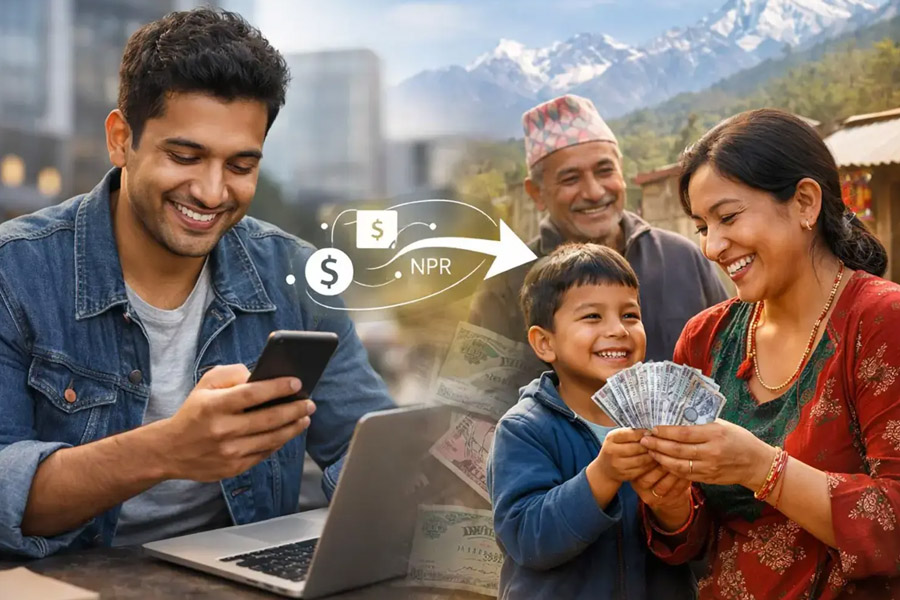
The Money Path: How Funds Travel From Australia to Nepal
Think of your transfer as a relay race. Your money starts with your chosen provider, hands off to a global settlement network, then finishes with a bank or payout partner in Nepal. Each handoff adds time and potential cost. Your funding method in Australia, the corridor your provider uses, and the payout network on the Nepal side all influence how cleanly that baton is passed.
Most first-time senders use bank accounts, debit cards, or cardless bank transfers. Banks offer cheaper but slower funding. Fast cards may cost extra. Once in Nepal, monies can go to a bank account, cash pickup, or mobile wallet. The optimum path fits your recipient’s reality, not just your screen.
Choosing the Right Payout Method in Nepal
Not every payout suits every household. Pick what will actually be used with the least friction.
- Bank deposit: Ideal for tuition, rent, and larger amounts. Safer storage and an audit trail. Confirm the exact account number and branch name. Some banks in Nepal require precise branch mapping for swift postings.
- Cash pickup: Useful if your recipient prefers cash or lacks an account. Check acceptable IDs in advance. Lines can be longer during festivals like Dashain and Tihar.
- Mobile wallet: Speedy and practical for bills and everyday spending. Wallet names and IDs must match the registered user. Daily limits may cap how much can be received in one go.
Practical nuance matters. Saturday is the weekly bank holiday in Nepal. Urban branches see faster processing than remote ones. Public holidays and load shedding periods can slow certain services. If timing is critical, match the payout to local hours and habits.
What You Need Before You Click Send
A smooth first transfer is built on accurate details. Gather these before you start.
- Your identification: Passport or Australian driver licence, plus proof of address such as a utility bill or bank statement.
- Funding method: Bank account details or card in your name.
- Recipient information:
- Full legal name that matches their ID
- Mobile number with country code
- Payout choice and matching details:
- Bank deposit: bank name, branch, account number, and SWIFT code if required
- Cash pickup: preferred payout provider and recipient’s ID type and number
- Wallet: wallet provider and registered wallet number
- Purpose of transfer: family support, tuition, medical, or savings. Be consistent and truthful.
- Relationship to recipient: spouse, parent, sibling, friend, or self.
- Expected verification items: proof of income or source of funds if the amount is larger than usual.
Treat this like packing for a mountain trek. One forgotten item can slow the journey.
The Real Cost of a Transfer Explained
You pay two kinds of costs. One is visible, the transfer fee. The other hides in the exchange rate. The best number to watch is the NPR amount your recipient receives per AUD you spend, after all fees.
A quick example for illustration:
- You send 1,000 AUD
- Provider fee is 2.99 AUD
- Exchange rate applied is 1 AUD equals 88.50 NPR
Your cost is $1,002.99 AUD. The beneficiary gets 88,500 NPR. If another service charges significantly more or less, the NPR outcome can differ. A small rate spread can buy schoolbooks or a month of mobile data. Compare the final NPR to your AUD payment, not just the headline price.
Timeframes Without the Guesswork
Speed depends on a few practical levers.
- Account verification: First transfers can take longer due to identity checks. Complete verification before you need to send urgently.
- Funding method: Bank transfers may take a day or two to clear. Debit cards often fund instantly but can cost more.
- Cutoff times: Providers batch payments. Transfers initiated late in the Australian evening may not move until the next business window.
- Nepal-side processing: Bank deposits usually settle within the same or next business day once received. Cash pickups and wallet credits can be near instant if systems are online.
- Calendar awareness: Nepal observes many festivals and national holidays. Banks close on Saturdays. Plan around these to avoid surprises.
If the transfer is time sensitive, initiate early in the week, during business hours, with all verification steps complete.
Security and Compliance Without the Jargon
Every legitimate service must check who you are and why you are sending. This is essential for safety, not an obstacle. Expect identity verification, transaction monitoring, and screening for sanctioned parties.
Protect yourself with a few simple habits:
- Turn on two factor authentication and keep your mobile number current.
- Use strong, unique passwords. A password manager helps.
- Avoid sending from public Wi Fi and shared devices.
- Never share one time codes with anyone, including support agents.
- Keep receipts and reference numbers in a secure folder.
If asked for additional documents, provide clear scans and respond promptly. Precision shortens review time.
Common Pitfalls and How to Avoid Them
Small mistakes can snowball. Watch for these:
- Name mismatches between recipient ID and payout details
- Typos in account numbers or wallet IDs
- Choosing cash pickup without confirming the recipient’s acceptable ID
- Funding with a credit card that triggers a cash advance fee
- Repeatedly editing the same transfer, which can trigger extra checks
- Underestimating Nepal bank holidays or Saturday closures
- Ignoring provider messages that request more information
A ten second review can save days of delay.
Optimizing Value Over Time
Once you complete a first transfer, turn it into a repeatable routine.
- Create recipient profiles with verified details, then lock them in.
- Set up rate alerts to catch favorable movements.
- Batch small payments if a flat fee applies, but weigh that against rate risk.
- Schedule regular transfers to avoid last minute rushes during volatile periods.
- Keep your verification level current to unlock higher limits and faster handling.
- Choose the funding method that balances cost and speed for your pattern, not just this week’s need.
Consistent habits make the experience predictable for both you and your recipient.
When Things Go Off Track
Delays can happen. The quickest path to resolution is calm, clear information.
- Use the in app or web tracker to see the latest status.
- If support is needed, have ready your transfer reference, recipient details, and any requested documents.
- Ask whether the delay is on the funding stage, compliance review, or Nepal side payout.
- If a mistake was made and payout has not occurred, request a correction or cancellation.
- For bank deposits that already left the provider, recalls may be possible but are not guaranteed. Act immediately.
Good providers offer chat, email, and phone coverage that aligns with both Australian and Nepal time zones. Use the channel that gets the fastest response for your case.
FAQ
What documents do I need in Australia to make my first transfer?
You will typically need a government issued photo ID such as a passport or driver licence, plus proof of address like a utility bill or bank statement. Some providers may ask for proof of income or source of funds for larger first transfers.
How long does it take to send money to a bank account in Nepal?
Bank deposits often arrive the same or next business day after the provider releases funds. First transfers can be slower due to verification. Transfers initiated near weekends or Nepalese holidays may settle after the next business window.
Can my recipient pick up cash without a bank account?
Yes. Cash pickup is common. Your recipient must present acceptable ID that matches the name on the transfer. Confirm the pickup location’s hours and the ID types they accept before sending.
Why was my transfer flagged for review?
Reviews can trigger due to larger than usual amounts, new recipients, mismatched details, or required compliance checks. Respond to any provider requests quickly with clear documents to keep things moving.
Are there transfer limits for first-time users?
Most services set initial limits that increase as you complete verification and build a sending history. Limits can apply per transfer, per day, or per month.
What exchange rate should I look at?
Look at the actual applied rate offered by your provider and the NPR your recipient will receive after fees. Mid market rates are useful for reference but do not reflect provider margins.
Is Saturday a banking day in Nepal?
Saturday is generally a bank holiday in Nepal. This can affect bank deposit timing. Cash pickup and wallet services may still operate depending on the network and location.
Can I send money to e wallets in Nepal?
Many providers support wallet payouts to popular Nepalese wallets. Ensure the recipient’s wallet is active, the name matches the registered user, and the amount does not exceed daily receiving limits.
What happens if I entered the wrong recipient name?
If payout has not occurred, contact support immediately to correct the name. For cash pickup, name accuracy is critical. For bank deposits, name and account number mismatches can cause rejections or delays.
Is paying with a credit card a good idea?
Credit cards can be fast but may incur higher fees. Some issuers treat remittances as cash advances, which adds extra charges and interest. If cost matters more than speed, fund via bank account instead.