Rethink Capacity: Plan Like a City Builder
Great storage starts with a map, not a shopping cart. Treat each room like a tiny city with lanes for movement, zones for activity, and neighborhoods for items that live together. Sketch the footprint, mark doors, windows, and swing paths, then note vertical dimensions: ceiling height, soffits, and the empty air above appliances. That empty air is your skyline.
Determine your reach zones. Daily necessities should be shoulder-to-knee height. Weekly items are above and below that band. Equipment rarely used or seasonal goes overhead or behind doors. This reach-first method lowers daily routine time and friction, the actual aim of storage.
Map the Traffic: Keep Aisles Open and Tasks Smooth
Frequent, unexpected movement causes clutter. Clear 36-inch passageways in entryway, garages, and laundry rooms. Give task zones 30 inches in front of washers, water heaters, breaker panels, and tool benches. Keep door swings clean to avoid jams when hands are full.
Use simple navigational cues to direct behavior. Coat hooks at the entrance help guide them. A door-mounted charging shelf holds keys and phones. Sports gear stays put in a kid-sized bin with labels. Good storage guides daily routines without nagging.
Ceiling Solutions That Work: Safe Overhead Strategies
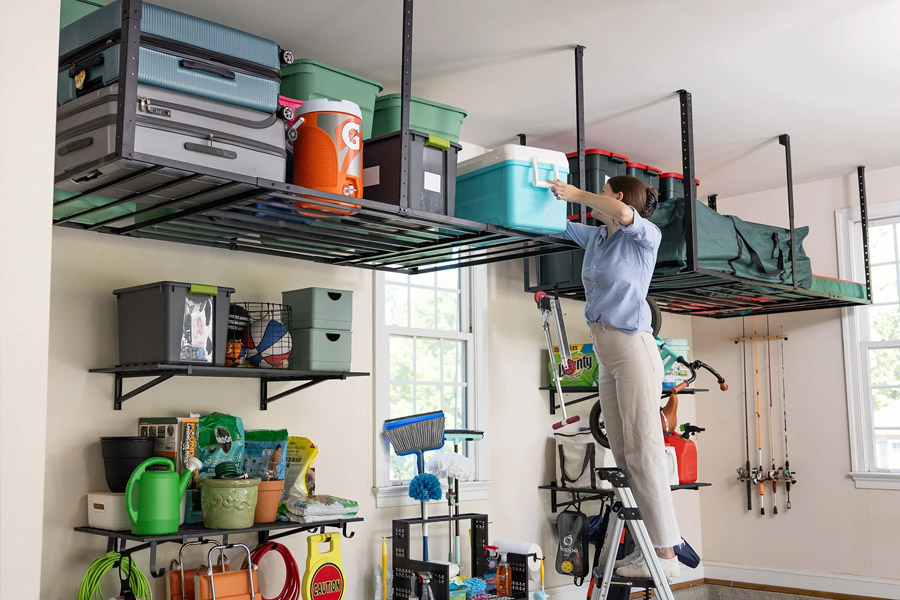
The ceiling is prime real estate for bulk, seldom used items. Overhead racks, ceiling tracks for bins, and hoists for bikes or kayaks free the floor and calm the space.
- Anchor into structural members, not drywall. Locate joists with a stud finder and confirm with small pilot holes.
- Keep clearances in mind. Leave space for garage door travel, opener arms, lighting, and attic access. Maintain safe headroom so tall people do not duck.
- Respect load limits. Choose racks with published capacities and use only a portion of the rating for a buffer. Distribute weight evenly. Place heavier bins close to support points.
- Use sealed containers for attic-like environments. Heat, dust, and pests are real. Gasketed lids keep contents clean.
- Store the right things up high. Holiday decor, camping bins, extra paper goods, and archive files belong here. Fuels, solvents, and fragile heirlooms do not.
A simple trick: label the underside of each bin where you can read it from below, then create a matching shelf map on the wall. You will never climb a ladder to check a label again.
Walls That Work Harder: Modular Systems and Mounting Tips
Wall systems turn vertical planes into quiet workhorses. Slatwall panels accept a wide range of hooks, baskets, and shelves. Pegboard is affordable and endlessly rearrangeable. Rail systems mount narrow tracks that accept specialized hangers for tools or sports gear.
- Wherever possible, fasten into studs spaced roughly 16 inches on center. Use a ledger board to create a continuous mounting surface when studs do not align with your panel.
- For heavy loads like bikes, ladders, or lawn equipment, choose accessories with specific weight ratings and lock-in features.
- Use a guard lip or bungee restraint on shelves to keep items from bouncing off the wall in busy spaces or in earthquake zones.
- Group by task, not by object type. Create a car-care bay, a gardening bay, a painting bay. Put the bucket, cloths, and chemicals in the car-care bay so the job starts and ends in one place.
A French cleat is a DIY-friendly way to hang cabinets or tool boards. It allows easy removal and reconfiguration without re-drilling new holes.
Small-Space Strongholds: Entryways, Laundry, and Kids Rooms
Small zones need discipline and a touch of choreography.
Entryway
- A narrow bench with drawers or flip-down shoe slots keeps pairs together and off the mat.
- Two hook heights solve family friction: lower for kids, higher for adults and bags.
- A shallow wall shelf near the door corrals keys, wallets, and mail for quick triage.
Laundry Room
- A vertical sorter with three bags reduces sorting time later. Label by color or by person.
- A fold-down drying rack on the wall gives you perimeter drying without eating floorspace.
- A countertop over front-load machines creates a folding stage and hides hoses visually.
Kids Spaces
- Use color-coded bins so pre-readers can clean up by color match. Add icon labels for clarity.
- Create a rotation closet for toys. Keep only a fraction out, store the rest, and rotate monthly to revive interest without buying more.
Materials Matter: Pick the Right Gear for the Job
Not all storage lives the same life. Match materials to the environment for longevity and safety.
- Garages and utility spaces: powder-coated steel, galvanized hardware, heavy-duty polymer shelves, and sealed bins that shrug off humidity and dust.
- Indoors: finished wood or bamboo for warmth, woven baskets with rigid liners where snagging is a risk, and clear containers for deep cabinet visibility.
- Closets: slimline velvet hangers for density, shelf dividers to stop sweater slides, and boot shapers to save floor space.
Clear bins reveal contents instantly, which speeds retrieval and discourages overfilling. Opaque bins are best for light-sensitive items, messy craft supplies, or any category you prefer to visually quiet.
Safety and Load Planning: Numbers You Can Trust
Treat weight like a budget.
- Books and records are dense. Estimate 35 to 45 pounds per linear foot for tightly packed books on a shelf.
- Paint weighs about 8 to 11 pounds per gallon. Store on low shelves with a containment tray.
- Tools vary widely. Keep heavy power tools below waist height.
Label capacities on shelves and racks so future you and future helpers do not guess. Keep combustibles away from heat sources, including water heaters and dryers. Avoid overloading single hooks with soft straps. Redundant support is cheap insurance.
Maintenance Rituals: Keep It Tidy With Less Effort
Organization fails without rhythm. Build short, repeatable rituals.
- Nightly 10-minute reset for hotspots: counters, entry bench, and coffee table.
- Weekly 30-minute sweep of the garage or mudroom. Return stray items. Vacuum grit.
- Seasonal swap: bring down bins for the new season and send last season up. Audit while you move.
- One-in, one-out rule for categories that inflate fast: water bottles, tote bags, kids’ art supplies.
Attach storage to life events. New season, new school year, holiday setup, tax prep. Each becomes a trigger for a light edit and a quick reset.
Visual Harmony: Labels and Color That Do the Heavy Lifting
A tidy look is more than vanity. Visual clarity speeds decisions and lowers cognitive load.
- Limit container styles to two or three across a room. Repetition reads as order.
- Use large, high-contrast labels on the front and the top. Add dates for perishable supplies.
- Choose a color code by zone or by person. Blue for car care, green for gardening. Family members get their own accent color for bins and hooks.
- Provide micro-stops for small items. Trays inside drawers prevent junk-drawer sprawl. Shelf risers double usable height in pantries and bathrooms.
Lighting matters. Under-shelf LEDs or a bright garage fixture turn caves into clear, usable zones. You cannot put things away in the dark.
Sustainable Sorting: Declutter With Purpose
Do not build storage for things you no longer need. Start with a fast sort: keep, donate, recycle, hazardous. Handle once. Box donations and schedule a pickup or drop-off right away so clutter does not stall in your trunk.
Keep only the number that fits your chosen container. The container becomes the limit. Archive mementos in acid-free sleeves, then photograph bulky items to preserve the memory without storing the mass. Store hazardous items like old paint or chemicals safely until your local drop-off day. The planet, and your shelves, will breathe easier.
FAQ
How high should I mount overhead racks in a garage?
Keep enough head clearance for the tallest person using the space. Leave room for garage door travel and opener arms. Maintain safe clearance below any sprinkler heads or lights. Position racks so you can reach bins from a stable step ladder without overreaching.
What should never go into overhead storage?
Avoid heavy power tools you use often, liquids like fuel or solvents, fragile heirlooms, and anything temperature sensitive. Keep those at accessible heights or in climate controlled areas.
How do I calculate a safe load for a shelf or rack?
Start with the manufacturer rating, then use only a portion of it as a safety buffer. Spread weight across supports and place dense items near uprights. If you do not have a published rating, upgrade hardware and add supports rather than guessing.
Are clear or opaque bins better for most spaces?
Clear bins win for speed. You see content at a glance, which prevents rummaging and mess. Opaque bins are helpful for visual calm in living spaces or to protect light-sensitive items. Use a mix, but keep labels large and consistent.
What wall system should I choose if I rent?
Freestanding shelves and over-the-door organizers avoid holes. Removable adhesive hooks can handle light items. If you mount into studs, patching small holes at move-out is simple, but confirm lease terms first.
How can I prevent moisture damage in storage areas?
Promote airflow and elevate items off concrete floors with shelves or pallets. Use gasketed bins and desiccant packs for sensitive contents. In damp basements or garages, a small dehumidifier or vents can keep humidity in check.
Can slatwall safely hold bikes and heavy tools?
Yes, if you use accessories with published weight ratings and fasten the panels securely into studs. For very heavy or awkward items, consider direct-to-stud bike hooks or floor stands paired with wall tethers for stability.
How often should I reorganize once systems are in place?
Use a light-touch cadence. Quick nightly resets, weekly sweeps, and seasonal swaps are usually enough. If a zone keeps exploding, adjust container size or move the category closer to where it is used. Systems should evolve with your life, not the other way around.