Key Takeaways
- The right gutter protection system depends on debris, rainfall, roof shape, and gutter condition.
- Houston homes need systems that manage both year-round debris and fast, heavy runoff.
- Gutter covers reduce cleaning needs, but they still require routine inspection.
- Downspouts, roof valleys, and gutter capacity matter as much as the guard itself.
Houston homeowners often look for gutter guards and leaf covers in Houston, TX after dealing with repeated clogs, overflowing water, or difficult ladder work. The best option is not always the product with the smallest openings or the highest price. It should fit the home’s roofline and surrounding trees, and be able to handle heavy rain.
Gutters in this area can collect leaves, pine needles, pollen, seed pods, roof grit, and small twigs in nearly every season. When debris slows water movement, runoff can spill over the gutter edge, wash out landscaping, stain siding, and pool near the foundation.
Why Houston Homes Face Special Gutter Challenges
Houston weather can quickly expose drainage weaknesses. A brief, hard storm may send a large volume of water down a steep roof and into one short gutter run. Mature oaks, pines, pecans, palms, and other vegetation can also keep filling the system long after a typical fall leaf season has passed.
Roof drainage works as a complete path from the shingles to the gutter, downspout, outlet, and final discharge point. As roof runoff structures require maintenance to remove debris and clear downspouts, a cover alone cannot solve problems caused by poor slope, loose hangers, damaged seams, or blocked outlets.
Signs Existing Gutters Need More Protection
Gutter protection may be worth considering when the home needs cleaning several times a year, especially if tree debris returns soon after service. Other warning signs include water pouring over the front edge during storms, moss or plants growing inside the channel, standing water, and downspouts that clog repeatedly.
Also look for sagging sections, soil erosion near the foundation, damp exterior walls, or trees that extend over the roof. Still, guards are not an automatic answer. A gutter that pulls away from the fascia or holds water after rain should be repaired before any cover is installed.
Main Types of Gutter Covers and Screens
Micro-Mesh Covers
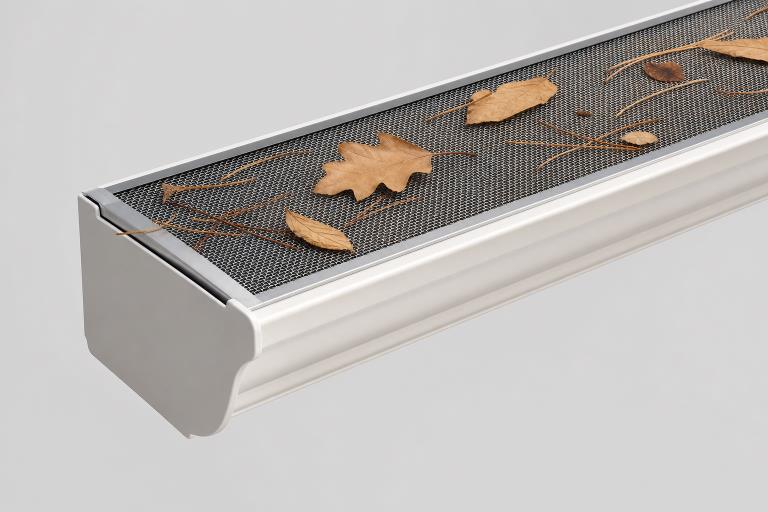
Micro-mesh uses fine openings to keep out small debris, including many pine needles and roof granules. It can be a strong choice for heavily treed properties, but pollen, fine grit, and wet organic material may collect on top. The surface should remain accessible for brushing and inspection.
Screen Guards
Screen guards generally block larger leaves and twigs while allowing water into the gutter. They can be practical for homes with moderate tree coverage, although small particles may still enter through wider openings.
Solid-Surface Covers
Solid covers guide water into the gutter through a shaped edge or narrow slot. Their performance depends heavily on roof pitch, placement, and water speed. A system that works on a simple roof edge may need more attention near a high-flow valley.
Foam and Brush Inserts
Foam and brush products sit inside the gutter channel. They are often simple to install, but leaves and organic material can remain trapped within the gutter itself. That can make cleaning more involved over time.
How to Match a System to Tree Debris
Start with the material that actually lands on the roof, not a generic product claim. A useful comparison includes the following:
- Pine needles: Fine-mesh or closely spaced screens can limit entry, though needles may collect on top and require occasional clearing.
- Large leaves: Rigid screens and solid covers can keep bulky leaves out of the channel, but piles may form along the roof edge.
- Pollen and roof grit: Choose a design that is easy to inspect, as fine debris can form a film over small openings.
- Low tree coverage: A basic screen or regular cleaning plan may provide better value than a complex system.
- Heavy storm exposure: Prioritize secure attachment, open-water entry, and sufficient gutter and downspout capacity.
Why Rainfall Capacity Matters
Debris control is only half the job. During intense storms, water must enter the gutter quickly enough to avoid overshooting the cover or overflowing the channel. Roof area, pitch, gutter width, downspout size, and valley placement all affect that result.
Pay close attention to roof valleys because they concentrate runoff in one location. A gutter may appear clean but still overflow if a valley sends water into an undersized section, the downspout is too small, or the gutter slope is incorrect. Downspouts should also release water so it flows away from the foundation without causing a washout.
What to Check Before Installation
- Inspect gutter condition: Look for rust, open seams, loose fasteners, sagging, and standing water.
- Test downspouts: Confirm water flows freely through each outlet and away from the home.
- Study the roofline: Identify valleys, steep sections, and areas with repeated overflow.
- Assess tree coverage: Note whether leaves, needles, blooms, or seed pods are the main issue.
- Review access: Make sure the finished system can still be serviced safely when needed.
Maintenance After Gutter Covers Are Installed
No guard makes a roofline maintenance-free. Even well-designed systems need checks after major storms and during peak pollen or leaf-drop periods. Guidance on rainwater collection notes that leaf screens must be regularly cleaned to remain effective, a useful principle for residential gutter protection as well.
Inspect cover surfaces for buildup, flush slow downspouts, and watch for lifted edges or loose fasteners. Homes with dense tree coverage may need more frequent checks than open properties. Ground-based tools are safer when possible, while tall or steep rooflines may call for a qualified professional.
Cost, Value, and Long-Term Trade-Offs
Total cost depends on gutter length, home height, roof complexity, product type, existing repairs, and downspout changes. Compare more than the initial price. Written estimates should explain preparation work, attachment method, warranty terms, exclusions, expected maintenance, and whether damaged gutters must be repaired first.
Common Gutter Protection Mistakes
- Installing covers over damaged, poorly pitched gutters.
- Choosing the smallest openings without considering pollen and roof grit.
- Ignoring downspout clogs or inadequate outlet capacity.
- Assuming cleaning and inspections are no longer necessary.
- Using the same solution on every roof section despite different slopes and valley flow.
- Skipping a water-flow test after installation.
Frequently Asked Questions
Do gutter guards eliminate cleaning?
Usually not. They can reduce the amount of debris entering the gutter, but material may still collect on top of the guard, around valleys, and near downspout openings.
Which option works best for pine needles?
Fine mesh is often considered for small debris, but it should be matched with the roof pitch, expected rainfall, and ability to clear buildup from the surface.
Can covers be added to existing gutters?
Many systems can be fitted to existing gutters if the channels are secure, correctly pitched, and free of major damage. Repairs should come first.
How often should Houston homeowners inspect gutter covers?
Check after major storms and during periods of heavy pollen, leaf, or seed drop. Homes beneath dense tree cover may need several inspections each year.
Conclusion
The most effective gutter protection choice is part of a complete drainage plan. By considering tree debris, rainfall intensity, roof valleys, gutter condition, downspout capacity, and future maintenance, Houston homeowners can choose a practical system that helps reduce clogs and overflow without creating unrealistic expectations.