Key Takeaways
- Transportation safety improves when districts pair clear procedures with frequent route and stop reviews.
- Driver insight, reliable maintenance, and simple communication are as important as new technology.
- A small set of useful measures can reveal recurring delays, capacity gaps, and safety concerns.
- Districts should evaluate technology against actual workflow, privacy, training, and support needs.
- Focused 90-day pilots can produce meaningful improvements without waiting for a major budget cycle.
Why Transportation Needs A Fresh Plan
Student transportation is both a safety service and a daily operations system. When a bus is late, the effects can reach far beyond the route. Attendance, classroom routines, school office workloads, family work schedules, and student confidence can all be affected. A thoughtful transportation plan helps districts protect students while making the school day more predictable.
Districts facing driver shortages, changing enrollment patterns, higher operating costs, longer travel distances, and more complex student needs need practical ways to manage the work. Pathwise can be part of a broader effort to organize K-12 operations, but lasting improvement begins with district leaders clearly defining the transportation problems they need to solve.
A fresh plan does not require replacing every route or purchasing an extensive new system. It requires leaders to look honestly at daily friction points, including recurring delays, unsafe stops, overloaded buses, inconsistent messages, and maintenance issues that interrupt service.
The strongest plans balance efficiency with student well-being. Saving a few minutes on a route is not a success if it creates a difficult crossing, an unreliable pickup time, or an unrealistic workload for drivers and dispatch staff.
Start With A Safety Audit
Before changing routes or buying tools, conduct a practical safety audit. Review loading and unloading zones, railroad crossings, busy intersections, driver training records, emergency procedures, bus inspections, delay communications, and accommodations for students with mobility or medical needs.
Start by collecting incident reports, maintenance records, late-trip logs, family complaints, and driver observations. Then speak directly with drivers, school leaders, families, and students. Finally, rank concerns by risk, frequency, and how quickly they can be corrected. Guidance for planning safer school bus stops emphasizes visibility, sufficient waiting space, and careful consideration of road crossings.
The audit should lead to assigned actions, deadlines, and follow-up. A concise list of five correctable issues is more useful than a lengthy report that never changes daily practice.
Review Routes And Bus Stops
Routes that worked several years ago may no longer fit current housing growth, road construction, bell schedules, or ridership. Review whether buses pass stops that could safely be combined, whether some vehicles are crowded while others have open capacity, and whether travel times vary sharply by day or season.
Safety must remain the deciding factor. For example, a revised route might save five minutes but require students to cross a high-speed intersection. In that situation, the slightly longer route may be the better operational choice because it reduces exposure to a serious risk.
Support Drivers And Transportation Staff
Technology cannot replace experienced drivers, dispatchers, mechanics, and attendants. These employees understand local traffic patterns, difficult turns, weather-related hazards, and the individual needs of students on their routes.
Ways To Strengthen Support
- Provide short refresher sessions throughout the year, not only one annual training.
- Create a simple process for reporting hazards and near misses.
- Share route changes and substitute-driver instructions promptly.
- Maintain realistic backup plans for absences and vehicle downtime.
- Recognize safe performance, dependable attendance, and constructive feedback.
Driver feedback can uncover problems that route data misses. A driver may know that visibility drops at a certain time of morning, that standing water blocks a stop after heavy rain, or that a family needs a clearer pickup instruction.
Use Data To Guide Decisions
Districts do not need to track every possible metric. Focus on on-time arrivals, average ride times, missed or late trips, bus capacity, maintenance downtime, ridership changes, safety incidents, near misses, and family concerns by category. Review results by school, route, season, and time of day because district-wide averages can hide a persistent problem on one bus.
A short weekly review can keep data useful. Ask three questions: What happened? Why did it happen? What small adjustment should be tested next? This approach turns reports into decisions instead of creating more paperwork.
Choose Technology With Care
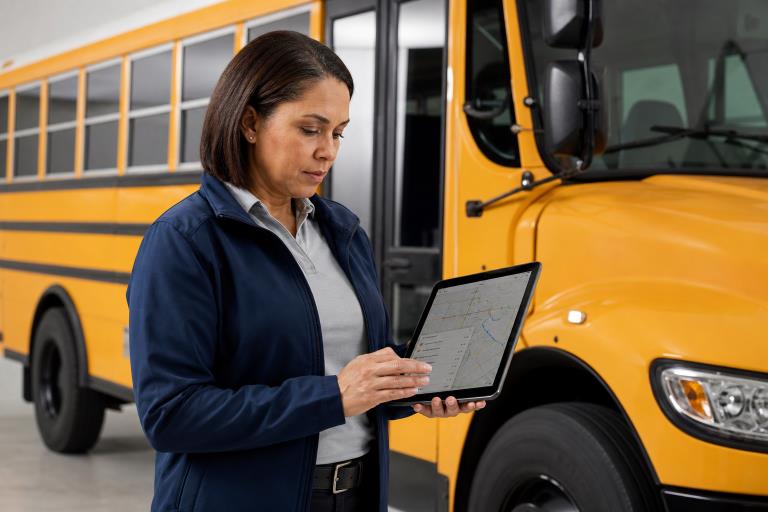
GPS tracking, route planning, digital inspection forms, two-way messaging, stop-arm cameras, and ridership records can help districts work more effectively. Still, every tool should begin with a specific use case, such as reducing late notifications or improving preventive maintenance.
Districts should also consider how school buses interact with other road users and emerging vehicle systems. An ongoing school bus safety investigation in Austin, Texas, highlights why transportation leaders should continuously examine loading-zone risks and not assume that automated systems or other motorists will respond correctly.
A Simple Technology Test
- Name the problem the tool will address.
- Confirm that the workflow works during real driving, dispatch, and maintenance conditions.
- Limit access to student, driver, and location data.
- Measure safety, service quality, cost, and staff time before and after implementation.
- Budget for training, updates, maintenance, and backup procedures.
Improve Family Communication
Families usually need four details: where the bus is, when it is expected, what caused a delay, and what they should do next. Messages should be prompt, plain-language, accessible through more than one channel, and translated when needed.
For example, “Route 14 is delayed” leaves families guessing. A better message is: “Route 14 is running about 15 minutes late because of road work near Oak Street. The next update will be sent by 7:35 a.m.”
Build A Practical Action Plan
Days 1-30: Find The Main Problems
Review safety and delay records, map frequent trouble spots, interview drivers and office staff, and identify the most common family concerns.
Days 31-60: Test Small Changes
Adjust one or two routes, improve one notification process, change a high-risk loading zone, or deliver a focused staff training session.
Days 61-90: Measure And Refine
Compare travel times and delay rates, ask drivers and families what improved, document unexpected outcomes, and decide which changes should become standard practice.
Common Questions From District Leaders
How Often Should Routes Be Reviewed?
Conduct a full review at least annually, with smaller checks after enrollment shifts, road projects, school openings, or bell schedule changes.
What If Funding Is Limited?
Begin with lower-cost actions: stop safety checks, route reviews, driver listening sessions, clearer delay messages, and better use of records already available.
How Can Student Privacy Be Protected?
Collect only necessary information, set role-based access, establish retention rules, review vendor practices, and train staff to handle transportation data securely.
Conclusion
Safer, more efficient student transportation does not begin with one software purchase. It begins with clear priorities, reliable procedures, honest data, supported staff, and consistent communication with families. By improving one process at a time and measuring the results, districts can make transportation safer, simpler, and more dependable throughout 2026 and beyond.