Key Takeaways
- Texture can make familiar dishes feel new without a full menu rebuild.
- Crispy, creamy, chewy, airy, and layered elements create clear sensory contrast.
- The best upgrades work within current prep routines, storage space, and service speeds.
- Finishing touches can add perceived value while supporting customization.
- Every texture change should be tested for dine-in, pickup, and delivery performance.
A familiar menu favorite can feel like an entirely new dish with one thoughtful change. A crisp topping on a creamy bowl, a chewy layer in a soft sandwich, or a crunchy finish on a savory entrée can add contrast, improve the eating experience, and make each bite more memorable. For foodservice operators, these small adjustments offer a practical way to refresh popular items without overhauling recipes or disrupting kitchen routines.
Texture is more than a finishing detail. Crispness, creaminess, chewiness, and smoothness influence how guests experience a dish, from its first bite to its final mouthful. Working with a crispy onion and jalapeno topping supplier for foodservice operators can help kitchens introduce appealing contrast while keeping preparation efficient. The key is choosing texture upgrades that complement the dish, fit existing workflows, and hold up during dine-in, pickup, and delivery.
Why Texture Matters in 2026
Texture helps distinguish dishes that otherwise use familiar ingredients. A grain bowl with tender rice, roasted vegetables, a smooth sauce, and a crisp topper offers more contrast than the same bowl served with only soft components. That difference can make a dish feel fresher, more comforting, or more indulgent, depending on the ingredients and presentation.
Food coverage has also highlighted growing interest in crunchy, gooey, and chewy eating experiences, showing why sensory appeal remains relevant beyond flavor alone. Crunchy, gooey, and chewy food textures can make a dish memorable, but they are most useful when they support the concept rather than distract from it.
How Texture Refreshes Familiar Menu Items
Change the Contrast, Not the Core
Keep the main protein, grain, vegetable, sauce, or base guests already recognize. Then add one component with a different texture, such as crisp onions on a burger, toasted seeds on a salad, or a creamy spread in a wrap. This approach preserves operational familiarity while creating a noticeable update.
Give Guests a Reason to Notice
A finishing element should have a job. It might add a crisp first bite, balance a rich filling, bring structure to a soft bowl, or provide a visual cue that makes the item look more appealing. Avoid piling on too many competing elements. Two or three distinct textures are usually easier to execute and easier to eat.
Texture Types That Create Contrast
Crisp and Crunchy
Toasted grains, crisp vegetables, baked toppings, and crunchy garnishes add sound and structure. They work especially well on creamy soups, soft grains, rich proteins, and dressed greens.
Creamy and Smooth
Purées, sauces, whipped toppings, and soft spreads can soften the edges of roasted or crunchy ingredients. A creamy element can also help connect several components in a bowl or sandwich.
Chewy, Airy, and Layered
Chewy noodles, dense breads, dried fruit, and hearty grains provide a satisfying bite. Puffed grains and whipped sauces add height with less heaviness. In desserts, parfaits, and shareables, layered textures can create variety from the first spoonful to the last.
Adding Texture Without Slowing the Kitchen
Start With Low-Complexity Changes
- Choose one high-volume item with steady demand.
- Identify where the dish feels soft, flat, or predictable.
- Test one new texture component at a time.
- Track prep time, portioning, waste, holding quality, and staff feedback.
Build for Consistency
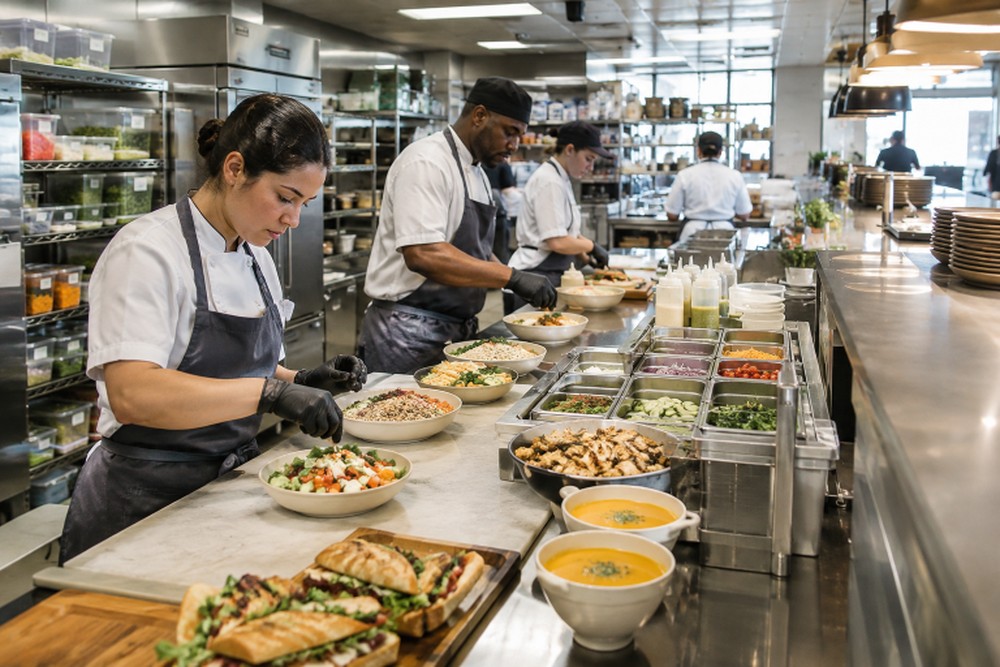
Select components that can appear in more than one dish, such as salads, bowls, sandwiches, and entrées. Use a simple portion guide and add the finishing element at the correct stage of assembly. A great topping loses its value if it is added too early and softens before the guest takes a bite.
Practical Menu Applications
- Salads: Pair greens with a creamy dressing and toasted or crisp toppings. Offer the topper as an add-on when customization allows.
- Grain bowls: Contrast soft grains with crisp vegetables, toasted seeds, or a crunchy garnish. Keep dry components separate for off-premise orders.
- Sandwiches and wraps: Balance rich fillings with firm vegetables or a toasted element, while ensuring the item remains easy to hold and bite.
- Soups and comfort foods: Use a crisp garnish or chewy grain to add depth to smooth, creamy bases.
- Desserts and beverages: Combine smooth fillings with crisp, chewy, or airy toppings, but consider lids, transport, and how customers will consume the item.
Protecting Texture for Pickup and Delivery
A texture that performs well during the pass may not hold up after 20 minutes in a closed container. Separate wet and dry components whenever possible, use packaging that manages steam for hot foods, and place crisp elements on top or in a side container. Test the final build at five-, ten-, and twenty-minute intervals to see what the customer will actually receive.
A Simple Testing Process
Start with a familiar dish, name the exact texture goal, and change only one variable in the first trial. Review added cost per serving, prep and assembly time, shelf life, waste, portion control, and holding performance. Then gather direct feedback on flavor, texture, ease of eating, portion value, and whether guests would order the item again. Keep the change only when it improves the experience without creating more complexity than it delivers.
Common Questions
How many textures should a dish have?
Most items benefit from two or three clear textures. More can make a plate feel cluttered and can complicate prep.
Can texture make a smaller portion feel more satisfying?
It can make the eating experience feel more varied and complete. The goal is not to disguise portion size, but to create a dish with contrast and interest.
What is the easiest texture upgrade?
A finishing component is often the simplest place to begin because it can leave the main recipe and cooking process unchanged.
Should every item have texture contrast?
No. Some dishes are meant to be soft, smooth, or delicate. Texture should reinforce the intended experience, not become a forced addition.
Final Thoughts: Small Texture Changes, Better Menu Experiences
Refreshing a menu does not require reinventing familiar favorites. The right textural contrast can make dishes more appealing while keeping kitchen operations manageable. By testing each addition for flavor, consistency, and delivery performance, foodservice teams can create more satisfying meals that keep guests coming back.