What Makes Limestone Feel So Inviting
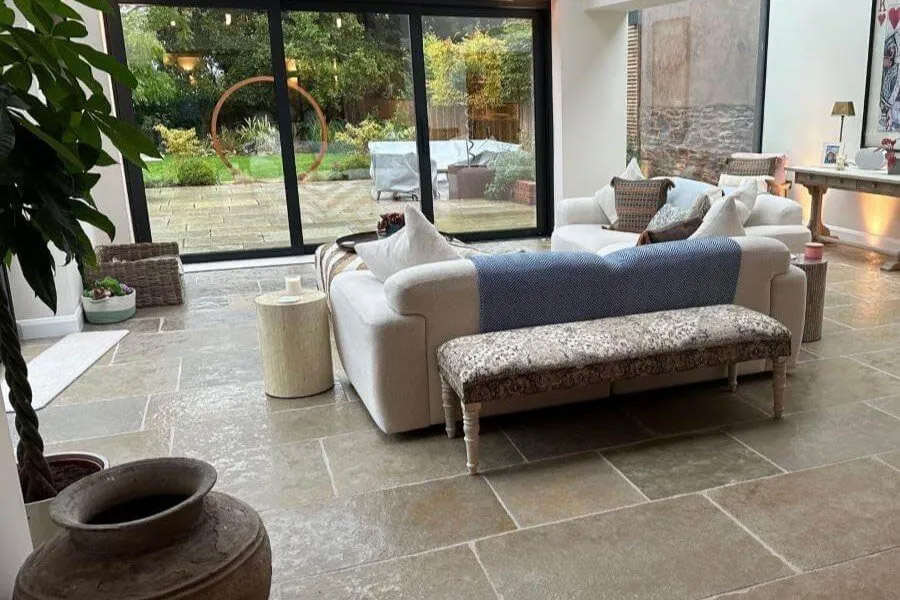
Rooms breathe with limestone. Its fossils and mineral veining read like nature’s calligraphy and are soothing to the eye and touch. Limestone doesn’t have dramatic patterns, so furniture, art, and light may shine. A pleasant, chalky warmth replaces the crystalline coolness while barefoot. That tactile quality makes it appealing.
Limestone does not off-gas or host dust mites because it is thick and mineral-based. Families seeking cleaner indoor air typically choose it for that reason. Stone mass also stabilizes temperature. Limestone floors absorb and release heat from sunshine, leveling out peaks and valleys.
Finish, Color, and Format Choices That Change a Room
Finish shapes character. Honed finishes are silky smooth and low-glare, perfect for everyday living. Bath and entryways benefit from brushed and tumbled finishes that catch light and provide grip. Polished limestone looks opulent but is slippery and reflecting, so use it in low-traffic rooms.
Color transforms too. Pale creams brighten modest rooms. Modern palettes are grounded in soft grays without concrete. Warm beiges complement oak, leather, and wovens. Shell bits or fossilized coral add organic appeal to many stones without dramatic patterning. To create cohesiveness, use the same stone in several rooms and vary the finishes. Curated, not matchy.
Format matters. Large rectangles decrease grout lines and provide a gallery atmosphere. Smaller sizes turn turns gently in compact spaces. Run rectangular tiles along a room’s length for perceived length. Rotate for visual width. French, herringbone, and basketweave patterns give liveliness without taking center stage.
Performance in Real Life: Kitchens, Baths, and Beyond
Kitchens test any floor. Installed and sealed limestone handles foot traffic, wheeled carts, and chairs easily. Lemon juice spills require immediate cleanup, as do most natural stones. The stone’s low porosity resists moisture incursion when sealed, and an honed or textured polish gives confidence under wet feet in bathrooms.
Entries benefit from limestone’s weight. With a walk-off mat, grit that would scar softer floors is less dangerous. Stone and area rugs create texture and improve acoustics in living spaces. With matching stair nosings, hallways and staircases can match visually.
Maintenance Made Simple
Care is straightforward. Daily dust mopping lifts grit. Weekly damp mopping with a pH neutral cleaner keeps the surface fresh. Avoid acidic cleaners and vinegar which can etch the surface. Place felt pads under furniture and use breathable mats near sinks and doors.
Sealing is not complicated. A penetrating sealer applied after installation and periodically refreshed helps resist stains. High traffic kitchens may benefit from resealing every one to two years. Light traffic rooms can go longer. You will know it is time when water no longer beads on the surface.
If a stain occurs, poultices formulated for stone can draw it out. Minor scratches can often be blended with honing powders or by a stone professional. The beauty of limestone is that it can be refinished. Many floors look better after a decade than the day they went in, the way good leather gains a patina.
Installation Keys That Determine Success
Everything depends on substrate pretreatment. The base must be clean, solid, and flat to strict tolerances for even tile placement. Back buttering larger formats prevents hollow places and enhances coverage. Light stones do well with white thinset to eliminate shadows. Extreme sunlight and perimeter expansion joints allow the assembly to move as temperatures fluctuate.
Plan the layout before a single tile is set. Center the field to avoid skinny cuts along walls. Dry fit pattern mixes to balance tones and fossilization. Consider door thresholds in advance and decide where transitions will occur so rooms feel connected rather than chopped.
In wet zones, use appropriate membranes beneath the stone to prevent moisture from migrating into the structure. In slab-on-grade conditions, test for vapor emissions and address them as needed. Details like these rarely show in photos, but they define how a floor performs over its lifetime.
Comfort, Acoustics, and Thermal Behavior
Limestone plays well with radiant heat. The stone’s thermal mass stores warmth evenly so there are no hot stripes over tubing. If you do not have radiant heat, limestone still feels comfortable underfoot, especially with the right finish and strategic use of area rugs.
Acoustically, stone is reflective, yet its density helps tamp down the hollow echo you may get with thin hard surfaces. Rugs and soft furnishings complete the job, creating a mellow soundscape. In upstairs installations, proper underlayment can reduce sound transfer to spaces below.
Sustainability That You Can Stand On
Longevity is sustainable. A floor that lasts decades has a lower life cycle footprint than one that needs replacing every few years. Limestone is quarried, cut, and finished, not chemically synthesized, and does not need sophisticated coatings. If chosen well and installed to last, it becomes a home’s fabric rather than a consumable.
Beyond durability, limestone can often be repaired, refinished, and repurposed. Offcuts make perfect hearth thresholds, stair treads, or outdoor step caps. When one material can serve many lives, waste declines and design continuity improves.
Design Moves: Patterns, Thresholds, and Transitions
Limestone shines when transitions are deliberate. At doorways, consider stone saddles that match the field for a seamless look. Where stone meets wood, set the heights precisely so neither material trip the other. In open plans, let pattern define zones. A diagonal set under a dining table or a bordered field in an entry signals place without adding walls.
Grout deserves attention. A grout that is similar in tone to the stone will minimize grid lines and keep the eye on natural variation. Slightly darker grout can frame the tiles and add rhythm. Ask your installer to create sample boards to judge color when the grout is fully cured.
Budget and Long Term Value
Material costs vary with origin, thickness, and grade. Installation costs depend on format, pattern complexity, and site conditions. Limestone is typically an investment, often higher than entry level porcelain but competitive with other natural stones. Where it excels is total cost of ownership. Minimal replacement, modest maintenance, and the ability to refinish translate into value over time. Many buyers view natural stone floors as a premium feature, which can support resale appeal.
Common Misconceptions
Not too cold. Limestone feels neutral in sunlight, radiant heat, or home temperatures. Not fragile. It can handle pets, kitchens, and busy hallways if selected and sealed properly. Not difficult to clean. It only requires gentle cleaning and easy behaviors. Not all are the same. Choose the proper finish and color for your room as vital as the stone.
FAQ
Does limestone stain easily?
Limestone is less porous than many expect, but it is still a natural stone and benefits from sealing. Daily spills wiped promptly will not leave a mark. A penetrating sealer adds time to your response window and makes cleanup easier. If a stain does set, a poultice can often remove it.
Is limestone too soft for a kitchen?
Not when chosen and finished appropriately. Select a denser limestone and a honed or brushed finish that disguises micro wear. Use mats at prep zones and keep chair feet protected. Many commercial kitchens use natural stone successfully because it can be maintained and refreshed.
How often should I seal limestone floors?
Frequency depends on traffic and exposure. Busy kitchens might be resealed every one to two years. Low traffic rooms can go longer. A simple water drop test tells the story. If water darkens the stone quickly, it is time to reseal.
Can limestone work with radiant floor heating?
Yes. Limestone is an excellent partner for radiant systems. It conducts and stores heat evenly, delivering steady comfort and efficient energy use. Ensure your installer follows manufacturer guidance for adhesives and expansion joints.
Is limestone slippery when wet?
Finish affects slip resistance more than the stone itself. Honed, brushed, or tumbled finishes offer more traction in baths and entries. Polished surfaces are best in dry, low traffic areas. As with any floor, water on the surface reduces grip, so use bath mats and wipe spills.
How does limestone hold up to pets?
Very well. Claws are less of a threat on a honed or textured finish, and accidents are easier to clean on sealed stone than on absorbent materials. Keep nails trimmed and use rugs in favorite resting spots for extra protection.
Can I use limestone outdoors to connect a patio with interiors?
Yes in many climates. For weather resistance and traction, choose textured limestone for outdoor applications. In harsh winters, drain and employ freeze-thaw materials. Matching interior and external stones can blend house and landscape.
What is the best way to repair chips or scratches?
Small chips can be filled with color matched stone filler and honed flush. Light scratches often blend with a gentle honing pad. For larger areas or to refresh an older floor, a stone professional can rehone or lightly polish the surface to uniformity.
How do I pick the right grout color for limestone?
Aim for harmony. A grout one shade darker or lighter than the dominant tone in your stone usually looks natural. Very light grout can highlight joints, while very dark grout can create a checkerboard effect. Ask for cured samples and view them under your room’s lighting.
Will limestone fade in direct sunlight?
Natural color holds well, though any material can shift slightly over many years of intense sun. Rotating rugs and furniture periodically keeps color exposure even. If you have floor-to-ceiling glass, consider window treatments that temper ultraviolet exposure without stealing daylight.