Key Takeaways
- Put jewelry on after lotion, perfume, makeup, and hair products have dried.
- Remove rings, bracelets, and watches before swimming, cleaning, exercising, gardening, or heavy manual work.
- Clean durable pieces gently, but treat pearls, opals, emeralds, and other delicate gems differently.
- Store each piece separately to prevent scratches, tangles, and pressure on settings.
- Check prongs, clasps, chains, and watch components regularly, and seek professional help if anything seems wrong.
- Keep purchase receipts, appraisals, gemstone reports, and repair records in one secure place for future reference.
Fine jewelry is made to be worn and enjoyed, but everyday exposure to skin oils, dust, cosmetics, sweat, and household products can gradually dull its appearance. Whether you wear an engagement ring every day or reserve luxury diamond jewelry for special occasions, a few consistent habits can help protect its beauty and wearability. Small changes in routine, such as taking rings off before applying hand cream or placing earrings in a pouch instead of a pocket, can make a meaningful difference over time.
Good care also helps uncover small problems before they become bigger ones. A ring may look perfect from above while residue collects behind the center stone, or a prong may be starting to lift long before a gemstone is visibly loose. Paying attention to cleaning, storage, and inspections protects both the piece itself and the memories attached to it. It can also help preserve the intended proportions, finish, and comfort of a piece, especially when it is worn frequently or passed down through a family.
Build a Simple Daily Jewelry Routine
A practical routine does not require specialized equipment. Apply skincare, fragrance, makeup, and hairspray first, then let products dry before putting on jewelry. Before leaving home, take a quick look at stones, prongs, clasps, and earring backs. If something appears bent, catches on fabric, or moves unexpectedly, set the piece aside. Make this visual check in bright, indirect light when possible, because buildup and damaged prongs can be easier to notice before the jewelry is worn.
Consider the activities ahead before choosing what to wear. Rings and bracelets are more likely to be knocked against hard surfaces during exercise, gardening, cooking, lifting, and household chores. Even durable stones can chip when struck in the wrong place, while delicate settings may bend under pressure. If you prefer to wear jewelry daily, reserving more fragile pieces for lower-impact occasions can reduce unnecessary wear.
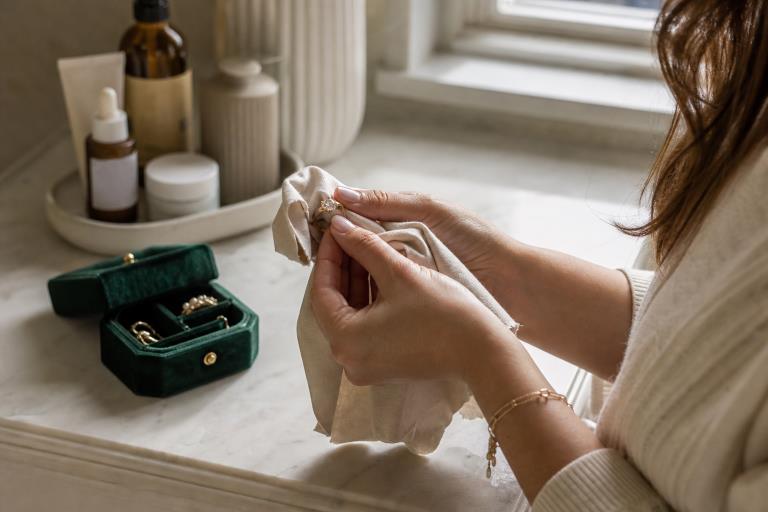
At the end of the day, remove jewelry before showering, sleeping, working out, or handling cleaning products. Wipe it with a soft, dry, lint-free cloth to remove surface oils and moisture, then return it to a pouch, box, or lined compartment rather than leaving it on a counter near a sink. This simple habit also makes it less likely that a small item will be misplaced, knocked onto a hard floor, or accidentally washed down a drain.
There is no one cleaning method that suits every material, setting, or gemstone. Since jewelry care varies by material, design, and the piece’s age, the safest approach is to identify what the piece contains before using water, heat, chemicals, or cleaning equipment. When available, review the seller’s care guidance, gemstone report, or prior repair records. These details may reveal whether a stone has been treated, whether a setting has previously been repaired, or whether a particular cleaning method should be avoided.
How to Clean Diamond Rings and Durable Metal Jewelry
For many diamond rings and solid gold or platinum pieces in secure condition, lukewarm water, a small amount of mild dish soap, and a very soft brush can be an appropriate home-cleaning method. Soak briefly, brush gently around the underside of the setting where residue collects, rinse in a bowl or glass of clean water, and dry with a soft cloth. Use a brush reserved only for jewelry, free of toothpaste, grit, or other residue that could mark the metal.
Focus on gentle pressure rather than aggressive scrubbing. The spaces below a diamond, between prongs, and around pavé settings often collect oils from skin and hand products, reducing the amount of light that reaches the stone. A careful cleaning can restore brightness without requiring force. After rinsing, blot the piece dry and inspect it again rather than rubbing it with paper towels or textured fabrics.
Avoid cleaning over an open drain. Do not use toothpaste, abrasive powders, bleach, chlorine-based products, or rough tools that can scratch metal or damage finishes. Stop immediately if a stone moves, a prong feels thin or sharp, or the setting snags on clothing. Cleaning cannot correct a worn setting, and vigorous brushing can make an existing problem worse. Pieces with very small accent stones, invisible settings, antique details, enamel, or mixed materials may be better cleaned by a professional.
Know Which Gemstones Need Special Treatment
Gemstone care depends on more than hardness. Toughness, natural fractures, porosity, coatings, fracture filling, and the way a stone is set all affect how it should be worn and cleaned. The care needs of colored gemstones and jewelry materials can differ significantly, especially when heat, chemicals, steam, or ultrasonic cleaners are involved. A gemstone may resist surface scratches yet still be vulnerable to impact, temperature changes, or solvents.
It is also useful to remember that a gemstone’s care needs may not be obvious from its color alone. Blue, green, or pink stones can represent many different gem materials, each with its own durability and possible treatments. If you inherited a piece or purchased it without detailed documentation, assume it needs a conservative approach until a qualified professional identifies the materials and condition.
Pearls, Opals, Emeralds, and Turquoise
- Pearls: Wipe gently after wear, keep them away from perfume and hairspray, and store them in a soft pouch or case. If a pearl strand is worn often, watch for stretched, darkened, or thinning thread and have it restrung when needed.
- Opals: Protect them from hard impacts, excessive heat, and sudden temperature changes. Their softer nature makes protective settings and mindful wear especially useful for rings.
- Emeralds: Use caution with heat, steam, and ultrasonic cleaning, particularly when the treatment history is unknown. Many emeralds have surface-reaching features or clarity treatments that require gentler care.
- Turquoise: Keep it away from oils, cosmetics, chemicals, and prolonged contact with moisture. Because it can be porous, avoid leaving lotions or oils on its surface.
Rubies, Sapphires, and Treated Stones
Rubies and sapphires are often suitable for regular wear, but they can still chip from a sharp impact or loosen when prongs wear down. Any treated, coated, filled, or repaired gemstone deserves extra caution. If you do not know a stone’s treatment history, use a gentle method or ask a qualified jewelry professional before cleaning it.
For all colored stones, avoid assuming that a commercial jewelry-cleaning solution is automatically suitable. A product that works well for an untreated diamond in a sturdy setting may not be appropriate for a porous gem, a fracture-filled stone, or a piece assembled with adhesive. When uncertain, a soft lint-free cloth is often the safest first step.
Why Ultrasonic Cleaners Are Not Always Safe
Ultrasonic cleaners use vibration to dislodge dirt from hard-to-reach areas, but that vibration can be risky for fragile, older, poorly maintained, coated, filled, or heat-sensitive pieces. It may also affect a stone that is already loose in its mounting. Pearls, opals, turquoise, and many treated gemstones should not be included in a universal cleaning routine.
The same caution applies to steam cleaning. High heat and rapid temperature changes can be unsuitable for certain gems and treatments, while pressure can expose weaknesses in an aging setting. A jewelry item can contain more than one material, so the safest method must account for the most delicate component rather than only the main gemstone.
When in doubt, warm water, mild soap, and a soft cloth are a safer starting point than an online cleaning shortcut involving harsh chemicals. Professionals inspect settings and gemstones before selecting a cleaning method, which is especially important for estate jewelry and unfamiliar pieces.
Storage Tips for Jewelry and Watches
- Store rings in separate slots or soft pouches so stones and metal do not rub together.
- Keep necklaces flat or on individual hooks to reduce knots and strain on chains.
- Use anti-tarnish storage materials for sterling silver when appropriate.
- Keep pearls in a breathable soft pouch rather than a tightly sealed plastic.
- Choose a cool, dry storage area away from direct sunlight and bathroom humidity.
- Use a padded travel case and keep watches separate from diamond jewelry that could scratch the case or crystal.
- Fasten clasps before storing necklaces and bracelets to help prevent chains from tangling with other pieces.
Before putting jewelry away, make sure it is fully dry. Trapped moisture can contribute to tarnish on silver and leave residue around settings. A dedicated jewelry box, drawer insert, or travel case also makes it easier to keep pairs of earrings together and to notice quickly when an item is missing.
How to Care for Luxury Watches
Wipe a watch case and bracelet with a soft cloth after wear. Leather straps should be protected from water, sweat, and prolonged direct sunlight. Water resistance should not be treated as permanent or assumed to make a watch suitable for every activity, particularly if the crown is not fully secured or seals have not been serviced.
Avoid exposing a watch to extreme heat, sharp impacts, or chemicals such as perfume and cleaning products. If a watch has a metal bracelet, dry it carefully after exposure to water and keep dirt from accumulating around the clasp. For leather straps, allowing the material to air dry naturally after normal wear is preferable to using direct heat.
Store mechanical watches safely and follow the manufacturer’s service guidance. If a crown feels loose, the crystal is damaged, condensation appears beneath it, or a clasp no longer closes securely, have the watch examined rather than continue wearing it.
Special Care for Estate and Vintage Jewelry
Older jewelry can have thinner shanks, delicate solder joints, worn prongs, historic finishes, or stones with unknown treatments. Have inherited rings, brooches, and other estate pieces inspected before home cleaning or restoration. Aggressive polishing can remove intentional patina and soften original details.
Vintage pieces may also use construction methods that differ from those used in modern jewelry, including closed-back settings, delicate engraving, foil-backed stones, or adhesive-supported components. These features can make soaking and ultrasonic cleaning inappropriate. A professional can assess whether cleaning, stabilization, resizing, or restoration would preserve the piece without unnecessarily changing its character.
Before repair work, photograph the piece and keep appraisals, certificates, measurements, and repair records together. This documentation can support insurance, future maintenance, and informed decisions about restoration.
When to Schedule Professional Help
Arrange an inspection promptly if a gemstone moves, a prong bends, or a clasp opens too easily, a chain link stretches, a ring changes shape, or a watch crown becomes difficult to operate. For frequently worn or valuable pieces, a professional inspection every six to twelve months can help identify developing issues.
Do not wait for a stone to fall out before requesting help. A jeweler may be able to tighten a setting, rebuild a worn prong, repair a damaged clasp, or address a thinning shank before the damage becomes more extensive. If a ring suddenly fits differently, examine it for bending or cracking rather than forcing it on or off.
A Practical Jewelry Care Schedule
- After each wear: Wipe away surface oils, sweat, and residue.
- Weekly: Check prongs, clasps, earring backs, chains, and watch straps.
- Monthly: Clean suitable pieces with a gentle method.
- Before travel: Photograph important items and pack them in an organized padded case.
- Every six to twelve months: Arrange a professional inspection for frequently worn, valuable, or sentimental pieces.
Conclusion
Fine jewelry care is most effective when it is consistent. Wear thoughtfully, clean gently, store pieces separately, and act quickly when a setting or clasp seems compromised. Matching your routine to the metal, gemstone, setting, and age of each item helps keep meaningful rings, necklaces, bracelets, earrings, and watches ready to enjoy for years to come.