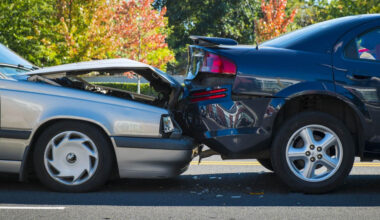
Ever been in a car accident where fault wasn’t crystal clear?
You are not alone. The majority of multi-vehicle accidents include some degree of shared fault. Determining who owes what can become complicated quickly. Enter comparative negligence.
This guide explains precisely how comparative negligence applies when more than one party is responsible for an accident. More importantly, you’ll understand how it impacts your potential recovery dollar.
Let’s jump in!
Here’s what’s inside:
- What Comparative Negligence Actually Means
- The Three Main Fault Rules Used Across The US
- How Fault Gets Divided In Multi-Party Accidents
- Real-World Examples of Shared Liability
- How Shared Fault Impacts Your Payout
What Comparative Negligence Actually Means
Comparative negligence is when responsibility is divided between two or more parties who were both at fault for an accident. Rather than hold one individual entirely responsible for the accident, the law allows each party to be assigned a percentage of fault.
Here’s the key thing:
That percentage reduces (or bars) the amount of compensation you can receive. For example, if you are found to be 20% at fault for an accident and your damages amount to $100,000… you would receive $80,000 instead.
Pretty simple, right?
Comparative negligence rules become extremely important in states like Texas where accidents happen frequently. Texas saw 4,150 traffic fatalities and more than 251,000 injuries related to car accidents in 2024. Every 57 seconds, someone in Texas files a reportable crash. With stats like that you know multi-vehicle accidents are going to be commonplace. Which is why hiring a Houston car accident lawyer ASAP could greatly impact how comparative negligence applies to you.
These rules also determine:
- Whether you can recover any damages at all
- How much your final payout gets reduced
- Which parties can sue which
Now let’s break down how these fault rules actually work.
The Three Main Fault Rules Used Across The US
Comparative negligence laws vary by state. In fact, there are three different types of systems. Which system applies to your case depends on where the accident occurred.
Pure Comparative Negligence
Pure Comparative Negligence allows you to recover damages even if you are 99% at fault. Your award is only reduced by your percentage of fault.
California, Florida, and New York are examples of this rule. It allows the most leeway for injured drivers. However, this also means that an at-fault driver can collect something even if they were the majority cause of the damage.
Modified Comparative Negligence
This is the most common rule in the US. It’s split into two versions:
- 50% rule: you can only recover if you are 50% or less at fault.
- 51% rule: you can only recover if you were <51% responsible
Texas is a 51% rule state. This means that if you are 51% or more at fault for an accident…you don’t get anything. However, if you’re 50% or less at fault you can recover your diminished damages.
Pure Contributory Negligence
The hardest rule of all. Even if you’re 1% responsible you can recover nothing.
Only four states (and Washington DC) remain on this system: Alabama, Maryland, North Carolina, and Virginia. It’s harsh — and explains why fault determinations in those states are particularly contentious.
How Fault Gets Divided In Multi-Party Accidents
Multi-vehicle collisions where more than two drivers are involved can become very complex. Insurance adjusters and courts must consider all parties actions (and lack thereof) to determine percentages of fault.
Here’s what they consider:
- Traffic law violations (speeding, running lights, illegal turns)
- Pre-crash behaviour (texting, tailgating, distracted driving)
- Weather and road conditions
- Vehicle maintenance issues
- Witness statements and dashcam footage
- Police reports and physical evidence
Each driver is assigned a percentage of fault that totals to 100%. So maybe one driver is assigned 50% fault, another 30%, and another 20%. Those percentages then decide how much each party pays.
The problem? Insurance companies love to blame everybody. They will try to place more blame on you so they don’t have to pay as much. That is why documentation is so critical in these situations.
Real-World Examples of Shared Liability
Let’s look at some common scenarios where comparative negligence rules come into play.
Chain-Reaction Rear-End Crashes
There’s a driver who comes to a stop on the highway. The next car stops in time but the next car behind them is tailgating. They rear end the second car, causing them to hit the first car.
Fault might look like this:
- Driver 1 (sudden stop): 20%
- Driver 2 (adequate distance): 0%
- Driver 3 (tailgating): 80%
Intersection Collisions
Driver 1 goes through yellow light. Driver 2 turns left without yielding. They both broke laws, so they’re both negligent. Driver 2 could be assigned 60%, and driver 1 becomes 40%.
Multi-Vehicle Pileups
These are the really messy ones. Bad weather, limited visibility, many cars involved can cause liability to be distributed among numerous parties. Each driver’s actions are scrutinized to determine responsibility.
How Shared Fault Impacts Your Payout
This is where things get real for accident victims.
Your final award isn’t based on your damages, it’s based on your damages minus your percentage of fault. And if you exceed the fault threshold in modified comparative negligence states, you get nothing.
Let’s use a Texas example (since Texas follows the 51% rule):
- Total damages: $200,000
- Your fault: 30%
- Your recovery: $140,000
Now let’s say your fault gets bumped to 51%:
- Total damages: $200,000
- Your fault: 51%
- Your recovery: $0
Notice how much a few percentage points change the game? Houston streets have been deadly recently. Recording a whopping 301 traffic deaths in 2024. With so many accidents, comparative negligence arguments happen all the time — and that thin line between 49% and 51% fault can cost you everything you deserve.
This is why evidence collection should happen as soon as possible. Police reports, witness testimonies, medical records, and photographs can all help cement your fault percentage in your favor.
Final Thoughts
Comparative negligence laws can seem complicated when there are multiple drivers involved. However, the bright side is that once you understand how these laws work you’ll be in a much better spot to protect your compensation.
To quickly recap:
- Comparative negligence splits fault into percentages
- Each state uses one of three main systems
- Your fault percentage directly reduces your payout
- In modified states, crossing the fault threshold blocks recovery entirely
- Evidence is everything when fault is disputed
Multi-vehicle accidents can be overwhelming. However, if you understand the concept of comparative negligence and how insurance companies manipulate it, you can make informed decisions and increase your chances of receiving fair compensation.