Fasteners are easy to overlook until a loose panel, missing sign, or opened enclosure creates a safety, maintenance, or security problem. For equipment placed where the public can reach it, Bryce Fastener solutions can be part of a practical plan to make unauthorized removal more difficult while preserving a workable service process for approved personnel.
The right choice is rarely just a matter of selecting an unusual screw head. The asset being protected, the location, the mounting material, weather exposure, maintenance frequency, and control of the matching tools all influence whether a fastening approach will perform as intended.
Why Fastener Choice Matters In Exposed Settings
Public fixtures, outdoor cabinets, access panels, signs, utility equipment, and shared facilities can face accidental interference as well as deliberate vandalism or theft. A standard fastener may be entirely appropriate in a controlled work area, but it can become a weak point when anyone can approach the assembly with common hand tools.
Consider an exterior equipment enclosure with a loose access panel. If the panel is removed, internal parts may be exposed to rain, dust, curious hands, or improper adjustments. A stronger fastening strategy does not solve every risk, but it can add delay and discourage casual interference.
Security, Tamper-Resistant, And Tamper-Evident Hardware
These terms are related, but they do not mean the same thing. Tamper proof screws are commonly described as hardware intended to resist unauthorized removal, yet no mechanical fastener should be considered impossible to defeat under every circumstance.
- Standard fasteners are designed for general assembly and routine access with common tools.
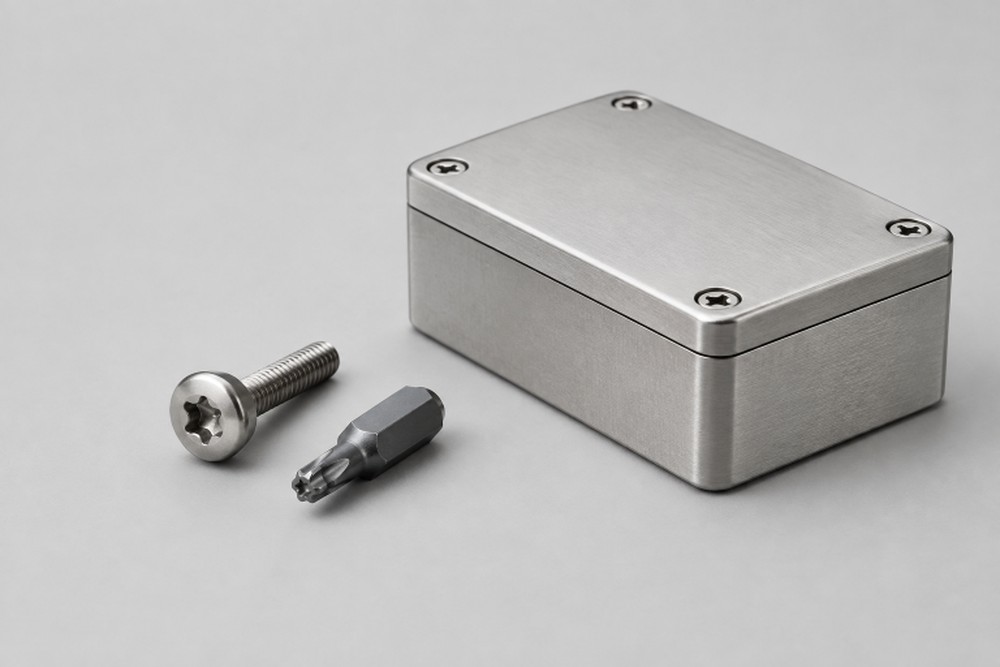
- Tamper-resistant fasteners use a drive, head, or design feature that makes removal more difficult without the intended tool.
- Tamper-evident hardware is intended to show visible evidence that an assembly has been opened or disturbed.
- One-way fasteners are installed in a tightening direction and are not intended for normal removal with an ordinary driver.
The practical goal is usually resistance and delay, not an absolute claim of invulnerability. Hardware should be selected to fit the likely threat and the time available for an unauthorized person to work on the assembly.
Assessing Risk Before Buying Hardware
A brief risk review helps prevent buying a specialty fastener that does not fit the job. Start by identifying the asset and the consequences if the fastener is removed. A decorative sign, an electrical cabinet, and a machine guard may all require different levels of protection.
- Check access. Determine whether the fastener is visible and reachable without supervision.
- Define the likely concern. Theft, vandalism, unauthorized adjustment, accidental removal, and repeated weather-related loosening are different problems.
- Consider service frequency. An enclosure opened monthly needs a more serviceable approach than a permanently installed fixture.
- Review tool availability. A specialized drive provides less control if compatible bits are easy to obtain or widely shared on site.
- Account for site conditions. Moisture, vibration, salt, chemicals, impact, and dirt can affect both the fastener and the assembly around it.
Common Drive Types And Their Uses
The drive is the interface between a fastener and its installation tool. The broad range of screw drives illustrates why tool compatibility should be reviewed before a specification is finalized. An uncommon drive can reduce casual removal, but it does not make weak materials, poor installation, or uncontrolled tools secure.
- Pin-in drives use a center pin that blocks a standard matching driver.
- Five-lobe and other specialized drives can support controlled access where an ordinary bit should not work.
- Spanner-style drives are often used on panels and public-facing fixtures.
- One-way heads can suit installations that should not require routine disassembly.
- Custom or controlled drives may be considered where commonly available security bits do not provide enough access control.
Select a drive only after confirming that authorized technicians can obtain the correct tool, use it safely, and service the product without damaging the head or surrounding materials.
Material And Environmental Performance
Drive design is only one part of the decision. Fastener material, finish, thread form, length, and the material being joined all affect long-term performance. Outdoor locations can expose hardware to moisture and corrosion, while roadside equipment may also experience dust, vibration, and impact.
For example, a dry indoor equipment cabinet may only need a serviceable tamper-resistant drive and properly sized threads. A roadside enclosure may need additional attention to corrosion resistance, sealing at the panel, vibration control, and the compatibility of the fastener with the enclosure material. When dissimilar metals are joined, review the assembly for corrosion concerns rather than evaluating the fastener alone.
Soft or thin mounting materials may need washers, inserts, backing plates, or a different thread design to prevent pull-through or stripped threads. If vibration is present, the locking method must support the full joint, not merely make the screw head harder to turn.
Installation And Tool Control
Install For Strength, Fit, And Future Service
Even a well-selected fastener can underperform when installed incorrectly. Confirm the size, thread, length, and driver before beginning. Clean damaged or contaminated threads, make sure the fastener seats evenly, and avoid using a length that bottoms out before the joint is clamped.
Use the manufacturer’s recommended torque range when it is available. Over-tightening can damage threads, deform a panel, strip a drive opening, or compromise a seal. Record the fastener type, approved driver, and service requirements so replacement work does not introduce a weaker substitute.
Control The Drivers And Bits
Tool control is part of physical security. Assign specialized drivers to approved workers, keep a simple sign-out process for uncommon bits or sockets, and store those tools separately from publicly accessible maintenance supplies. Sandia National Laboratories describes a tamper-resistant fastener design in the context of delaying access and supporting tamper detection, which reflects the value of viewing hardware as one layer of a broader protection plan.
Inspection, Maintenance, And Common Mistakes
Inspection intervals should reflect the value of the asset and the environment. During checks, look for corrosion, loose hardware, cracked mounting surfaces, stripped drive openings, water entry, unexplained access, and repeated damage in the same location. Recurring tampering can indicate a larger issue that hardware alone will not solve.
Common mistakes include selecting a security head without reviewing bit availability, using unsuitable materials in wet or salty environments, ignoring the strength of the mounting surface, mixing incompatible metals without review, and failing to document the approved replacement part. Better lighting, protective enclosures, stronger mounting points, surveillance, and clearer maintenance procedures may also be appropriate.
Fastener Selection Checklist
- What asset does the fastener protect?
- Who can physically reach the assembly?
- What type of interference is most likely?
- How often must authorized personnel remove it?
- Will the installation face moisture, salt, chemicals, heat, vibration, or impact?
- Is the mounting material strong enough for the intended load?
- Are the matching drivers and bits controlled?
- Can the fastener be installed, inspected, and replaced without damaging the assembly?
Conclusion
The best tamper-resistant fastener starts with the real conditions at the site, not simply the most unusual head design. Match the hardware to the asset, environment, maintenance plan, mounting material, and access-control process. When sound installation, controlled tools, routine inspection, and broader physical security measures work together, fasteners can help reduce avoidable damage and unauthorized access.