Key Takeaways
- A useful consultation begins with a medical evaluation, not pressure to book a procedure.
- Patients should understand who will diagnose the concern, create the plan, and perform each surgical step.
- Credentials, realistic results, safety standards, total cost, and follow-up access all deserve careful review.
- The best treatment depends on the cause and pattern of hair loss, not on a single popular technique.
Choosing hair restoration care is a significant decision, especially for Raleigh-area patients balancing medical quality, travel time, cost, and long-term goals. Rather than starting with a promotion or a procedure name, start with the questions that help you understand your hair loss and the people responsible for treating it.
For example, hair restoration in Raleigh, NC may include comparing nearby providers with Cooley Hair Center, a Charlotte practice that serves Raleigh and Triangle patients. Its Raleigh patient page explains that consultations and procedures take place in Charlotte, outlines virtual consultation options, and identifies Dr. Jerry Cooley as an ABHRS Diplomate and past president of the International Society of Hair Restoration Surgery. That type of clear service-area information and credential transparency can help patients evaluate whether travel is practical.
Start With the Cause of Hair Loss
Hair thinning can be associated with hereditary pattern loss, hormonal changes, illness, stress, medications, nutritional concerns, or scalp conditions. A transplant is not the automatic answer for every concern. In some cases, monitoring, medication, a dermatology referral, or treatment for an underlying scalp issue may be more appropriate before surgery is considered.
Make the Consultation a Medical Conversation
A thorough consultation should address the pattern and pace of loss, scalp health, donor-hair availability, medical history, family history, goals, and the possibility of future thinning. Ask what diagnosis the clinician suspects, what could happen if you wait, what alternatives exist, and what result is realistic for your available donor supply.
Confirm Who Will Perform the Work
Do not assume the person presenting the plan will perform the procedure. Ask who will design the hairline, remove grafts, prepare grafts, place grafts, and handle follow-up questions. A search for the best hair restoration clinic in Raleigh, NC should lead to the same practical questions about medical oversight, roles, and continuity of care, rather than a decision based only on reviews or advertising. The International Society of Hair Restoration Surgery provides a useful set of questions to ask a hair restoration surgeon, including training, licensure, the roles of everyone involved in the surgery, procedure options, recovery, and cost.
Review Credentials Beyond a Logo
Professional membership, medical licensure, board certification, and procedure-specific experience are not interchangeable. Ask what credentials a clinician holds, where they are licensed, and how much of their practice is devoted to hair restoration. It is also reasonable to verify licensure through the appropriate state medical board and to ask whether the provider has experience treating patients with hair characteristics and loss patterns similar to yours.
Compare FUE, FUT, and Non-Surgical Options
Follicular unit extraction, or FUE, removes individual follicular units from the donor area. Follicular unit transplantation, or FUT, involves removing a strip of donor tissue that is then divided into grafts. Both approaches involve incisions and can leave scars, so claims of completely scarless surgery deserve scrutiny. Non-surgical options may also be part of a plan. Depending on the patient and diagnosis, a clinician may discuss prescription or topical medications, platelet-rich plasma, camouflage methods, or watchful monitoring. The appropriate choice depends on donor supply, hair texture, scalp characteristics, medical history, treatment goals, and the likelihood of ongoing loss.
Look for Honest Results, Not Perfect Promises
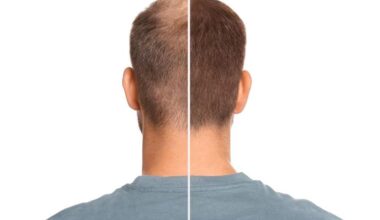
Before-and-after photos can be useful when they show consistent lighting, similar angles, comparable hair length, and a clear time frame. Look for patients whose age, hair type, and degree of thinning resemble your own. Be cautious about guaranteed outcomes, heavily styled photos, vague timelines, claims of unlimited density, or pressure to schedule immediately.
Plan for Future Hair Loss
A transplant can redistribute donor hair, but it does not necessarily prevent thinning of existing native hair. A thoughtful plan considers age, family history, donor reserves, and the possibility that the crown or mid-scalp may continue to change. Someone who improves frontal density today may still need a future strategy for gradual thinning elsewhere.
Compare the Full Cost and Recovery Plan
Request a written estimate that explains consultation charges, surgeon and facility fees, medications, anesthesia if applicable, follow-up visits, post-procedure products, and possible future sessions. Raleigh patients traveling to another North Carolina city should also include lodging, transportation, and time away from work in their comparison. Before committing, ask about washing, sleeping position, exercise, swelling, early shedding, medications, and the expected schedule for progress reviews. You should also know who will answer questions after you return home and which symptoms require prompt contact with the clinic.
Use Industry Data Carefully
The 2025 ISHRS Practice Census results reported that 95 percent of first-time surgical patients treated by surveyed members in 2024 began treatment between ages 20 and 35. The report also described growing use of medical and non-surgical approaches. It is useful context, but it reflects participating physicians’ survey data, not a rule about when any individual should seek treatment.
A Simple Raleigh-Area Comparison Checklist
- Did a qualified medical professional perform the evaluation?
- Did the provider explain the likely cause and future course of the hair loss?
- Were surgical and non-surgical options discussed when appropriate?
- Did the team clearly explain risks, limitations, costs, and recovery?
- Were relevant patient results available for review?
- Is the follow-up plan workable if you live in Raleigh, Durham, Cary, or elsewhere in the Triangle?
Final Thought
The right choice is not automatically the closest office, the lowest quote, or the most aggressive promise. For Raleigh patients considering hair restoration, a sound decision should begin with a clear diagnosis and an assessment of whether surgery is appropriate for their hair loss type and stage. It is also important to review the surgeon’s qualifications, understand who will perform each stage of the procedure, and discuss the benefits and limitations of the recommended technique. Before committing, compare written treatment plans, realistic graft estimates, total costs, recovery instructions, and available follow-up care. Patients should also consider how the plan will protect the donor area and accommodate possible changes in hair loss over time. Taking these factors into account can help patients choose care that aligns with their needs rather than making a decision based on convenience or marketing alone.