Key Takeaways
- Define the fence’s purpose before choosing a style or material.
- Confirm property lines, easements, permits, and HOA requirements.
- Locate underground utilities before digging.
- Choose materials based on privacy, security, weather, pets, and maintenance.
- Plan gates, drainage, slopes, and access carefully.
- Compare detailed estimates and account for installation and future maintenance.
- Proper planning helps prevent delays, disputes, damage, and unexpected costs.
A fence can improve privacy, define outdoor space, protect pets, and support everyday security, but a successful project starts well before the first post hole is dug. Homeowners comparing designs, materials, and installation approaches can use this checklist to make informed decisions, whether they are working independently or consulting fence builders in Bethesda, MD. The best plan accounts for the property itself, including boundaries, local requirements, slopes, drainage, access, and how the fence will be used each day. Taking time to resolve these details early can reduce surprises, delays, disputes, and costly changes during installation.
Start With A Clear Goal
Identify the fence’s primary purpose before choosing its height or style. Privacy often calls for solid panels, while pet containment may require small gaps at the bottom and secure latches. Security, pool protection, boundary definition, curb appeal, and wind screening can each lead to different choices. For example, a homeowner may use a taller privacy fence behind the house while selecting a lower, more open style near a front walk to preserve visibility.
Review Property Lines And Easements
An old fence, hedge, driveway edge, or row of shrubs is not necessarily the legal boundary. Review a recent survey, plat, deed, or available county records before marking the fence line. A boundary survey may be especially worthwhile for older, wooded, corner, or irregularly shaped lots. Also identify utility, drainage, shared driveway, and access easements, since these areas may restrict placement. If the fence will sit close to a shared line, a respectful conversation with the neighboring owner can prevent misunderstandings.
Check Local Rules And HOA Requirements
Fence regulations vary by municipality and may address height, setbacks, corner-lot sight lines, pool barriers, and placement near sidewalks or rights-of-way. For example, the fence and wall rules in Fairfax County show how front-yard and side-yard restrictions can differ. Homeowners’ association covenants may also regulate materials, colors, styles, and approval procedures.
- Check the applicable city or county zoning requirements.
- Ask whether a permit, drawing, or site plan is needed.
- Review HOA approval steps before ordering materials.
- Confirm requirements related to pools, drainage, and public areas.
- Keep approvals, drawings, and correspondence with project records.
Plan For Underground Utilities
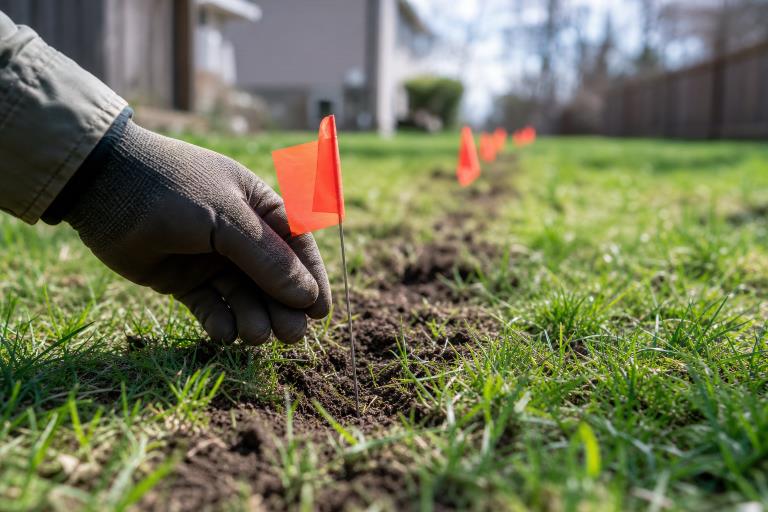
Posts, gates, and retaining features require digging, so utility planning is essential. Before excavation, request markings through the local 811 service. Homeowners planning to install a fence in Virginia can request utility markings before digging begins. Markings generally identify participating public utilities, but private lines for irrigation, landscape lighting, wells, propane, or other yard systems may require separate locating. Keep flags and paint marks visible until work is complete.
Choose A Material That Fits The Site
The least expensive option is not always the lowest-cost choice over time. Match material to maintenance expectations, moisture exposure, wind, pets, children, security needs, and the property’s overall appearance.
- Wood:Offers a warm appearance and flexible design, but needs cleaning, sealing, staining, and occasional repairs.
- Vinyl:Provides a low-maintenance privacy option, although styles and colors may be more limited.
- Aluminum:Works well where visibility and a decorative appearance matter.
- Steel:Provides strength for demanding security applications.
- Chain link:Is practical for pets, large areas, and budget-conscious projects.
Measure The Layout And Design Gates
Total linear footage affects material quantities, labor, and cost. Mark corners, turns, slopes, trees, sheds, driveways, walks, and existing structures on a simple sketch. Include planned post locations, gate openings, and grade changes. A drawing often reveals access problems before work begins, such as a gate that swings into a garden bed or a narrow opening that will not accommodate a mower. Gates deserve extra attention because they affect daily convenience. Plan for trash bins, bicycles, lawn equipment, trailers, and future projects. Confirm swing direction, slope clearance, latch location, lighting, locks, and hardware. Pool gates and child-safety barriers may require self-closing, self-latching hardware and inspection.
Consider Slope, Drainage, And Soil
Sloped yards may need stepped fence sections or panels that follow the grade. Soft soil, rocks, tree roots, standing water, erosion, and frost movement can all affect post stability. Poor drainage can contribute to leaning posts, damaged hardware, and premature wood decay. Keep wood components out of constant soil contact where possible, and address runoff issues rather than expecting the fence to withstand them indefinitely.
Build A Budget And Prepare The Yard
Costs depend on more than fence length. Account for material, height, gate size and quantity, terrain, difficult soil, old-fence removal, permits, surveys, access controls, and landscaping repairs. Compare written estimates by scope, not price alone. A clear estimate should identify materials, labor, cleanup, disposal, gate details, exclusions, and potential change-order costs. Before installation, remove furniture, toys, planters, and stored items from the work area. Trim plants that block the proposed line, protect pets and children from equipment and open holes, and confirm how crews will reach the site without damaging gardens, driveways, or other improvements.
Create A Simple Maintenance Plan
Inspect the fence twice a year and after severe weather. Check posts, rails, panels, fasteners, hinges, latches, and gates for looseness, sagging, rust, cracks, pooling water, or shifting soil. Wood may need sealing or staining; vinyl benefits from routine washing; metal fences need attention to coating damage and corrosion; and chain link should be checked for loose ties, poor fabric tension, and bottom gaps.
Common Fence Planning Questions
How early should a fence project be planned?
Begin several weeks in advance, especially if the project requires a survey, HOA approval, permit review, utility markings, or significant site preparation.
Should a survey be ordered before installation?
A survey is particularly useful when markers are unclear, improvements sit near the boundary, or a neighbor may question the planned location.
Does every fence need a permit?
No. Requirements vary by location, but tall fences, pool barriers, corner-lot layouts, walls, and fences near public areas may receive additional review.
Final Planning Checklist
Define the fence’s purpose, confirm property boundaries and easements, check local regulations and HOA requirements, locate underground utilities, choose materials suited to the property’s conditions, plan gates around real daily needs, and account for drainage, terrain, and access. Taking time to review these details before installation can prevent boundary conflicts, utility damage, poor drainage, awkward gate placement, and unexpected project costs. A thoughtful plan also makes it easier to coordinate materials, installation, and future maintenance. With careful preparation and the right installation approach, homeowners can create a fence that not only looks appropriate for the property but also remains practical, secure, and dependable for years to come.