Why Floors Matter More This Year
Home life has altered. More time spent cooking, working, and gathering has highlighted floors. Performance and bolder aesthetics are essential in 2026. Homeowners prefer quiet, easy-to-clean surfaces that improve indoor air. They desire character and warmth. There is a wave of materials and finishes that are welcome, customized, and durable enough for pets, kids, and rolling office chairs. Consider your floors the stage for your home. When they work, rooms feel quieter and more put together without trying.
Engineered Wood With Soul
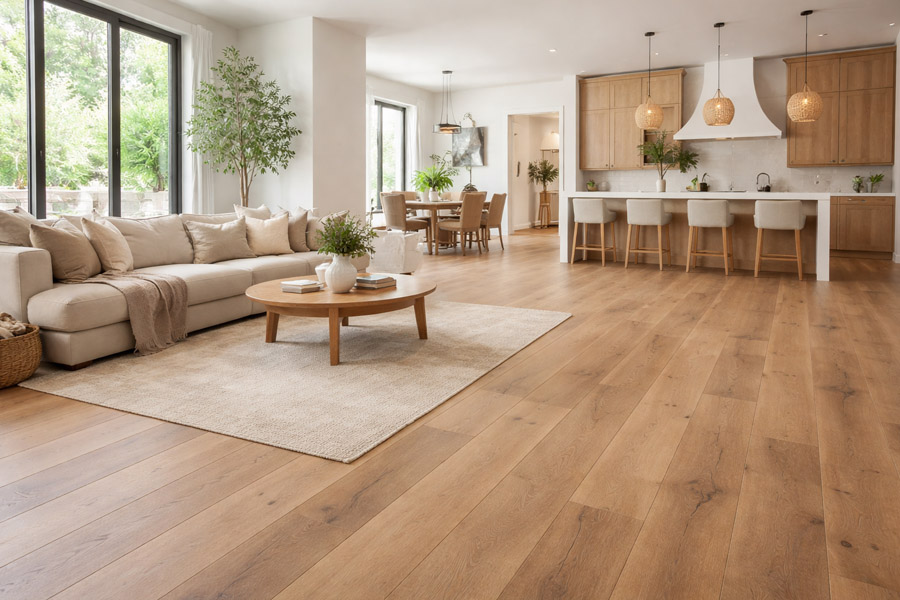
Warm wood returns, but with practicality. Engineered boards resist seasonal movement and complement radiant heat. Details matter. For later refinishing, look for extensive wear layers. Ask about core construction since plywood cores withstand moisture better than fiberboard in kitchens and entry. Matte and oil-like finishes highlight grain and reduce glare and imprints. Waterborne topcoats and UV-cured oils provide low-odor installation and fast service availability. Choose thermal-treated choices for richer color and increased stability without maintenance issues.
Installation matters as much as wood. Floating click systems simplify plank replacement and speed up projects. With glue-down, sound management and underfoot stability are enhanced. While staple-down is traditional, it requires a sturdy subfloor. Flat substrates are required regardless of approach. Humps and dips show on wood boards like ripples on a pond.
Pattern That Guides the Eye
Pattern goes beyond adornment. It may divide an open layout, highlight a view, and liven up quiet areas. While herringbone and chevron remain popular, parquet panels and mixed-width patterns are gaining popularity. Pattern conceals scuffs better than straight lay because angles and seams cover daily markings. Border inlays can frame dining rooms without walls. Bold patterns seem like bespoke rugs that never need vacuuming in modest foyers. Before expanding, try it in a hallway or mudroom if you like the idea but are hesitant.
Pattern need not be limited to wood. Porcelain inlays, terrazzo chips, and even cork tiles can play with geometry. The key is scale. Big patterns need space to breathe. Tight patterns suit compact rooms and deliver a sophisticated, tailored effect.
Oversized Tile, Precise Execution
Large-format tiles offer a tidy solution for busy lives. Fewer grout joints make floors look bigger and mop faster. However, larger tiles require more preparation. For flush edges without lippage, subfloors must be flat. Rectified tiles have narrower joints but require careful planning. Leveling and the correct mortar are essential. Matte or honed finishes reduce reflections and protect eyes and camera lenses in sunny rooms.
Porcelain slabs push the seamless look even further. They slide from kitchen to pantry to powder room without visual breaks. In wet areas, choose slip‑resistant finishes with fine‑grit texture. Plan for movement joints and transitions at doorways. The clean look depends on these hidden details.
Soft Surfaces, Quiet Rooms
Reimagining carpet for bedrooms, media rooms, and nurseries. The latest crop prefers soft, low-to-mid pile heights that resist matting. Solution-dyed fabrics resist stains and sun fading. Wool blends manage humidity and provide unequaled tactile comfort. The correct cushion changes the experience underfoot. Carpets with high-density pads last longer and improve acoustics, calming upstairs and shared walls.
Silent, textured patterns. Imagine modern linear ribs, heathered yarns, and sculptural loops. To address allergy concerns, choose for low-emission adhesives and backings and regularly vacuum. Soft floors do more than insulate. It absorbs echos and simplifies talks.
Stone and Stone Alternatives
Natural stone endures. Limestone dresses well. Marble veining enhances an entrance. Dark drama from slate. Honed finishes add modernity and safety. Breathable formulations that resist stains without plastic gloss make sealing easier. If you cook with acidic foods often, use stones that resist etching or patinate to show meal marks.
Consider sintered stone or porcelain that replicates marble or basalt for the look with better maintenance. Terrazzo tiles, whether poured or precast, offer striking color and durability. Micro-terrazzo and cement-look porcelain offer a minimalistic approach. Stone and its relatives naturally carry thermal mass and radiate heat to balance temperature.
Healthier Materials and Honest Sustainability
Sustainability goes beyond recycled content. Floors with low-emitting coatings and adhesives safeguard indoor air. Request third-party validated emissions data, not just marketing claims. Modern formaldehyde regulations apply to solid and manufactured woods. Bio-based cork and linoleum excel due to their resilience, durability, and comfort. Bamboo matures quickly and can match hardwood in dent resistance when strand-woven.
The ultimate green metric is durability. Long-lasting floors that can be renewed instead being replaced save resources. Consider recycling or take-back programs for installation offcuts and end-of-life items while shopping. Modular tiles can be used in high-use areas instead of replacing entire rooms if carpet is chosen.
Water, Pets, and Everyday Chaos
Kitchens, mudrooms, and basements need spill-resistant floors. Better than laminates, rigid core products with stone or waterproof foam cores handle standing water. Look for secure locks and swelling-resistant edges. Read warranties to understand waterproofing. Ask how a pet-protected floor takes scratches and how long accidents may wait before staining.
In bathrooms, mosaics still excel in showers because more grout means better grip on slopes. For main floors, aim for tiles with a slip rating suitable for wet socks. Add entry mats at doors and a washable runner in traffic lanes. A good maintenance routine beats any marketing claim.
Sound, Comfort, and What Sits Below
Underlayments carry more weight this year. They soften footfall, reduce sound transmission, and hide minor imperfections. Dense foam or cork under floating floors knocks down clicky echoes. Rubber under tile decouples structure from ceramic, reducing cracks and foot fatigue. In multifamily settings or upstairs bedrooms, sound ratings are worth a close look. Acoustics shape how a room feels as much as color does.
If you plan radiant heat, choose materials with good thermal conductivity. Tile, stone, and engineered wood perform best. Carpets can work above radiant systems but require careful selection of both carpet and pad so heat reaches the room efficiently.
Minimal Transitions and Custom Details
The cleanest floors use unobtrusive details. Treads seem continuous with flush stair nosings. Vents are color-matched and vanish into the field. Without cumbersome trimmings, slim metal profiles protect tile edges. Not all expansion gaps are bad. Baseboards or shadow reveals hide the need for wood and laminate ventilation. Slow transitions are important when spaces change materials. A narrow stone border between wood and tile reads deliberate and shields water- and dirt-collecting edges.
Cost and Longevity Without Guesswork
Budgets exist. Knowing where each option is helps you invest intelligently. Carpet and laminate are usually cheaper. Middle ground is quality vinyl plank and cork. Engineered wood and porcelain tile range in quality and installation complexity. Due to skillful effort, natural stone and slab porcelains rank highest. The lifespan arcs similarly. Properly laid tile and stone can survive for decades. A large wear layer on engineered wood can be refreshed. Good upkeep keeps vinyl and laminate shiny for 10–20 years. Carpet life depends on fabric, pad, and care.
When evaluating value, count installation and preparation. A flawless subfloor and competent installer elevate any material. Skimping there is costly later.
FAQ
Which flooring pairs best with radiant heat?
Tile, porcelain slab, and natural stone conduct heat efficiently and store warmth, delivering even comfort. Engineered wood also performs well when installed with the right adhesives or floating systems and when temperatures are brought up gradually. Avoid thick pads and high pile carpet directly over radiant zones unless specified by the system manufacturer, since they can slow heat transfer.
How do I make large‑format tile safe in wet areas?
Choose tiles with a slip rating intended for damp environments. Opt for honed or textured finishes rather than polished surfaces. In showers, smaller forms or mosaics create more grout lines and better traction on slopes. Keep grout lines clean and use mats at entries to avoid water tracked indoors.
Can engineered hardwood be refinished?
Yes, if the wear layer is thick enough. A wear layer around 3 millimeters or more can often handle one to two sandings, sometimes more with careful work. If the wear layer is thin, focus on maintenance and screening with recoating rather than full sanding to extend life.
Are waterproof floors truly waterproof?
Planks and tiles that are waterproof won’t swell or delaminate from surface dampness. Not all of the assembly is sealed like a boat. Seams, underlayment, and subfloors can absorb standing water. Wet room cleansing and perimeter sealing preserve warranties and structure.
What is the quietest flooring for upstairs?
Carpet over a dense, high‑quality pad yields the softest sound profile. For hard surfaces, engineered wood or luxury vinyl over acoustic underlayment reduces footfall noise significantly compared to stone or tile. Glue‑down installations feel quieter and more solid than floating systems.
How do I choose between matte and satin finishes?
Matte hides dust and footprints, reduces bright room glare, and highlights texture. The soft shine of satin illuminates darker spaces and makes smudges simpler to wipe away. Lighting and upkeep should be considered. In sunny environments, matte appearance is enhanced throughout the day.
How can I transition between materials without breaking visual flow?
Aim for flush heights and align grout or plank lines where materials meet. Use slim metal profiles or a narrow stone band to bridge wood and tile cleanly. Keep thresholds low and consistent from room to room. Planning transitions on paper before installation ensures doors clear and patterns align.
What maintenance routine keeps floors looking new?
Create a simple cadence. Daily or every few days, dry dust hard surfaces and vacuum carpets. Weekly, damp mop with manufacturer‑approved cleaners. Monthly, check entry mats and felt pads under furniture. Annually, refresh protective coats where applicable and reseal stone as needed. Small habits prevent the kind of wear that forces early replacement.