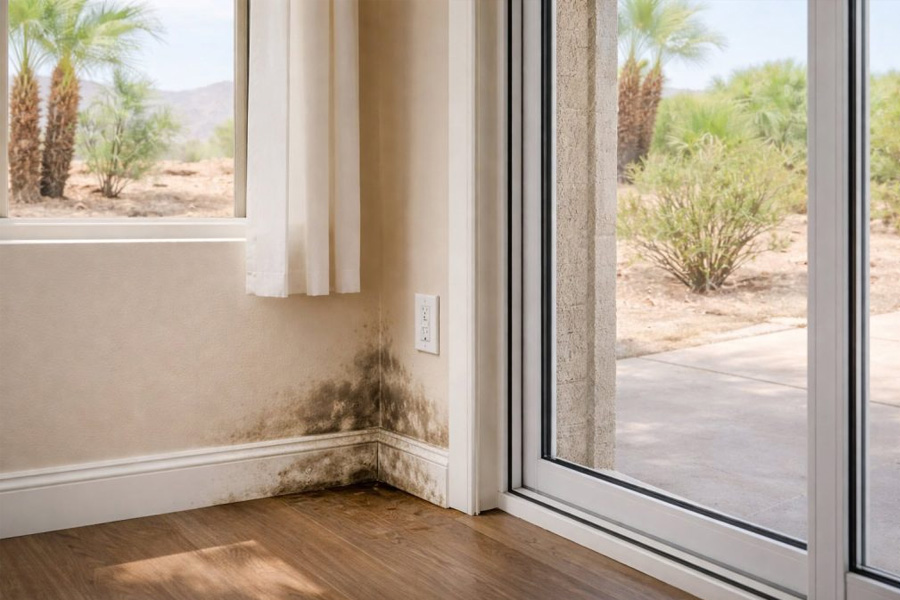
Why Mold Finds a Foothold in Arizona Homes and Workplaces
Arizona’s searing heat and regular monsoons foster indoor mold growth. Unmaintained evaporative coolers create dampness. Long-running air conditioning can drip condensate into walls. Summer storms damage roofs and windows, leaving drywall and insulation moist. With stucco exteriors, slab foundations, and rushed construction, moisture can’t dry out.
Commercial buildings are at risk. Water can pool on flat rooftops during storms. Old HVAC systems spread spores through return air. Storage and rarely used mechanical rooms might have months-long leaks. An overflowing unit in a multifamily unit might affect numerous neighbors, requiring coordinated investigation and remediation.
Early Clues and Hidden Pathways of Indoor Mold
Mold does not always reveal itself with a bold black patch on drywall. It often works in the shadows. People notice an earthy odor that flares when the air conditioner turns on. Allergic symptoms escalate in one room and ease outdoors. Paint bubbles or texture loosens on a ceiling that looks otherwise intact. Vinyl flooring lifts at the edges. These clues signal moisture migration behind surfaces.
Gravity, capillary action, and air pressure transport water. Negative pressure can drive wet external air through tiny breaches in Arizona’s sealed, chilled interiors, increasing wall humidity. A roof leak may stain several feet away. A malfunctioning condensate line might feed a closet subfloor colony. Medical evaluation and legal proof need understanding these routes.
What Attorneys Do Before Filing: Building the Proof
Good mold injury cases start before a complaint. Attorneys begin by charting exposure: where you lived or worked, when symptoms started, and how they followed building conditions. They collect maintenance orders, repair records, and tenant correspondence. They match photos and videos with meteorological data and leak timeframes. They arrange professional moisture mapping, cavity checks, and spore identification and concentration lab tests.
Medical documentation is approached with the same discipline. Attorneys encourage clients to track symptoms with dates, preserve allergy testing results, and keep pharmacy and clinic receipts. When appropriate, they consult specialists who understand environmentally triggered conditions. The goal is to connect the dots between building moisture, mold ecology, exposure pathways, and health or property loss, creating a narrative that is clear and supported by professional assessments.
Liability Maps in Arizona: Who May Owe You for Mold Harm
Responsibility can fall on several parties depending on where and how the problem arose. Landlords must deliver and maintain habitable dwellings, respond to notice of defects, and address roof, plumbing, and HVAC failures that make a unit unsafe. Property managers can be liable if they ignore complaints or delay repairs. Contractors who botch roof installs or HVAC condensate routing may bear responsibility for resulting damage. In homeowners associations, the HOA often maintains roofs and exterior envelopes for attached units, and failure to act after notice can create exposure.
Tenants and owners have duties too. Failing to report leaks, blocking ventilation, or disabling bathroom fans can complicate fault. Arizona’s pure comparative negligence rule allows recovery even when a plaintiff bears some responsibility, but damages are reduced by that percentage. Sorting out who knew what, and when they knew it, is a core task in these cases.
Insurance Realities: Claims, Denials, and Bad Faith Signals
Insurance coverage for mold is often limited by policy endorsements, but it is not automatically excluded. Some policies cap mold-related payments at relatively low amounts. Others cover the water loss that caused the mold, triggering broader repair obligations. Insurers sometimes push for quick surface cleaning rather than full removal of wet materials, which risks recurrence.
Lawyers look for unfair treatment. Delay inspections during active water infiltration, rejection letters that disregard leaks, and plans to paint over contaminated items without drying the structure are examples. Policyholders may have additional claims if insurers undervalue or refuse to investigate clear losses. Communication and archiving of correspondence, estimates, and site notes are essential.
Remediation Standards and When to Push Pause on Repairs
Effective cleanup goes beyond biocide spraying and wall closure. First, address the moisture source, then remove uncleanable porous materials. HEPA filtration, negative air confinement, and worker safety prevent cross-contamination. After demolition, dry the structure to specified moisture levels before rebuilding. Visual or clearance testing by an impartial specialist may be appropriate in disagreements.
Pause sometimes. If a landlord or insurance refuses to contain a leak, it can damage evidence and increase risk. Attorneys work with specialists to combine health demands with proof, securing images, moisture readings, and sample chain of custody before closing walls.
Timelines That Matter: Notice, Discovery, and Filing
Timing drives outcomes. Tenants should notify landlords promptly and keep proof of delivery. Early notice establishes a starting point for liability and demonstrates that you acted responsibly. Health effects from mold can develop over time, and discovery of the injury may occur after initial exposure. Attorneys pay close attention to the date you reasonably knew of your injury and its likely cause, as that date can trigger filing deadlines that are not obvious when the first leak occurs. Evidence collection should begin as early as possible, while conditions are fresh and documentation is available.
Damages You Can Pursue Beyond Medical Bills
Doctor visits, medicines, testing, and chronic symptom treatment are common mold claims expenses. But the economic and personal damage typically goes deeper. People miss work or cut hours, lowering their earnings. Families pay for temporary lodging while repairs. They throw away contaminated clothes, furniture, rugs, and beds. Regular cleanings and air purifiers cost time and money. Human toll is recognized by law. Non-economic damages can address coughing-related sleep disruption, concern over recurrence, and loss of daily activities.
In severe cases, long-term respiratory issues or exacerbation of preexisting conditions can significantly change life trajectories. Comprehensive evaluation helps ensure the full scope of harm is presented, not just the first doctor bill.
Steps You Can Take Today Without Jeopardizing Your Case
If mold is affecting you, seek medical treatment. Inform your provider of your location and water activities. Document everything with dates. Photos of staining and upkeep removal. When safe, seal and label moldy goods for testing. Inform the concerned party in writing and save a copy. During temporary moves, keep receipts. Avoid self-demolition that could spread contaminants or destroy evidence. In doubt, seek an attorney who can organize testing and evidence preservation while safeguarding your health.
FAQ
How do I tell if symptoms are linked to my home or workplace rather than seasonal allergies?
Track when and where symptoms spike. If breathing problems, headaches, or sinus irritation improve when you spend a day away and worsen upon return, that pattern is informative. Document episodes with dates and locations, then share this record with your medical provider and attorney so they can correlate with building events and inspections.
Can I ask for temporary relocation during remediation and who pays for it?
Relocation may be necessary if your workplace affects key living areas, ventilation, or medical risks. The lease, insurance, and fault determine cost responsibility, but damages often include these fees. Keep receipts and write to landlords or insurers about housing possibilities.
Do I need professional testing to bring a claim, or are photos enough?
Pictures and moisture logs are compelling, but expert testimony is stronger. Moisture mapping shows active wet zones, while testing identifies species and spore loads. Attorneys use both types of evidence to prove contamination was serious and linked to water incidents.
What if I used a humidifier or overwatered plants and the landlord blames me?
Arizona’s pure comparative negligence rule allows partial fault to be assessed. If your conduct contributed to indoor humidity but the building had unrepaired leaks, fault can be divided. Evidence of structural water intrusion, delayed repairs, and HVAC deficiencies can outweigh minor tenant actions. A thorough investigation clarifies the balance.
How fast should a landlord respond after I report a leak?
Immediate steps to stop active water are expected, followed by timely drying and repair. Prolonged delays increase damage, risk, and liability. Keep a written timeline of your report, responses received, and any interim measures taken by maintenance.
Are workplaces held to different standards than residential landlords?
Workplace safety and building maintenance are regulated. Employers must address known dangers and employee water or indoor air quality reports. Commercial building owners and managers must maintain roof, plumbing, and HVAC systems. Service contractors, building owners, and renters can be liable.
Can I recover the value of personal items damaged by mold?
Yes. You can seek compensation for belongings that cannot be effectively cleaned, such as porous furniture, mattresses, books, and textiles. Document each item with photos, describe its condition before contamination, and keep purchase receipts or reasonable valuation evidence when possible.
What mistakes most often weaken mold cases?
Late or unrecorded notification, discarding damaged objects before photographing or reviewing them by an expert, shallow cleanups without addressing the moisture source, and medical record gaps might hinder a claim. Early preparation and evidence preservation boost your case.