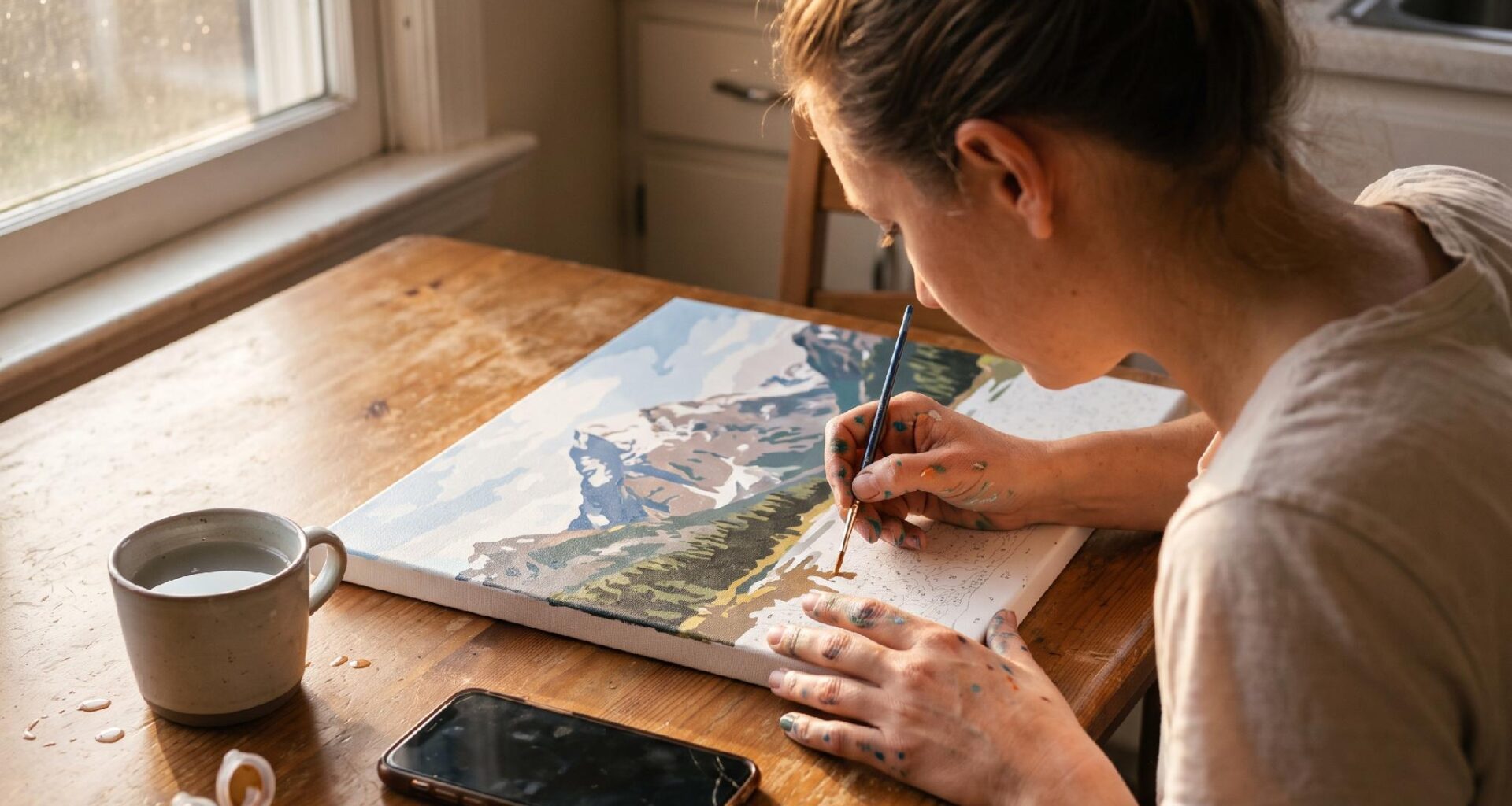
The average American adult now spends close to 7 hours a day staring at a screen. That number alone explains why a decades-old craft-store hobby is suddenly having a moment again.
US adults averaged between 6 hours 40 minutes and 7 hours 3 minutes of daily screen time in 2025, according to Demandsage’s “Average Screen Time Statistics 2026” report. Smartphone use alone climbed from 3 hours 38 minutes in 2021 to about 4 hours 2 minutes in 2025. Those aren’t small increases, and a lot of people have noticed. Paint by numbers, once dismissed as a kids’ craft-store throwback, is being rediscovered by adults who want something to do with their hands that doesn’t involve a notification.
The Digital Detox Hobby Adults Are Turning To
This isn’t a fringe trend. Paint-by-numbers kit searches jumped 18.22% month-over-month in June 2024, and landscape-kit search volume rose from 145 in November 2024 to 163 by January 2025, according to Mimi Panda’s “The Rise of Paint by Numbers and Adult Coloring” report. Sales of those landscape kits nearly tripled to 245 units by February 2025.
The timing lines up with a broader shift in mood around phones. A 2025 AWiseE roundup found that 52% of Gen Z and 45% of Millennials say they spend too much time on their phones, and 40% and 35% of each group, respectively, are actively trying to cut back. AWiseE also tracked a 33% surge between 2023 and 2025 in the number of Americans who say they want to reduce their screen time. People are looking for something to replace scrolling with, and a hobby that requires two hands, a brush, and zero notifications fits the bill.
That’s part of why sites where you can order paint by numbers for adults online have become a starting point for people testing the hobby out. Browsing a wide range of kits online, from simple florals to detailed skylines, gives new painters an easy entry point without a trip to a craft store, and it means anyone curious about the trend can find a project that matches their patience level on the first try.
What the Research Says About Painting and Stress
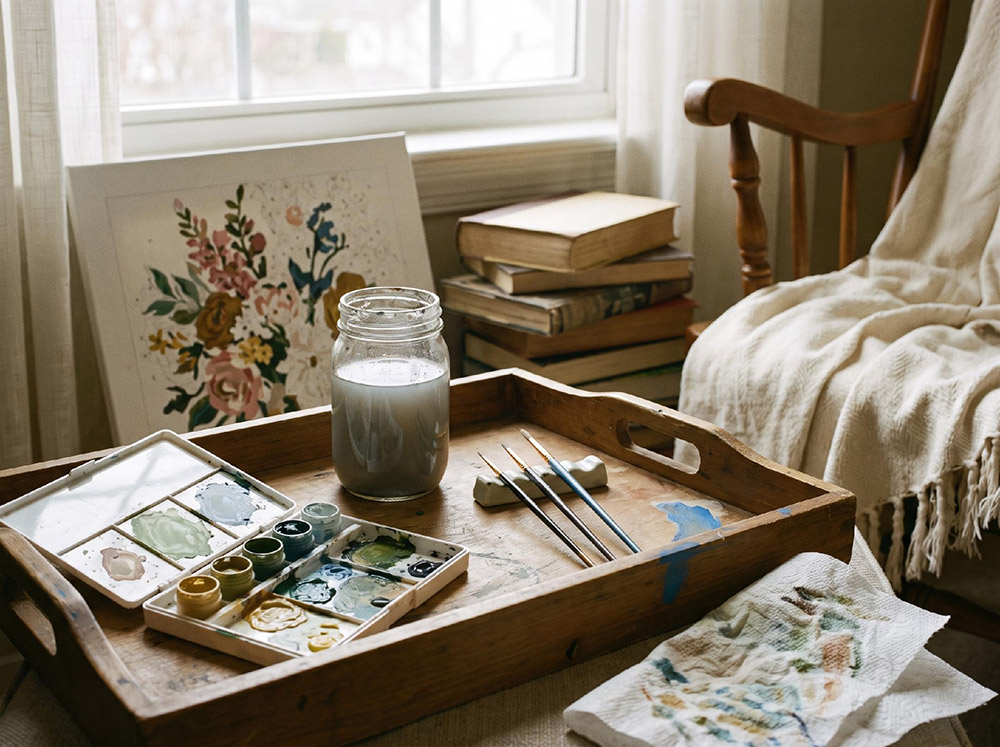
The appeal isn’t just nostalgia or a clever marketing angle. A systematic review published by the National Library of Medicine, “Creative Arts Interventions for Stress Management and Prevention,” found that creative activities reduce stress and anxiety across both healthy adults and clinical populations. The mechanism is fairly simple: a focused, repetitive task quiets racing thoughts in much the same way meditation does, minus the learning curve.
A 2025 Frontiers in Psychology feasibility study on digital art-making found measurable reductions in anxiety symptoms among participants after short creative sessions. Paint by numbers works on a similar principle, just with a brush and a physical canvas instead of a tablet. You don’t need any art training to start, and the numbered guide removes the blank-page anxiety that keeps many people from ever picking up a paintbrush in the first place.
There’s a real trade-off worth noting here: paint-by-numbers won’t teach you freehand technique the way an open studio class would, and some experienced painters find the guided format limiting. For someone whose goal is stress relief rather than skill-building, that’s a fair trade.
How to Choose the Right Kit as a Beginner
Picking a first kit matters more than most beginners expect. A few things separate a kit you’ll actually finish from one that ends up in a drawer:
- Canvas quality: Linen or cotton-blend canvases hold paint better and resist warping compared to thin poster-board versions.
- Paint opacity: Thicker, well-pigmented paints cover the printed lines in fewer coats, which matters when you’re new to blending.
- Standard sizing: 16×20 inches is the most common size and a reasonable starting point, big enough to see detail, small enough to finish in a few sittings.
- Time commitment: Small kits run 5 to 8 hours, medium kits 10 to 15 hours, and large kits 18 to 25 hours.
Setting aside a small, dedicated space for the project also helps it stick. A corner of a desk or a section of a table works fine, and thinking about it as part of everyday home upkeep, the same way you’d carve out space for a reading nook, makes the hobby easier to return to instead of packing everything away after one session.
Turning a Finished Canvas Into Something More
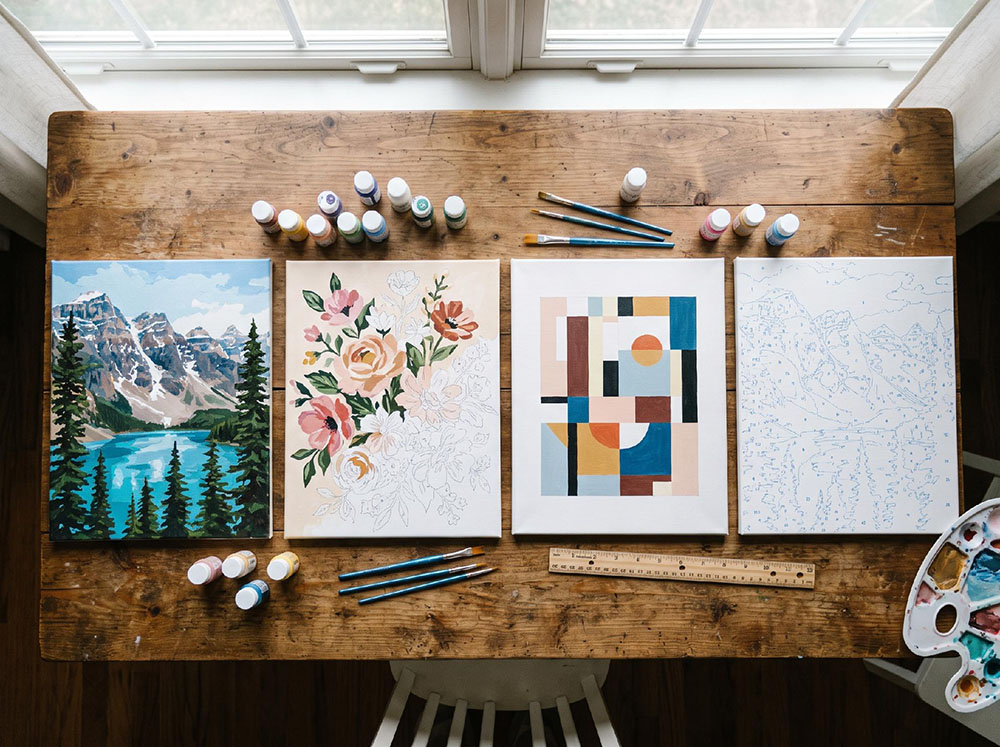
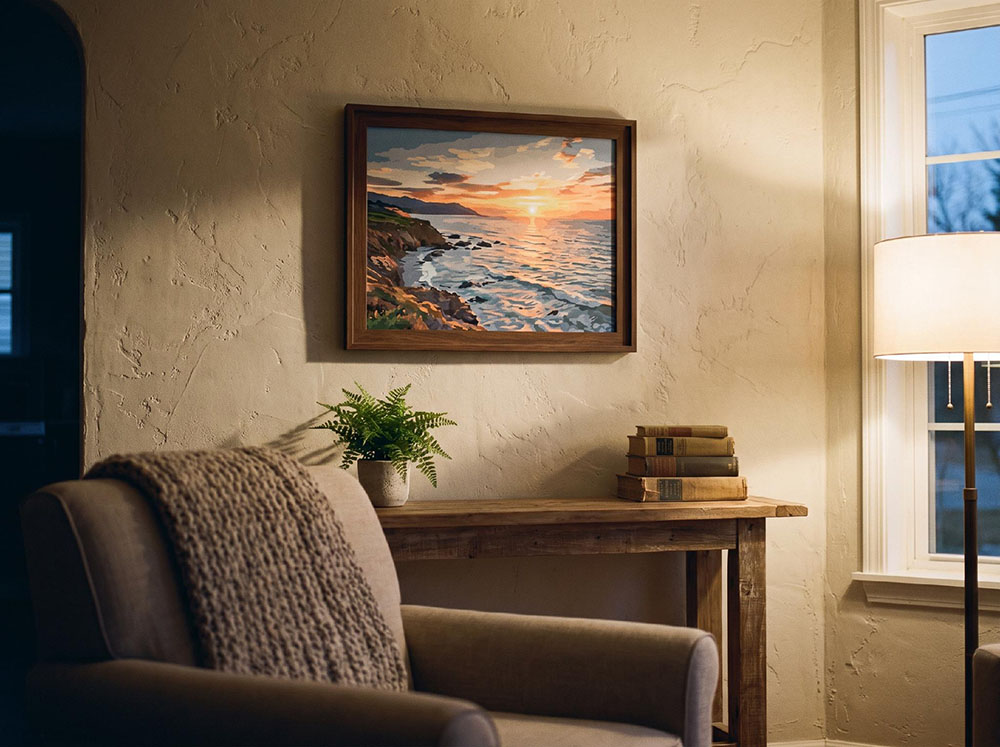
A finished canvas doesn’t have to sit in a closet. Framing it turns a weekend project into wall art, and it’s a cheap way to personalize a room without a trip to a home decor store. Some painters treat the framing and display stage as its own kind of party planning and home decor moment, picking a spot on the wall the way they’d plan out a gallery corner for a gathering.
Paint-by-numbers kits also make a genuinely thoughtful gift for a busy schedule, especially for someone who’s mentioned wanting to unplug more but hasn’t found an easy way in. A 2025 Statista chart on digital-detox behavior found that a large share of Americans are actively taking steps to manage their screen time, from app limits to intentionally screen-free activities. Gifting something screen-free, rather than another gadget, taps directly into that shift.
Making It a Habit, Not a One-Off Project
The painters who stick with this longest treat their kit as a phone alternative during downtime, not a special-occasion activity. Keeping a canvas out on the table, rather than storing it away, makes it the easy choice when you’d otherwise reach for your phone on a slow evening.
Custom photo kits, in which a personal photo is converted into a numbered canvas, have also helped keep the hobby fresh into 2026. Turning a vacation photo or a pet portrait into a paint-by-numbers project gives people a reason to start a second or third kit rather than stop after one.
Conclusion
Paint by numbers isn’t just a nostalgia trend making a random comeback. It’s a practical, data-backed response to screen fatigue that fits neatly into where a lot of adults already want to be in 2026: less time on a phone, more time doing something with their hands. If you’re curious, don’t overcommit to a 25-hour landscape on your first try. Start with something small you can actually finish, and see if the habit sticks from there.