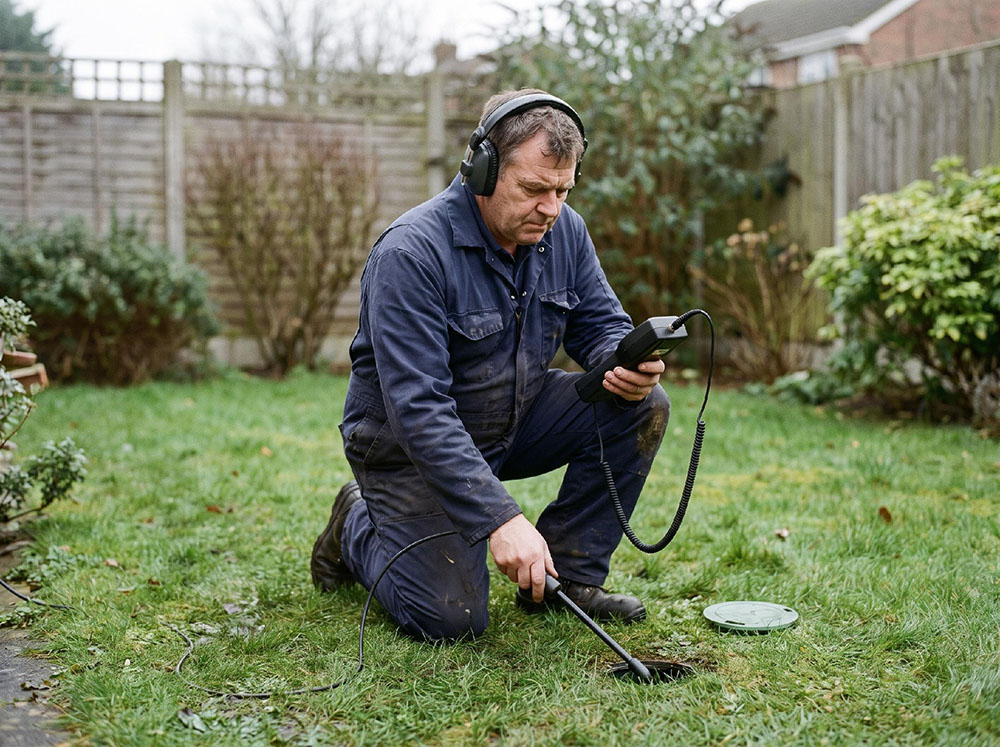
Most homeowners never see the leak that ends up costing them the most. It’s not the dripping faucet or the running toilet. It’s the pipe under the yard, quietly losing water for weeks or months before anyone notices a soggy patch of grass or a water bill that suddenly doesn’t make sense.
Nationwide, household leaks waste nearly 1 trillion gallons of water every year, according to the EPA’s WaterSense program, roughly the annual water use of more than 11 million homes. A lot of that waste happens underground, out of sight, where a small crack can run for a long time before it becomes a visible problem. This piece looks at why that’s happening more often than it used to and what homeowners can do about it before a hidden leak becomes an expensive one.
The Real Cost of a Hidden Underground Leak
The average U.S. household loses more than 9,300 gallons of water a year to leaks, and about 1 in 10 homes has a leak severe enough to waste 90 or more gallons per day, per EPA WaterSense data. That’s not a rounding error on a water bill. It’s the kind of number that shows up as a $200 overcharge before anyone thinks to check the meter.
The financial hit is only part of it. A slow underground leak near a foundation can warp flooring, soften soil beneath a slab, and eventually lead to cracks unrelated to the original plumbing problem. Mold shows up in places nobody thought to look. None of this happens overnight, which is exactly why it’s so easy to miss until the damage is done.
That’s also why more homeowners are skipping the guesswork entirely and calling in professionals instead of digging up the yard on a hunch. Companies offering underground leak detection services use acoustic and thermal tools to locate the exact point of a leak before anyone breaks ground, which turns a potential weekend of trenching into a targeted, hours-long repair. It’s a fairly simple trade: pay for precision up front, or pay for a bigger hole and a bigger bill later.
Why Aging Infrastructure Makes This Problem More Common
Part of what’s driving this shift is the age of the pipes themselves. The American Society of Civil Engineers gave U.S. drinking water infrastructure a grade of C- in its 2025 Infrastructure Report Card, and pegged the national infrastructure investment gap at $3.7 trillion, up from $2.59 trillion in 2021. Water systems need an estimated $1.7 trillion in investment over the next decade, while roughly $655 billion in funding is anticipated.
Those aren’t abstract utility numbers. Many residential supply lines and service connections were installed decades ago, and pipe materials that were standard in the 1960s and 1970s are now reaching the end of their useful life. The American Water Works Association estimates that 5.9 billion gallons of treated water are lost every day nationwide because of old, leaky pipes, faulty meters, and broken water mains, a figure cited in the ASCE 2025 Infrastructure Report Card. When the infrastructure feeding a neighborhood is aging, the odds that a homeowner’s own line is due for trouble go up, too.
This is one of those routine checks that save homeowners money down the road, and it fits into the same category of maintenance we’ve covered in our home improvement articles: things that are easy to ignore until they aren’t. It also connects to protecting your household from costly, hidden hazards, the same theme running through our home safety coverage.
How Modern Leak Detection Actually Works
For a long time, finding an underground leak meant a plumber’s best guess and a shovel. If the first hole didn’t hit water, you dug another one. That approach is expensive, disruptive to landscaping, and not especially accurate.
Acoustic leak detection changed that. Water escaping a pressurized pipe makes a distinct sound, and specialized listening equipment can pick it up through soil and pavement, then triangulate the exact location. Thermal imaging adds another layer, since water changes the surface temperature of the ground or a slab just enough for an infrared camera to catch it. Combined, these methods let a technician mark a precise dig site instead of guessing.
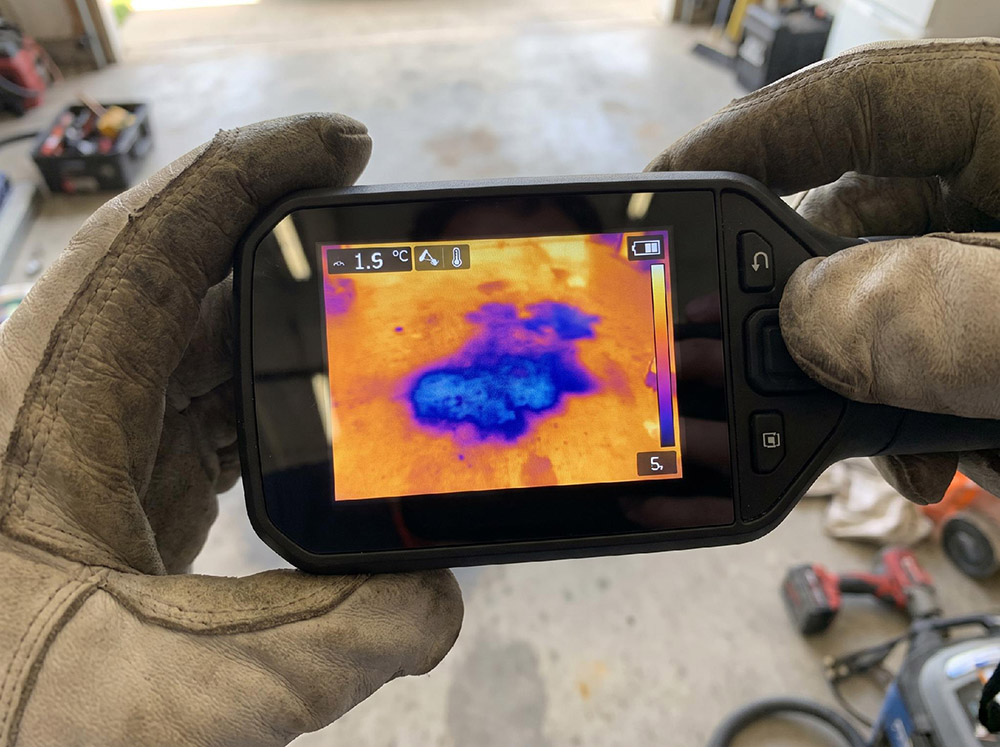
This isn’t a niche service anymore. The global market for water pipeline leak detection systems was valued at $2.72 billion in 2025 and is projected to reach $4.46 billion by 2033, a 6.4% annual growth rate, according to Straits Research. That kind of growth reflects a real change in how homeowners and utilities are choosing to deal with leaks: find it first, then dig, not the other way around.
Warning Signs Homeowners Shouldn’t Ignore
A hidden leak usually leaves a few clues before it becomes a real problem. Worth checking for:
An unexplained jump in the water bill with no change in household usage is often the first sign. A warm or damp spot on the flooring, especially near a slab, can indicate a hot water line leak beneath it. The sound of running water when every fixture in the house is off is another giveaway, as is a soggy patch of yard that stays wet regardless of the weather. A musty smell without an obvious source, particularly in a basement or crawl space, deserves a second look, too.
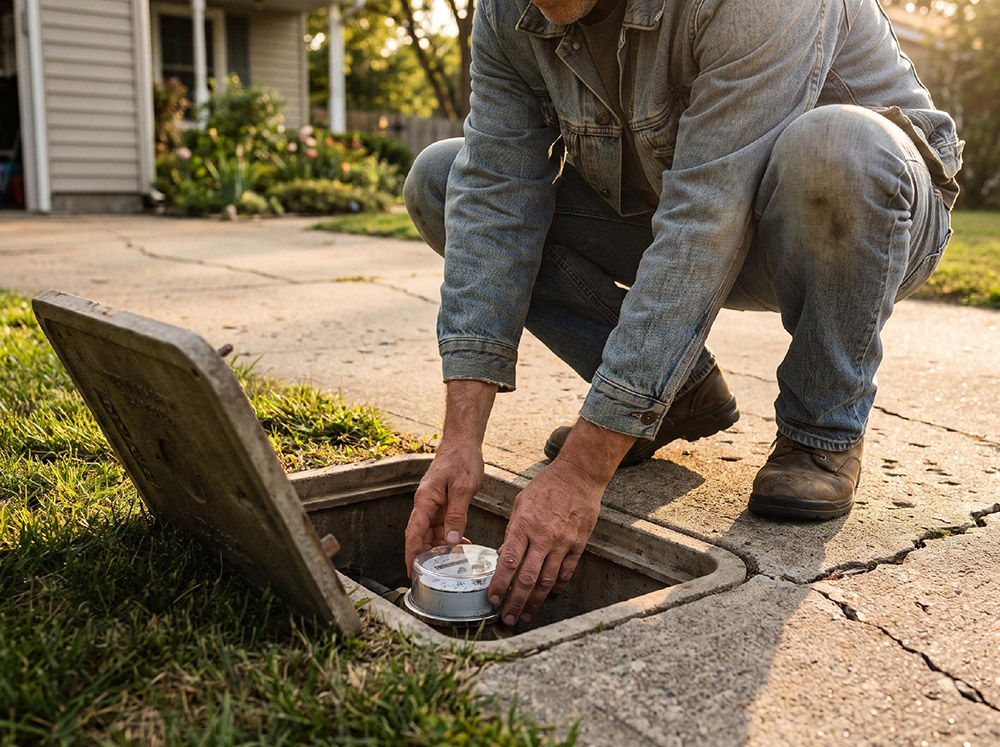
The EPA also recommends a simple self-test: check the water meter, avoid using any water for two hours, then check it again. If the reading moved, there’s a leak somewhere on the property, even if nothing looks visibly wrong yet.
For a deeper background on how leaks affect slab and foundation integrity over time, academic research on pipeline aging is worth a look. A 2025 study published in a ScienceDirect engineering journal modeled time-to-failure patterns in aging underground water pipelines, and the findings back up what plumbers have been saying anecdotally for years: older pipe networks fail in increasingly predictable, and increasingly frequent, ways. It’s the same pattern the EPA WaterSense program points to when it tracks national household water loss year over year.
A Small Step That Prevents Big Repairs
Most underground leaks stay invisible until they’re expensive. That’s the frustrating part. But it’s also the part that’s changed the most in recent years, because homeowners no longer have to choose between ignoring a suspicious water bill and tearing up the yard to find an answer.
Between EPA’s Fix a Leak Week reminders and the growth of non-invasive detection technology, catching a leak early has become much more practical than it used to be. Fixing easily corrected household leaks can cut water bills by about 10%, according to the EPA WaterSense program. Add that to protecting your household from costly, hidden hazards like mold and foundation stress, and a quick inspection starts to look less like an inconvenience and more like routine maintenance, the same category as checking gutters or servicing an HVAC system before summer.
If something about the water bill feels off, it’s worth checking the meter before assuming the worst, or waiting for it to get worse on its own.