Osteoarthritis doesn’t need to be silently suffered through by a senior. It’s a mechanical condition with direct physical roots, and that makes for clear, specific steps a caregiver can take at home to minimize pain and keep a loved one mobile. This guide walks through what’s actually happening in the joints, where daily life gets hardest, and what steps make the biggest difference – including the point where bringing in outside help stops being a last resort and starts being the smart move.
What’s actually happening in an arthritic joint
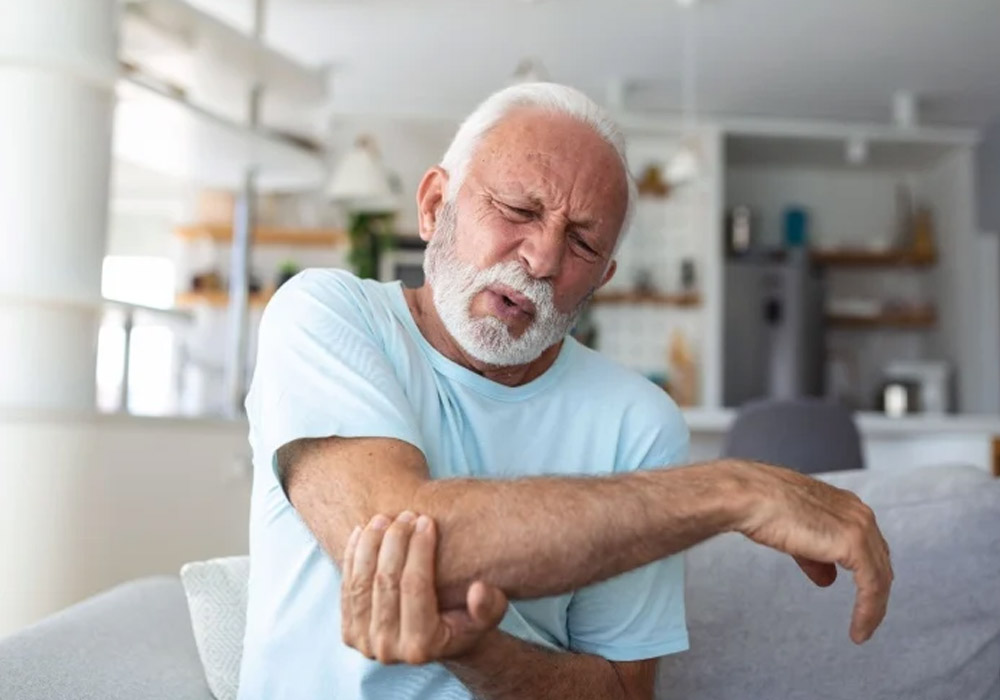
Osteoarthritis is a condition where the cushioning surfaces at the ends of bones break down over time, and the bone eventually grinds against the bone. This results in pain, swelling, and stiffness. Most older people suffer from these “bad days” and “good days”. OA is not a short-term inflammation in response to an infection or an autoimmune attack that will go away. It does not heal in a few weeks, as with a skin wound. The joint surface has changed. Rest alone won’t fix it, and movement done the right way is part of the answer rather than something to avoid. OA hits those bearing body weight hardest (knees, hips), but joints like hands, spine, and shoulders also get thrown into the pot. This will determine what gets disrupted in your home life, depending on which joints are involved.
Where OA actually shows up in daily life
It is simple to discuss osteoarthritis in a theoretical manner. However, it is more difficult, and more beneficial, to identify exactly how it impacts a senior’s life.
For instance, getting in and out of a bathtub poses a higher risk of falling when the knees refuse to bend as needed. Buttoning a shirt or opening a jar becomes exceedingly painful due to the affected finger joints. Suddenly loading the hips and knees that may not support the weight while trying to stand up from a low chair or a toilet becomes necessary. Climbing the stairs, which used to be natural, turns into a two-handed process of taking one step at a time. Even the simple act of walking from the bedroom to the kitchen in the morning, before the joints have a chance to “loosen up,” can be the most difficult ten minutes of the day.
Once you determine how OA influences a person’s performance of specific daily activities like bathing, dressing, using the toilet, or transferring themselves in and out of a chair or bed, you will know where to direct your energy as a caregiver. You are not handling a diagnosis. You are handling a set of specific, fixable situations.
A practical home-safety checklist
Falls cause more injuries in people over 65 than anything else and a person with OA in the knee or hip is already dealing with suboptimal balance and longer reaction time. Home safety isn’t a good idea here: it’s actual preventive medicine.
In the bathroom, that means grab bars near the toilet and in the shower (not those towel bars that look sturdy but aren’t made to support a person’s weight), a raised toilet seat, and a non-slip mat or shower chair. Loose rugs should be removed everywhere but especially in hallways and at the top and bottom of stairs. Improve lighting in stairwells and bedrooms so a 2 a.m. trip to the bathroom doesn’t turn into a hazard.
The kitchen should have the stuff you use most frequently (medications, dishware) within easy reach at waist height. This is one simple adjustment guaranteed not to hurt – no stressing arthritic joints over and over with unnecessary bending, or reaching. Same goes for your cell phone charger. A little advance planning can keep you from contorting your arm behind the headboard.
If you’re going to buy assistive devices – and you probably are – take the time to do so correctly. The tip of a cane is meant to meet the top of the crease in your wrist while your arm is hanging comfortably. A cane is also meant to be used on the opposite side of the affected joint, not the same side. Walkers, meanwhile, can straighten up your posture if used properly. Lean too far forward or grip too tight and a rollator isn’t doing you any favors in the gait department. Companies like Impactful Home Care can connect you with professionals who ensure your setup and technique are right, and a PT or OT can check fit in a single appointment. Don’t put it off.
Movement is the treatment, not the enemy
Caregivers often assume that it’s best for someone with osteoarthritis to rest a painful joint. But joints that are rested hurt more and stiffen up. Surrounding muscles weaken, and that increases the joint strain. Low-impact movement has strong evidence behind it as the most effective long-term approach to managing osteoarthritis pain.
Walking, water exercise, swimming, and chair yoga all work; they strengthen supporting muscle and keep joint fluid moving without the impact pounding. Daily range-of-motion exercises – just five to ten minutes – can go a long way toward maintaining flexibility that patients will otherwise lose so steadily and quietly over time. Little and often is more important than a lot now and then. A short walk every day is better than a long walk twice a week. A long walk is better than no walk because “my knees are playing up today.”
Encourage movement in the morning specifically, since that’s when stiffness tends to peak. A few minutes of gentle stretching before standing up for the day can make the next hour noticeably easier.
Pain relief you can manage at home
Heat packs are highly effective when it comes to morning stiffness as they help muscles to relax and increase blood flow to the joint. On the other hand, cold packs reduce swelling and numb the sharp pain. Caregivers often combine both depending on the day and the specific joint that is in pain.
Topical analgesics, creams, and gels that are applied over the joint, alleviate pain without the general impact of oral medication. Over-the-counter alternatives such as topical NSAIDs or menthol-based rubs are popular for this reason. Nonetheless, the doctor of the elderly person needs to be consulted before making any changes to oral medication, regardless if it is acetaminophen, or NSAIDs. This is particularly important if the person is using blood thinners, has kidney issues, or is taking other medications that don’t go well with anti-inflammatories.
Diet and weight: the most underused lever
Nutrition plays an important role in OA management – anti-inflammatory eating patterns can lessen joint pain in many people. But the most effective, widely cited medical intervention for knee pain in overweight seniors is, unexcitingly, weight loss. It’s free, low-risk, and sustainable. And it works!
Medical research shows that every pound of body weight puts roughly four pounds of stress on the knee joints. For a senior who’s 10 pounds overweight, that’s like adding a 40-pound backpack that steadily beats against their knees over every mile. Small wonder their knees hurt.
Now here’s the good news. Lose 10 pounds and those knees no longer have to absorb that extra force with every step. It’s not a quick fix, but over the longer term, it will yield the most guaranteed long-term relief for arthritic knees of almost anything else on this list. For most seniors, slow and steady weight loss should be part of a strategy for addressing a host of OA-related issues.
Joint protection during everyday tasks
Aside from exercise and diet, the way you go about your day can really help your joints out. How you move can make a big difference. Occupational therapists will tell you that proper body mechanics, pacing tasks, and avoiding repetitive motions can save your joints from plenty of extra wear and tear over a lifetime.
Use a cart, don’t carry a heavy bag of groceries. A rolling cart will help you out. Sit, don’t stand to fold laundry. Do yourself a favor and skip the hunching over a table while you fold laundry. Take a seat to give your back and knees a break. Take breaks during tasks that require repeated gripping like gardening or knitting. None of this feels dramatic day to day, but it adds up to meaningfully less joint stress over weeks and months.
When it’s time to bring in professional support
There is a point where family caregiving cannot do it any longer. If ADLs are no longer safe – if transferring a parent out of bed risks a fall, if bathing requires more physical strength than you can safely provide, if pain has shrunk their world down to one room – that is the sign.
PT and OT are where you start, sure, because strength, gait, and adaptive technique are directly addressed. But for many families, the relentless reality of bathing, dressing, transfers, and household safety needs consistent, hands-on help that therapy sessions alone can’t cover. This is the gap that in-home care services fill. Trained caregivers can handle mobility, transfers, bathing, dressing – and also keep an eye out for new fall risks, because the condition of a senior changes over time, sometimes gradually and sometimes not.
Protecting the caregiver, too
Feeling stressed as a caregiver is inevitable and it is caused by both physical and mental factors. Inadequate lifting or transferring of a senior can cause family caregivers to strain their back and shoulder in most cases. If you are the one doing the transfer regularly, it’s advisable that you learn the proper techniques such as bending your knees, keeping the senior closer to your body, and pivoting instead of twisting. Even better, a therapist can show you these techniques in person rather than you learning from a video.
You may not notice when burnout starts to set in, especially when you miss sleep, skip meals, and resent the fact that you never have a day off. It is important that you recognize this in yourself early enough so that you can line up respite care or professional help before you drain the tank.
Osteoarthritis might necessitate some big changes about what a day looks like, but it certainly doesn’t have to mean a sudden loss of independence for a senior. Small, steady changes to movement, home setup, and daily habits carry most of the weight. Recognizing when it’s time to bring in extra help isn’t a failure of caregiving; it’s just being smart about it.