Key Takeaways
- Make writing a consistent classroom routine rather than an occasional assignment.
- Break writing into manageable steps: choose, plan, draft, revise, edit, and share.
- Use prompts, drawings, word banks, sentence starters, and discussion to help students develop ideas.
- Teach revision as improving meaning, details, organization, and word choice, not simply correcting mistakes.
- Keep editing focused on a few important conventions, such as capitalization, punctuation, and spelling.
- Provide flexible supports for different learners, including multilingual students and children with handwriting challenges.
- Give students an audience through partner sharing, classroom displays, reading circles, or recordings.
- Track progress across drafts and conferences to recognize growth over time.
- Encourage students to view writing as a process where practice, feedback, and revision help their ideas become stronger.
Second graders become more confident writers when writing is a familiar classroom habit rather than an occasional assignment. A simple workshop routine gives children manageable steps, frequent chances to talk through ideas, and permission to improve their work over time. Teachers do not need elaborate materials to begin. A few prompts, planning pages, word banks, and student folders can create a strong foundation. Classrooms looking for printable supports can Learn more here.
Why A Writing Routine Matters
A predictable routine lowers the pressure of a blank page. Instead of hearing “Write a story” and wondering where to begin, students know they will choose an idea, make a plan, draft, improve it, check it, and share it. That sequence reflects the writing process framework, which emphasizes planning, drafting, revising, editing, sharing, and publishing as interconnected parts of the writing process. Most importantly, students learn that writing is flexible. A writer may add a detail while drafting, change an ending during revision, or return to planning after a conference. The goal is not a perfect first draft. The goal is to help children make purposeful choices.
How To Set Up The Workshop
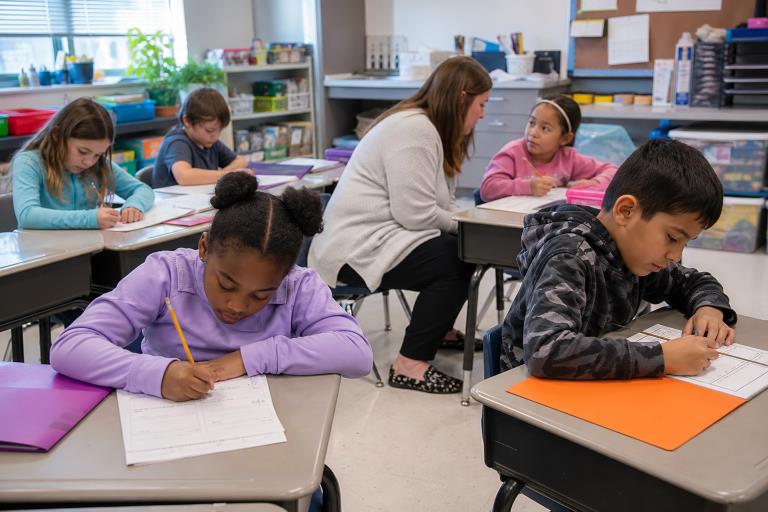
A workshop can fit into 20 to 40 minutes. Begin with a five- to ten-minute mini-lesson, such as writing a stronger opening or checking end punctuation. Follow with independent writing time while the teacher meets with a few students. End with a brief share, reflection, or partner conversation. Keep supplies simple: writing folders, pencils, crayons for planning drawings, idea charts, word banks, timers, and a quiet spot for sharing. Store planning sheets and drafts together so students can see that one piece develops across several days.
The Seven Writing Steps
1. Help Students Choose An Idea
Invite students to write about moments they know well. Pictures, classroom objects, read-aloud conversations, and personal experiences all make useful prompts. Let children talk before they write, then offer a few topic choices rather than a single narrow assignment. A student who starts with “my weekend” might narrow the idea to “the time my little brother hid my shoe.” A small moment is easier to describe clearly.
2. Turn Ideas Into A Simple Plan
Planning can be a drawing, an oral rehearsal, a short list, or a basic organizer. Ask: Who is this about? Where and when did it happen? What are two or three important events? How will it end? The plan gives the writer a path, but it should never prevent a new idea from being added later.
3. Support The First Draft
Model how writers get ideas onto paper before worrying about every detail. Think aloud as you compose a few sentences: “I know what happened first so that I will write that part.” Sentence starters can help hesitant writers begin, and invented spelling can be appropriate during early drafting. When a student pauses, ask, “What do you want your reader to know next?”
4. Add Details And Strong Words
Teach students to make their writing easier to picture. Encourage words that show color, size, sound, movement, and feeling. For example, “I saw a dog” can become “A muddy brown dog splashed through the puddle and shook water on my boots.” Students can expand a sentence by answering what happened, where it happened, when it happened, and how it felt.
5. Teach Revision In Small Moves
Revision improves meaning, not just correctness. Have students read a draft aloud, circle the most important part, find one place that needs more detail, and add, remove, move, or replace words. Teach one revision goal at a time. One day may focus on vivid details, while another focuses on endings that help readers understand why the moment mattered.
6. Edit For Clear Conventions
Editing comes after students have worked on the message. Use a short checklist with words, pictures, or symbols: begin sentences with capital letters, add end punctuation, check familiar word spellings, and reread for sense. Limit each cycle to one or two targets so editing feels achievable rather than overwhelming.
7. Give Students An Audience
Sharing gives writing a real purpose. Students can read to a partner, join a classroom reading circle, display a favorite piece, or record an audio version. Let writers choose whether to share the whole piece or one section. Teach feedback that is specific and kind: “I could picture the puddle,” followed by, “I wonder what happened next?”
Ways To Support Different Learners
- Students who struggle to start: Use picture prompts, oral rehearsal, topic menus, and sentence frames.
- Developing English speakers: Welcome home-language planning, labeled drawings, partner talk, and personal word banks.
- Students with limited handwriting stamina: Offer typing, dictation, speech-to-text, or a scribe when appropriate.
- Advanced writers: Encourage character thoughts, transitions, multiple events, dialogue, or a second viewpoint.
How To Check Progress
Assessment should capture growth across the process, not only the final page. Keep quick conference notes, collect plans with drafts, and use a short rubric for ideas, details, organization, and conventions. Ask students to name one change they made and why. Comparing an early draft with a later draft often reveals progress that a final paper alone cannot show.
Common Questions From Teachers
How Long Should A Writing Workshop Last?
Start with 20 to 30 minutes. Increase the time as student stamina and the classroom schedule allow.
Should Students Finish A Piece In One Day?
Usually, no. Several short sessions give students time to plan, draft, revise, edit, and share without rushing.
What Is The Difference Between Revising And Editing?
Revising improves ideas, details, order, and word choice. Editing checks spelling, capitalization, punctuation, and sentence clarity.
A Routine That Builds Confident Writers
When second graders repeatedly choose ideas, plan, draft, revise, edit, and share, writing becomes less intimidating. Consistent practice helps students understand that strong writing grows through small changes, helpful feedback, and the belief that every child has something worth saying.
Conclusion
A consistent writing workshop helps second graders see writing as a process rather than a one-time assignment. By choosing meaningful ideas, planning, drafting, adding details, revising, editing, and sharing their work, students gradually build stronger skills and greater confidence. Simple routines, flexible supports, and encouraging feedback can make writing more approachable for different learners while giving every child opportunities to develop their own voice. Most importantly, students learn that good writing does not have to be perfect on the first try, as it improves through practice, thoughtful choices, and revision.