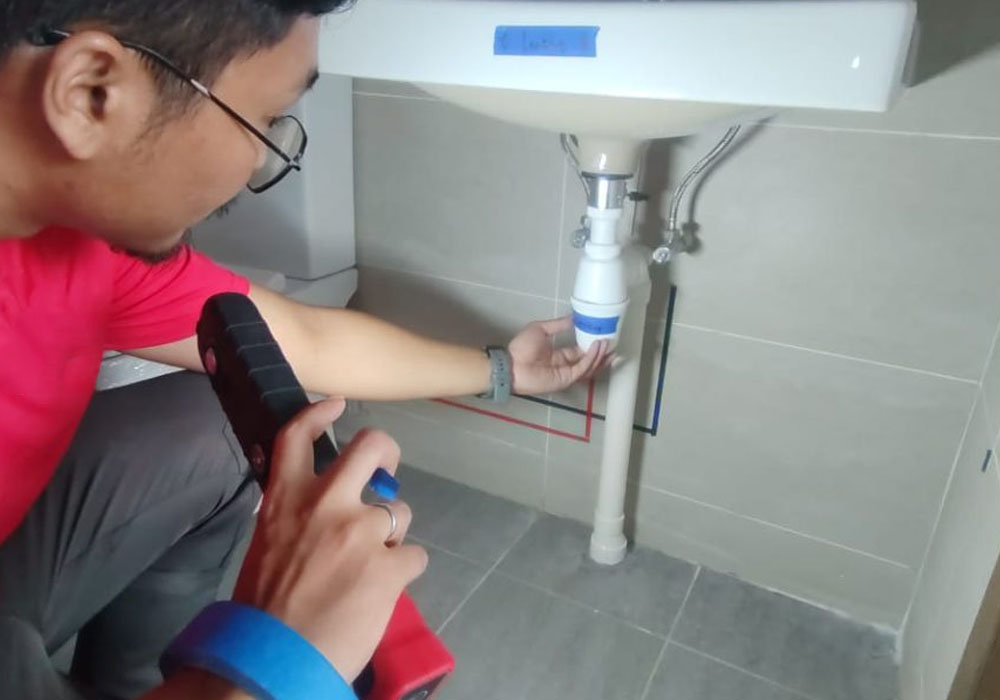
A new Build-To-Order (BTO) flat marks an exciting milestone for many homeowners, but even newly completed homes can have construction defects. Some issues are easy to notice, while others remain hidden until they affect daily use or renovation work. Identifying these problems early allows homeowners to report them during the Defect Liability Period (DLP) and request the necessary repairs before renovation begins. This article explains the most common workmanship defects found during HDB handovers and what you should check before moving forward.
1. Wall and Floor Surface Defects
A proper BTO inspection usually starts with the walls and floors because they cover most of the home. Common workmanship defects include hollow tiles, tile lippage, uneven flooring, chipped edges, and visible cracks. These issues may affect both appearance and long-term durability if they are not reported promptly.
Check for Hollow Tiles
Lightly tapping each floor or wall tile helps identify hollow spots hidden beneath the surface. Professional inspectors also use tapping rods, spirit levels, and laser levels to verify tile installation, floor flatness, and alignment more accurately. Recording these defects with photographs makes it easier to submit a clear report during the DLP.
2. Door and Window Installation Problems
Doors and windows should operate smoothly without sticking, dragging, or leaving visible gaps. Slightly misaligned frames may allow water, dust, or outside noise to enter the home over time. Scratched glass, damaged rubber seals, and locks that fail to align correctly are also common issues found during HDB inspections. Test every lock, handle, and sliding panel several times before accepting the unit. Small defects that seem minor during handover may become frustrating once the flat is occupied.
3. Plumbing and Drainage Issues
Bathrooms, kitchens, and service yards deserve careful attention because hidden leaks and poor drainage can become expensive after renovation. Turn on every tap, flush each toilet, and inspect under sinks for leaks or loose fittings. These checks form an important part of any complete BTO inspection.
Test Water Flow
Pour water across bathroom floors to confirm it drains directly toward the floor trap without water ponding. Poor floor gradient is one of the most common defects inspectors identify during snagging inspections. Moisture meters may also be used around wet areas to detect hidden moisture that is not visible on the surface.
4. Electrical and Fixture Defects
Every switch, power socket, and lighting point should be tested before furniture is installed. Loose switches, faulty sockets, flickering lights, or improperly secured fixtures may indicate installation issues that require correction. Homeowners should also inspect ceiling lights, exhaust fans, and doorbells where provided. A socket tester helps confirm correct polarity and grounding, allowing electrical faults to be identified more accurately. Early reporting reduces the chance of discovering problems after renovation work has already started.
5. Ceiling and Paint Finish Defects
Ceilings and painted surfaces should have a smooth and consistent finish throughout the flat. Peeling paint, uneven plaster, visible patches, water stains, or rough surfaces may point to cosmetic or moisture-related defects. These areas are sometimes overlooked because homeowners focus on flooring and fittings first. Inspect ceilings under natural light and check corners, beam joints, and areas around light fixtures. Documenting defects before renovation provides stronger evidence, as repair work or repainting can make it difficult to determine whether the issue existed during the HDB handover.
Professional inspectors provide added confidence by using specialized tools, systematic checklists, and detailed documentation to identify defects that homeowners may miss. Their reports help simplify submissions during the Defect Liability Period and reduce the risk of overlooked issues. A careful inspection before renovations begin protects your investment and provides greater confidence that your new flat is ready for the next stage.