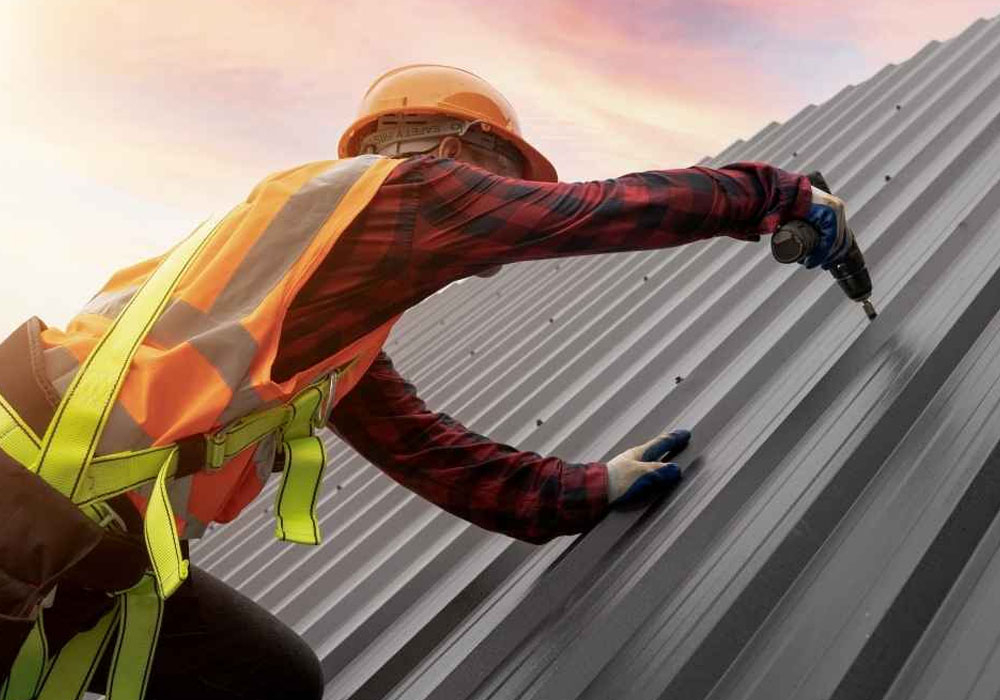
A metal roof features a tough construction that resists deterioration and withstands harsh weather conditions. It actively reflects solar heat, and this helps keep your indoor spaces cool. Here are a few ways metal roofing improves long-term roof performance:
Interlocking Sealed Joints
Interlocking sealed joints combine separate metal roofing panels into a continuous shield. When roofing contractors install sealed joints, the side edges shut tightly. The overlapping sections should lock securely, and this helps prevent individual panels from coming loose due to strong winds.
Sealed joints block rain and moisture from slipping underneath the protective metal shell. The seams may be raised above the surface where water drains; the fluid flows away, and the underlayment underneath is able to remain dry. This drainage design helps prevent internal leaks and safeguards the wood framing from hidden rot.
Concealed Protective Fasteners
Protective fasteners attach roofing sheets from underneath the outer surface. Some metal roofing systems include standing seam fasteners, which hold the panels securely in place while still allowing room for expansion during temperature changes. During installation, contractors may attach metal screws directly to the wooden deck, and the overlapping panel covers them. This design technique changes how a roofing system ages over time. Since the metal shield hides the anchor points, the steel screws are not exposed to harsh outdoor elements; this helps keep them free from rust and degradation.
Engineered Rigid Profiles
Manufacturers may shape flat metal sheets into raised dimensional patterns that improve their strength. The shape helps improve the panel’s resistance to bending, and it allows the system to span long distances without sagging. This shaping process alters how the metal handles physical forces over time. Deep structural ribs may distribute pressure evenly across the surface, preventing individual panels from warping out of shape if heavy weights are placed on top. The roof is able to retain straight lines and a solid framework. Raised architectural ribs create a tough surface that may resist denting from falling debris or objects.
UV Ray Reflection
Metal roofs reflect ultraviolet rays away from the house, and this helps block solar radiation from penetrating the structure. The panels may be polished, allowing them to send radiant energy back into the atmosphere and keep the building shell cool. Reflective action safeguards the hidden building elements from absorbing too much heat under high temperatures.
Since heat is reflected away, the underlayment layers can retain their original structure, and the wood framing avoids drying out. The roof avoids material fatigue related to high heat. If a system absorbed the sun’s heat daily, the roofing could break down rapidly from thermal stress. The metal roofing protection helps block premature aging and extend the life of the structural roof deck. Metal roofs that are painted with reflective paint also help reflect UV light. Ultraviolet rays reflection may improve long-term performance through:
- Preserving material finish
- Shielding structural layers
- Preventing surface deterioration
Low Maintenance Requirements
Some metal roofs do not need frequent repair cycles to keep them functional. Homeowners can maintain the structural integrity of their home without ongoing upkeep. A low-maintenance exterior optimizes home performance by reducing disruptions from regular repair work and inspections. Low-maintenance roofing alternatives remain reliable since they are manufactured to handle long-term exposure; this also allows your property to retain its value.
Learn More About Metal Roofing
Roofing contractors offer professional installations, so homeowners are provided with secure and durable metal roofs. Expert setup techniques help maximize material longevity by providing a secure barrier against outdoor elements. Contact a reputable roofing company to learn more about their services and the benefits of installing a metal roof.