Key Takeaways
- Choose a cornhole set based on where, how often, and by whom it will be used.
- Regulation boards measure 24 by 48 inches and use a six-inch hole.
- Wood offers a traditional, steady feel, while plastic and composite sets can be easier to transport.
- A smooth, properly sealed surface affects both bag movement and board longevity.
- Dry storage and a level playing area protect the set and make games safer.
Table Of Contents
- Start With How You Will Use the Set
- Check Board Size and Playing Standards
- Compare Board Materials
- Understand Why the Finish Matters
- Match the Set to Your Outdoor Space
- Plan for Weather and Storage
- Create a Safer Playing Area
- Use a Simple Buying Checklist
- Common Questions About Cornhole Sets
- Conclusion
A backyard cornhole set should do more than look good next to the grill. It should suit the available space, the players’ ages and skill levels, and the amount of carrying, setup, and storage involved. A full-size wood set may be ideal for regular cookouts, while a lighter travel set can be better for camping and tailgates.
For homeowners who want a warm, classic appearance, a stained cornhole board can add wood-grain character without turning the game into a purely decorative piece. Cornhole Worldwide, an Ohio-based brand serving backyard players from its Cleves, Ohio area, offers a collection of stained games with hardwood-inspired looks, patterned finishes, and regulation-style solid-wood boards, making it a useful reference point when comparing finish options for outdoor play.
Start With How You Will Use the Set
Casual Backyard Play
For family gatherings and weekend games, prioritize easy setup, stable legs, and storage that fits your garage, shed, or closet. Consider younger players too. A set that is manageable to move and forgiving on a short lawn may get used more often than a heavier set that stays stored away.
Tailgates and Travel
If the boards will travel, check the folded dimensions, total weight, carry handles, and whether a case is included. Measure the vehicle storage area first. Folding legs and a secure way to hold the boards together can make a noticeable difference when walking across a parking lot or park.
League or Tournament Practice
Players seeking consistency should use regulation dimensions and a predictable surface. The official cornhole rules describe a 27-foot adult board distance, four bags per team, and standard scoring that awards three points for a bag in the hole and one point for a bag on the board.
Check Board Size and Playing Standards
Regulation boards are 24 inches wide by 48 inches long, with a six-inch hole positioned nine inches from the top. Full-size boards give beginners a familiar target and let regular players practice under conditions closer to organized play.
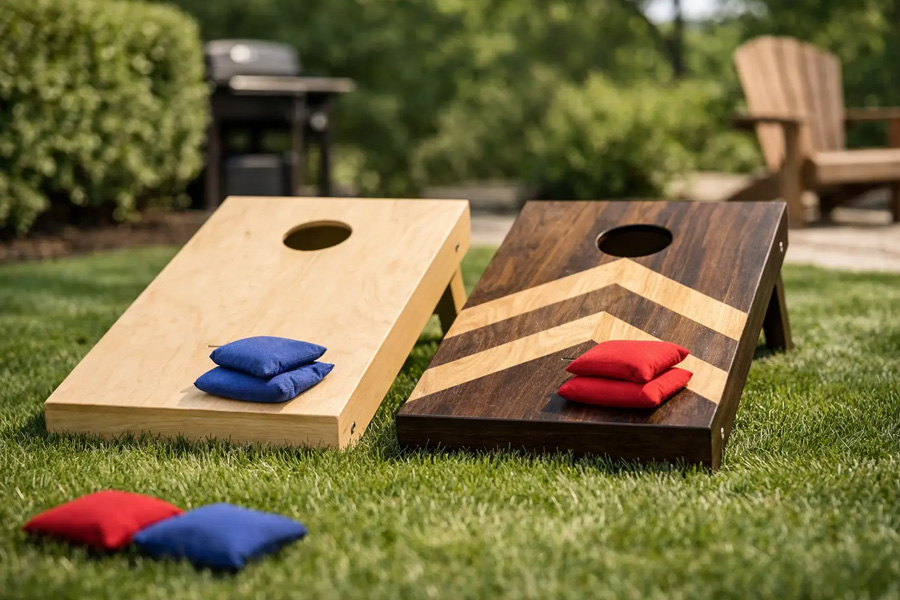
Photorealistic backyard cornhole game at golden hour, featuring stained wooden regulation boards on a level green lawn beside a warm deck and patio furniture, with soft directional sunlight, long gentle shadows, and a relaxed family gathering in the background.
- Use 27 feet between the front edges of boards for adult regulation play.
- Shorten the distance for children, beginners, or limited spaces.
- Check that the legs lock or sit firmly without wobbling.
- Set boards on level ground so bags slide and land predictably.
Compare Board Materials
Wood Boards
Wood boards have the classic cornhole feel: substantial, steady, and often quieter under a landing bag. They work especially well for a semi-permanent backyard setup. Look for a rigid frame, smooth edges, solid legs, and a sealed surface. Their trade-off is weight and the need for careful weather protection.
Plastic and Composite Boards
Plastic and composite sets are usually lighter, easier to wipe clean, and more convenient for travel. They can be a practical choice for families with limited storage. Before buying, make sure the surface is not overly textured and that the legs remain stable on grass, concrete, and patio pavers.
Understand Why the Finish Matters
The finish influences appearance, protection, and playability. A board should feel smooth enough for controlled bag movement, but not so slick that every bag races off the far edge. Painted boards work well for bold colors, team themes, and event-specific designs. Stained finishes reveal more of the wood-like grain and often pair naturally with decks, patios, and garden furniture.
Inspect the entire surface, including the hole edge and corners. Rough spots can catch bags, while chipped sealant can invite moisture into a wood board. A balanced finish helps the game feel consistent from one round to the next.
Match the Set to Your Outdoor Space
On a deck or patio, choose colors that complement existing furniture and leave room for players to step, turn, and retrieve bags. On a lawn, use the flattest available patch and avoid sprinklers, garden hoses, muddy soil, and slopes. For parties, a recognizable pattern or personalized design can make the set easy to identify without sacrificing practical construction.
Plan for Weather and Storage
Even outdoor-ready game sets last longer when they are not left in rain, standing water, or direct sun for extended periods. Moisture can stain or warp wood, while heat and sunlight may fade graphics and dry out coatings.
- Wipe away dirt and moisture after each game.
- Allow boards and bags to dry completely before storage.
- Store the set indoors or beneath a dry, breathable cover.
- Keep bags separate from damp boards.
- Inspect bolts, legs, and frame joints at the start of each season.
Create a Safer Playing Area
Measure the lane before inviting players over. Remove toys, hoses, tools, chairs, and breakable decorations from the throwing path. Leave clear room behind each player, keep children and pets away from active throws, and add outdoor lighting if games may continue after sunset. A regulation court needs much more space than a small patio, so shorten the distance when necessary rather than forcing a crowded setup.
Use a Simple Buying Checklist
Board Checklist
- Regulation or compact dimensions appropriate for your needs.
- A smooth playing surface and rigid frame.
- Stable, easy-to-fold legs.
- A finish suited to regular outdoor use.
- A weight you can comfortably carry and store.
Bag Checklist
- Durable outer fabric and consistent filling.
- Two contrasting colors for easy scoring.
- Even stitching with no loose seams.
- A dry storage bag or container.
DIY can be rewarding if you have the tools, time, and patience to measure, cut, sand, and seal carefully. Homeowners comparing that route with a finished purchase can review how to build cornhole boards to better understand the materials and steps involved. Buying a completed set is often the simpler choice when you value immediate use and a professionally finished surface.
Common Questions About Cornhole Sets
What size should a backyard cornhole board be?
Regulation boards are 24 by 48 inches. Smaller boards can be useful for children, travel, or tight spaces, but they will not play exactly like full-size boards.
Can cornhole boards stay outside?
They can handle occasional outdoor use, but dry storage is the safer choice. Do not leave wood boards in the rain or on wet grass for long periods.
Should beginners buy regulation boards?
Regulation boards are a smart choice for people who want consistent practice. A smaller, lighter set may be more practical for occasional family use, young children, or frequent travel.
Conclusion
The best cornhole set fits the players, the backyard, and the way the game will actually be used. Focus on board size, frame strength, surface smoothness, portability, storage, and weather care before choosing a design. That approach helps you find a set that looks at home outdoors and remains enjoyable for years of games.