Key Takeaways
- Consistent observation prevents many pond problems before they affect fish.
- Water tests, filtration, aeration, and sensible feeding work together.
- Seasonal changes require different routines for debris, algae, temperature, and oxygen.
- Routine maintenance is safer than waiting for a major pond problem.
- Clear water does not always mean healthy water.
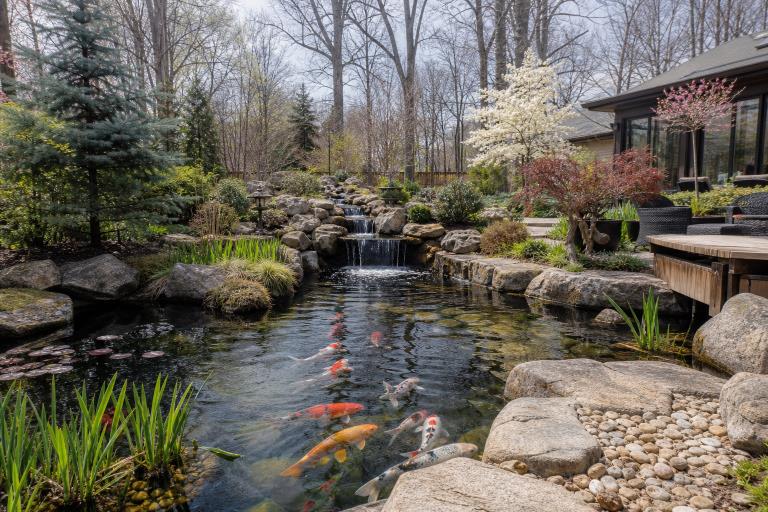
A koi pond is more than a landscape feature. It is a living system where fish, plants, beneficial bacteria, water movement, and weather all affect one another. Regular pond cleaning can help remove accumulated debris, but the best results come from a steady care routine throughout the year.
Whether a pond is shaded by trees or sits in full sun, seasonal changes can quickly alter water conditions. Spring brings debris and rising fish activity, summer raises heat and algae concerns, fall adds leaves, and winter can reduce oxygen exchange. A few short checks each week can make pond ownership far more manageable.
Why Seasonal Care Matters
Temperature, sunlight, rainfall, leaves, and feeding levels all change over the year. A pond that looks healthy in early spring may become cloudy once warmer weather increases fish waste and algae growth. Small, repeated tasks such as skimming leaves, checking water flow, and watching fish behavior are usually easier than correcting a serious imbalance later.
A Simple Water Quality Routine
Test pH, ammonia, nitrite, nitrate, and water temperature regularly. Alkalinity or carbonate hardness can also be helpful when pH is unstable. Keep results in a log, especially after heavy rain, a heat wave, new fish additions, or changes to feeding. As pond water quality measurements can reveal, problems involving oxygen, pH, nutrients, and algae are often easier to address early.
One result is only a snapshot. Trends are more useful. A gradual ammonia increase, falling water level, or reduced filter flow can point to a developing issue before fish begin gasping, isolating themselves, or refusing food.
Spring Koi Pond Checklist
Spring is a gradual restart period. Fish may become active before the biological filter is fully prepared to process increased waste.
- Remove leaves, twigs, and settled debris from the surface and edges.
- Inspect pumps, skimmers, filters, plumbing, and aeration equipment.
- Test the water before increasing food portions.
- Check fish for sores, damaged fins, flashing, or unusual behavior.
- Feed lightly when fish are active and conditions are appropriate.
- Inspect rocks, edging, and surrounding soil for erosion or leaks.
Avoid rushing into a full cleanout during cold, unstable weather. Sudden changes in water temperature and chemistry can create unnecessary stress.
Summer Koi Pond Checklist
Warm water holds less dissolved oxygen, while strong sunlight and extra feeding can accelerate algae growth. Check water levels often during dry weather, keep waterfalls and aerators running freely, and clean mechanical filter sections before flow becomes restricted.
- Add shade with suitable plants, structures, or nearby landscaping.
- Remove excess floating algae by hand when practical.
- Feed only what the fish consume quickly.
- Watch for fish lingering near returns, waterfalls, or the surface.
Algae is not automatically a sign of failure. Excessive growth, foul odors, poor visibility, or fish distress are stronger warnings that nutrient levels, circulation, or oxygen need attention.
Fall Koi Pond Checklist
Fall preparation limits the amount of organic material that breaks down over winter. Remove leaves before they sink, trim dying aquatic plants, inspect skimmers and overflow routes, and service equipment before freezing weather arrives.
Leaf nets can reduce cleanup, particularly beneath deciduous trees. Secure the net tightly and check it often so it does not sag into the pond, trap debris in the water, or interfere with circulation. Reduce feeding as water cools and fish activity slows.
Winter Koi Pond Checklist
Winter care depends on local conditions. In regions with prolonged ice, maintain an opening for gas exchange with a pond-safe de-icer or properly position aeration. Do not strike thick ice to open a hole, since vibrations can stress fish.
Avoid unnecessary fish handling, monitor equipment after storms and outages, and remove accessible debris when conditions allow. Koi generally need much less food when the water is cold, and they are inactive. Good water quality, filtration, shade, and regular feeding are all part of a healthy pond environment during the active season.
Safe Pond Cleaning Steps
Routine maintenance includes skimming, filter care, and partial water changes. A full cleaning is more involved and should be planned around fish safety and preserving beneficial biology.
- Prepare shaded holding containers, aeration, and conditioned replacement water.
- Turn off electrical equipment before working in the pond.
- Move fish calmly only if draining is necessary.
- Remove sludge carefully without damaging liners, plants, or plumbing.
- Inspect pumps, drains, filter chambers, and pond edges.
- Refill gradually and closely match water temperatures before returning fish.
Never use household cleaners around fish, and do not rinse all filter media with chlorinated tap water. The goal is to remove harmful buildup without eliminating the bacteria that process fish waste.
Common Care Mistakes To Avoid
- Overfeeding eager fish.
- Adding new fish without quarantine.
- Changing too much water too quickly.
- Treating algae without testing water or considering oxygen levels.
- Ignoring unusual pump noises, reduced flow, or falling water levels.
- Removing every plant and sheltered area from the pond.
When To Seek Specialized Help
Contact an experienced pond professional or aquatic veterinarian when several fish are gasping, water readings remain abnormal, a leak cannot be found, equipment fails, drains are blocked, or fish show sores, swelling, torn fins, flashing, or abnormal swimming. These situations can involve water management, electrical systems, and fish health at the same time.
Frequently Asked Questions
How Often Should A Koi Pond Be Cleaned?
Routine checks may be weekly, while deeper cleaning depends on pond size, fish load, filtration, plant coverage, nearby trees, and settled debris.
Should All Pond Water Be Replaced?
Usually, no. Complete replacement can cause abrupt shifts in temperature and water chemistry. Partial, planned changes are generally less disruptive.
What Does Cloudy Pond Water Mean?
Cloudiness can come from disturbed sediment, suspended debris, bacterial changes, algae, overfeeding, or inadequate filtration. Test first instead of adding products immediately.
Can A Pond Be Too Clean?
Yes. Beneficial bacteria live on filter media, rocks, and other pond surfaces. Cleaning should remove waste while retaining the biological foundation that supports healthy koi.
Conclusion
Healthy koi pond care relies on observation, timing, and consistency. By adapting maintenance to each season, testing water regularly, and responding early to changes in fish behavior or equipment performance, pond owners can support clearer water and healthier fish throughout 2026.