The week after Labor Day often marks a noticeable shift in how homeowners use their outdoor space. Summer furniture starts coming inside, pool equipment gets packed away, gardening supplies stay in rotation, and tools used regularly suddenly need a designated place for the next several months.
That seasonal transition can expose a storage problem that was easy to overlook during the warmer months. A crowded garage, overflowing shed, or equipment scattered around the yard can make fall maintenance harder than it needs to be.
A fall reset is a practical opportunity to evaluate what you own, what you actually use, and where everything should go before colder weather arrives.
Why Storage Gets Harder After Summer
Summer activities tend to accumulate equipment. Families may have bicycles, lawn games, patio furniture, pool accessories, gardening tools, and outdoor toys all competing for space.
When those items are no longer used daily, they still need proper storage. Moving everything into a garage can create another problem by taking up room for vehicles, workbenches, household supplies, or seasonal decorations.
Before buying additional storage, start by sorting everything into three groups:
- Use regularly: Items you’ll need throughout the fall.
- Store seasonally: Equipment you can pack away until spring.
- Remove or donate: Broken, unused, or duplicate items.
This simple process can show how much storage space you actually need.
Choosing a Shed Instead of Expanding the Garage
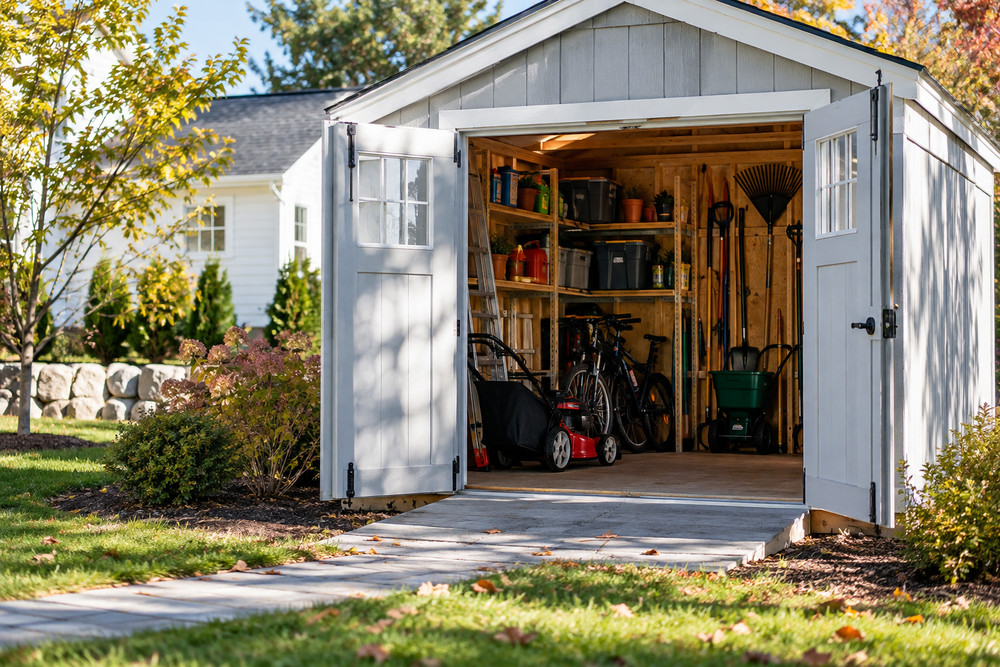
For homeowners who need additional outdoor storage, a separate structure can provide useful space without requiring a garage addition. Backyard storage sheds come in a range of sizes and layouts, making it possible to match the structure to the property and the items being stored.
The right size depends less on the number of boxes and more on the types of equipment involved. For example, a smaller footprint may work for hand tools, garden supplies, and seasonal decorations. A larger structure may be more appropriate for riding mowers, bicycles, wheelbarrows, ladders, and bulky outdoor equipment.
Think About What Needs to Fit
Create a basic inventory before deciding on dimensions. Measure larger items individually and allow enough room to move around them.
Consider:
- Lawn mowers and other powered equipment
- Bicycles and outdoor recreation gear
- Long-handled garden tools
- Bags of soil or seasonal supplies
- Patio furniture and cushions
- Holiday decorations
- Ladders and household equipment
Vertical storage can also make a significant difference. Wall-mounted hooks, shelves, pegboards, and overhead storage keep frequently used tools accessible while leaving more floor space.
Placement Matters as Much as Size
A shed can have plenty of interior capacity and still be inconvenient if it is placed poorly. Consider how often you will access the items inside and how often you’ll move equipment in and out.
A structure used for lawn equipment should be reasonably close to the part of the property where that equipment is needed. You can place a shed for seasonal belongings farther away if you access those items only a few times a year.
Before choosing a location, consider:
- Access for moving large equipment
- Drainage and ground conditions
- Distance from the house
- Clearance from fences and other structures
- Local building requirements
- Door placement and available walking space
Checking local requirements before construction can prevent problems later. Rules regarding setbacks, permits, foundations, and property lines vary by location.
Make the Fall Reset More Efficient
Once the storage structure or existing storage area is ready, organize it around frequency of use rather than simply filling available space.
Place commonly used items near the entrance. Seasonal equipment can go toward the back or on higher shelves. Keep heavy items low and stable, and store lighter boxes higher.
Clear labels can also save time. Instead of opening several containers to find a specific item, label boxes by contents and season.
Another useful step is to leave a small amount of open space. A completely packed storage area becomes hard to navigate and leaves little room when you add new equipment or supplies.
When the Storage Problem Is Bigger Than a Shed
Not every property has a simple residential storage problem. Rural homeowners, farmers, and landowners may need covered space for tractors, implements, feed, hay, trailers, and other large equipment.
For these properties, the question is not simply where to put a few seasonal items. Equipment needs enough clearance to move safely, while hay and agricultural supplies need appropriate protection from weather and moisture.
The structure should also account for how you’ll access equipment throughout the year. A building that technically fits a tractor may still be impractical if the doors are too narrow or interior clearance is limited.
For larger rural storage needs, prefab barns in Indiana can be one option property owners may consider when evaluating covered space for equipment, hay, and other agricultural materials.
Planning Storage Around Winter Needs
Fall is also the right time to think beyond the immediate cleanup. Winter weather can make outdoor equipment harder to access, and poorly stored materials may become damaged or difficult to move.
Before winter arrives, check that:
- Outdoor equipment is cleaned and prepared for storage.
- Fuel-powered equipment is handled according to manufacturer recommendations.
- Tools are dry before being placed inside enclosed storage.
- Hay and other agricultural materials are protected from moisture.
- Heavy equipment has enough clearance for safe access.
- Walkways and entrances remain clear.
Good storage is not just about putting things under a roof. It is about creating a system that makes equipment easier to access, protects valuable belongings, and keeps the property organized throughout changing seasons.
Common Storage Mistakes to Avoid
A few planning mistakes can make a new storage structure less useful than expected.
Choosing the smallest possible size: Saving space initially may lead to overcrowding later. Consider future storage needs, not just today’s inventory.
Ignoring access: A structure may have sufficient square footage but still be difficult to use if doors, paths, or interior aisles are too tight.
Storing everything together: Mixing gardening tools, holiday decorations, lawn equipment, and household supplies can make finding individual items unnecessarily difficult.
Skipping measurements: Guessing whether large equipment will fit can result in expensive adjustments later. Measure both the equipment and the available entry points.
Forgetting the site: Consider drainage, ground conditions, access, and local regulations before installation or construction begins.
A Better Start to the New Season
The week after Labor Day is a useful reminder that storage needs change with the seasons. Summer equipment may be leaving the yard, but fall maintenance and winter preparation are just beginning.
Whether the solution is better organization, additional residential storage, or a larger agricultural structure, the best approach starts with understanding what you need to store and how often you’ll access it.
A thoughtful fall reset can turn a crowded property into a more functional space and make the transition into colder months much easier.