Beyond the Pretty Apron: What Actually Matters
Apron-front sinks draw attention. Face is statement, basin is workhorse. But lifespan is in the unseen: body composition, fire or forming procedure, wall thickness, mounting, and water flow. Two models might seem alike in a snapshot yet act differently with pots, knives, and boiling water. Treat the apron as the grin and the material as the backbone.
Material Deep Dive: Choose the Backbone First
The right sink is a marriage of chemistry and craft. Here is how common apron-front materials behave in real kitchens.
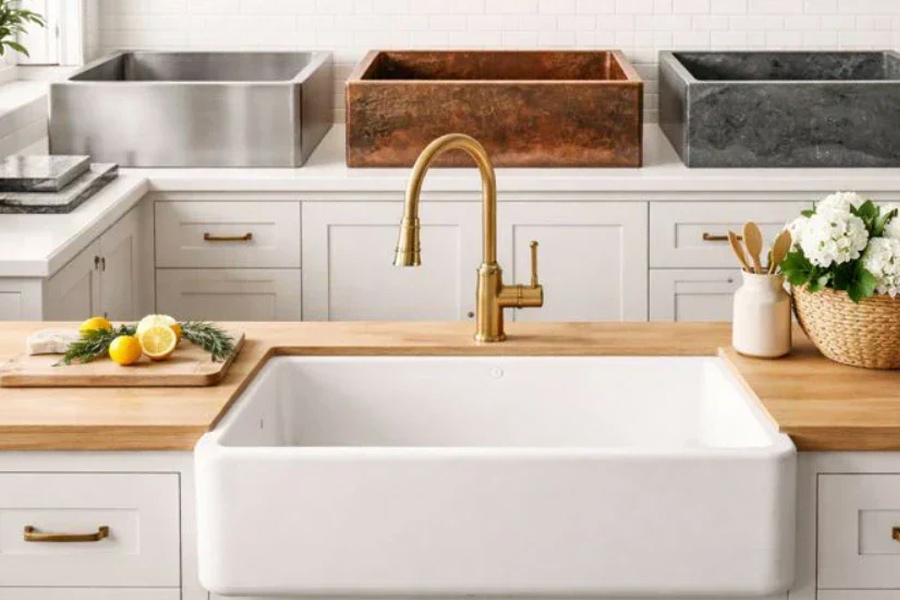
- Refined clay is fired at high temperatures to form a solid, non-porous body and glaze. Expect hefty 30–36 inch sizes. Heat and stain resistance are excellent. Hard to cut, but brittle if struck sharply. Ideal for bright, consistent daily kitchens.
- Porcelain enamel on cast iron: Heavy and classic with impressive heat retention. The enamel is beautiful and glassy, but it is still a coating. Sharp impacts can chip the finish. Thermal swings are usually fine, yet extreme shock can craze the surface. Great in traditional spaces if you accept the possibility of chip touch-ups.
- Porcelain enamel on steel: Lighter than cast iron. The enamel looks similar, but the underlying metal is thinner and more resonant. More prone to flex and chip if mistreated. Works for secondary kitchens or lower traffic zones.
- Modern, durable stainless steel apron-front. In general, 16 gauge is stiffer and quieter than 18 gauge. Look for soundproofing pads and undercoats. Brushed finishes hide scuffs better than mirror. Avoids cracking and rusting and looks good with modern fixtures.
- Copper: A living finish that develops a patina. Microbial properties are a plus. Thickness is key; thicker stock resists denting. Acids and salts can spot the surface, which is part of the charm for some owners. Choose lead-free copper and expect to nurture the patina rather than freeze it in time.
- Granite composite and quartz composite: Resin-bound stone particles create a uniform body. Lighter than fireclay, tougher than simple acrylic. Good scratch resistance and color-through construction. Extreme heat can mark some blends, so check temperature ratings and avoid direct-from-oven contact.
- Solid surface and acrylic: Warm to the touch, repairable with sanding, lightest of the bunch. More susceptible to scratching and heat damage. Best when the priority is easy fabricator modifications or color matching with counters.
Pick the material that aligns with your habits. If you dunk red wine carafes and sear steaks daily, your sink should be as calm under pressure as you are.
Durability Clues You Can Verify
You do not need a lab to spot a survivor. A few practical checks tell you plenty.
- Weight and wall thickness: Robust sinks weigh more because there is more real material. For heavy ceramics, thickness at the rim and drain opening is a giveaway. Thin edges can telegraph shortcuts.
- Glaze or finish continuity: On fired ceramics, the transition from glazed face to body should be smooth and unified. On coated products, you may see a clean line where coating stops.
- Drain geometry and slope: A gentle floor slope toward the drain keeps water from lingering. Flat bottoms can look sleek but hold puddles that build mineral scale.
- Sound: Tap the bowl. Dense ceramics give a muted thud. Thin metal rings. Neither is bad by itself, but the sound hints at structure.
- Product spec honesty: Real manufacturers publish meaningful details like approximate weight, drain size, and installation type. Vague listings often mean vague performance.
Fit, Ergonomics, and Splash Control
The right sink fits your space and your body.
- Cabinet compatibility: Base cabinet opening matters more than the marketing size. Leave room for side support rails if you are setting the sink on a frame.
- Depth and posture: Ten inches of interior depth swallows pans, but it also makes you lean farther. If you are under 5 foot 6, consider 8 to 9 inches or raise your dishwasher side for balance.
- Bowl configuration: Single bowl for sheet pans and stockpots. Double bowl for divide-and-conquer dishwashing. Offset drains gain usable space under the cabinet for disposers and pull-out bins.
- Corners and radius: Tight corners maximize flat bottom area for cutting boards and grids. Large radii are easier to clean. Pick your poison.
- Faucet pairing: Reach should hit near the center of the bowl. Too tall and you get a rainstorm. Too short and you chase water across the apron. A pull-down sprayer is the best insurance against splashes and corners that collect crumbs.
Installation Realities That Save Headaches
A perfect sink installed poorly becomes a daily frustration.
- Support strategy: Treat heavy sinks like stone. Build a cradle or rails in the cabinet. Do not rely on caulk to carry weight.
- Leveling and shimming: Set the sink perfectly level before the counters arrive. A tilted basin creates standing water and awkward overhangs.
- Templating sequence: Provide the exact cutout template to your fabricator and dry-fit before final polish. Apron-front reveals vary by manufacturer, and a quarter inch here feels like a canyon later.
- Silicone and expansion gap: Use a quality kitchen and bath sealant. Leave a tiny joint for seasonal movement between counter and ceramic or metal.
- Delivery inspection: Open the box on arrival. Check corners, apron, rim, and drain hole for hairline cracks or shipping bruises. Reject damage immediately so you do not stall the countertop schedule.
Care That Keeps the Shine
Daily use leaves marks. Smart habits keep them from becoming scars.
- Rinse and wipe: End-of-day rinse plus a soft cloth prevents mineral film. Hard water homes benefit from a quick dry.
- Mild cleaners only: Non-abrasive creams or diluted dish soap protect glazes and composites. Avoid oven cleaners, wire wool, and undiluted bleach.
- Use a bottom grid: It is a sacrificial layer. It preserves the basin floor and lets water move under dishes.
- Thermal sense: Do not pour rolling boil water onto a bone-dry ceramic. A brief cool rinse first prevents shock. Metal sinks tolerate swings better but still appreciate moderation.
- Limescale management: White vinegar on a cloth loosens deposits. Rinse thoroughly and dry. For stainless, follow the grain with a microfiber towel.
Spending Where It Counts
Budgets are real. Spend on the parts you never want to touch again.
- Prioritize material over marketing: Allocate dollars to the body, not the box art. A mid-priced, well-made sink beats a premium logo on a mediocre core.
- Accessory math: Bottom grids, strainers, cutting boards, and racks add up fast. A bundle that includes them can be a smart buy if quality matches the sink.
- Warranty fine print: Look for coverage on both structure and finish, plus clear pathways for replacement if shipping damage occurs.
- Second quality options: Some brands sell cosmetically imperfect pieces with tiny glaze specks for less. If the defect hides inside the cabinet or under the counter, you might pocket real savings.
Smart Showroom Tests Before You Commit
Bring your senses to the store.
- Water bead test: A few drops should pool and glide across a fired ceramic glaze or quality composite. Staining liquids should not darken the surface once wiped.
- Magnet check: A strong magnet clings to steel and cast iron, not to fireclay or copper. It also hints at material thickness by how firmly it grabs.
- Coin tap: A short, dull thud suggests a dense ceramic body. A bright ring suggests thin metal. Use this as a comparative test among options in the same aisle.
- Basket strainer fit: Take the drain you plan to use and test the fit. Tolerances vary and a mismatch becomes a return run.
When Fireclay Should Take a Back Seat
Fireclay is excellent, but not universal.
- Extreme impact zones: If heavy cast iron pans get tossed rather than placed, consider stainless. It will dent before it chips, and dents rarely cut fingers.
- Desire for a living finish: Copper offers patina and personality that ceramics cannot mimic. Embrace the change and the care it asks for.
- Lightweight cabinets: If reinforcement is off the table, a lighter composite or steel apron-front spares your casework.
- Hard well water with high iron: White ceramics show tea and iron stains faster. Stainless and darker composites mask residue while you dial in a filtration plan.
FAQ
How deep should a farmhouse sink be for daily cooking and cleaning?
Eight to nine inches of interior depth balances capacity and comfort for most users. Ten inches is great for sheet pans and stockpots but can strain your back over long sessions. Consider your height, faucet reach, and how often you soak large cookware.
Are workstation apron-front sinks worth the extra cost?
If you prep at the sink, yes. Integrated ledges let you slide cutting boards, colanders, and drying racks. It creates a multi-level work zone that keeps counters clearer and reduces steps when you cook frequently.
Will a garbage disposer crack a ceramic sink around the drain?
A proper install with the correct mounting ring and an even bead of sealant distributes load safely. The risk comes from overtightening or misaligned hardware. Follow the sink maker’s torque guidance and use the recommended flange.
Can I install an apron-front sink in an existing cabinet without replacing it?
Often yes, with careful modifications. You may need to cut the face frame, add side rails or a cradle, and trim doors to clear the apron. Measure twice, template once, and reinforce the base to carry the added load.
Do stainless apron-front sinks scratch easily?
All stainless scratches. Brushed finishes hide marks better, and they blend over time into a uniform patina. Using a bottom grid and avoiding scouring powders preserves the finish. Small scuffs can be eased with non-woven finishing pads that match the grain.
How do I keep a white sink from yellowing or graying over time?
Daily rinsing, weekly gentle cleaning, and keeping metal pots off the bare floor with a grid go a long way. For stubborn tea or coffee shadows, a paste of baking soda and water followed by a thorough rinse and dry restores brightness without harsh chemicals.
Is a double-bowl farmhouse sink still practical with large cookware?
It can be. Look for asymmetric splits, such as 60-40, and a low divider that allows pans to bridge both sides. A single-bowl model remains king for oversized sheet pans and griddles.
What gauge stainless should I look for in an apron-front sink?
Sixteen gauge is a solid sweet spot for rigidity and noise control. Eighteen gauge can work with good sound deadening. Anything thinner is more prone to denting and a tinny resonance when water hits the surface.