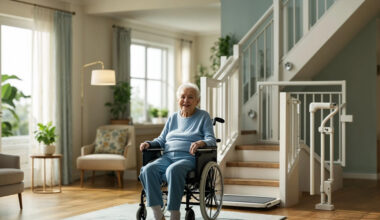
The natural desire to care for an elderly parent at home isn’t simply emotional – it’s grounded in cognitive science. Known environments minimize cognitive stress, maintained habits decrease stress-related hormones, and established social networks built over many years offer a protective factor against functional decline. For seniors with early-stage Alzheimer’s or dementia, home is likely the best place they can be.
The Cognitive Case For Familiar Surroundings
When older adults move through a space they’ve lived in for twenty years, the brain doesn’t work very hard. The layout is automatic. The light switch is where it always was. That mental automaticity matters more than most people realize.
Navigating an unfamiliar space – a new facility, an adult child’s house – demands active cognitive effort. The brain has to construct new spatial maps, learn new routines, and process continuous sensory novelty. For someone already declining, that extra load competes directly with memory and reasoning. The familiar home, by contrast, frees those resources. It’s the difference between driving a route you know by heart and following turn-by-turn directions in an unfamiliar city.
This is also where the plasticity of the brain comes into play. When older adults stay engaged with familiar activities – gardening, cooking their meals, doing the crossword in the same chair – they continue to use the neural pathways they spent a lifetime building. That sustained engagement doesn’t reverse decline, but there’s solid evidence that it slows the rate at which function is lost.
What Relocation Stress Actually Does To The Brain
The term “transfer trauma” is often used to characterize the potential damage that could happen when older adults, particularly those with dementia, are transferred from a recognizable environment. This is not just a sense of mental upset. It can lead to acute confusion, an increase in physical or verbal aggression, withdrawal, and measurable functional decline that doesn’t always reverse.
The process is no secret. Displacement raises the level of cortisol, the primary hormonal agent in the body that is produced in response to stress. It’s perfectly normal for cortisol levels to rise in reaction to a stressor – and just as normal for them to fall once the crisis has passed. Yet if cortisol levels remain persistently high over weeks or months, there is evidence suggesting hippocampal shrinkage, which directly affects memory formation. Thus, for an elder who is uncertain, fearful, and cut off from familiar references, the move might actually cause a months-long stress reaction which worsens the cognitive decrease.
That’s not an argument against facility care in every case. There are situations where it’s the right call. But it is an argument for not defaulting to relocation simply because it feels like the more supervised option.
How Professional Home Care Makes This Viable
The primary concern with aging in place is safety. It’s a valid one. An older adult with severe memory loss, a high risk of falling, or an inability to handle activities of daily living – such as bathing, dressing, or managing medications – can’t safely live at home on their own. The real question isn’t whether they need help, it’s what kind of help they need.
This is where Care Mountain and professional elderly home care services come in to fill the real void. In-home caregivers are there to manage the tasks that compromise independent living and would be unsafe for the elder to manage by themselves, yet they allow the older adult to stay in a protective cognitive environment. They are there to offer companionship, which is not a nice-to-have extra, but a necessity if we consider that regular social interaction is one of the most consistently protective factors against dementia. Social connectedness, the kind built through neighborhood relationships and familiar community ties, doesn’t survive a move the way people hope it will.
77% of adults in the United States over the age of 50 wish to stay in their homes permanently (AARP, 2021). Yet, most don’t have a clue of how to make it work. Professional home care services represent that alternative. It also spares family caregivers from burnout, real and dangerous, as it might compromise the quality of care the elderly receive.
Routine And Autonomy As Protective Factors
Maintaining a familiar routine does more than reduce anxiety and provide comfort. It also minimizes the number of cognitive decisions that need to be made each day. An older adult who wakes at the same time, eats in the same kitchen, and follows patterns built over decades isn’t just experiencing familiarity – they’re operating in an environment calibrated to their cognitive capacity.
Autonomy compounds this. When older adults retain meaningful control over daily choices – what to eat, when to sleep, how to spend an afternoon – they maintain a sense of agency that’s strongly linked to better psychological outcomes. The loss of decision-making control, which often accompanies a move to an assisted living facility, is a stressor in its own right. It doesn’t show up on a medical chart, but it shows up in quality of life and, over time, in how quickly people disengage from the world around them.
When Staying Home Isn’t The Answer
This argument has a limit, and it’s worth naming it plainly. Late-stage dementia with real safety risk, a house that simply can’t be modified enough, medical needs that require round-the-clock clinical monitoring – these are the situations where a facility may be the right call, whatever benefits familiar surroundings might otherwise offer.
A good amount of ground can be covered before reaching that point. Grab bars, better lighting, clearing out clutter and trip hazards, rearranging a home to cut down on confusion – these changes buy real time, sometimes years of it. But eventually modifications and in-home help stop being enough. Pretending otherwise isn’t reassuring, it’s just avoidance, and it leaves families worse off when the moment actually arrives.
The honest version of this argument is that aging in place is usually right, not always. Telling the difference takes an honest look at how someone is functioning, how likely they are to fall, and where they stand with dementia – and that’s best done with a care professional involved, not guessed at by family alone.
The Default Assumption Should Shift
We have adopted a cultural bias that considers transferring an older adult to an institutional setting to be the responsible choice, while keeping the person at home is considered the emotional choice. However, evidence does not support such an argument. Proven risks of relocation, the cognitive strain of unfamiliar surroundings, the stress of chronic upheaval – all of these are empirically grounded considerations that ought to count.
Staying home, supported by qualified care, isn’t choosing comfort over safety. For most older adults, it may be the decision that best serves both.