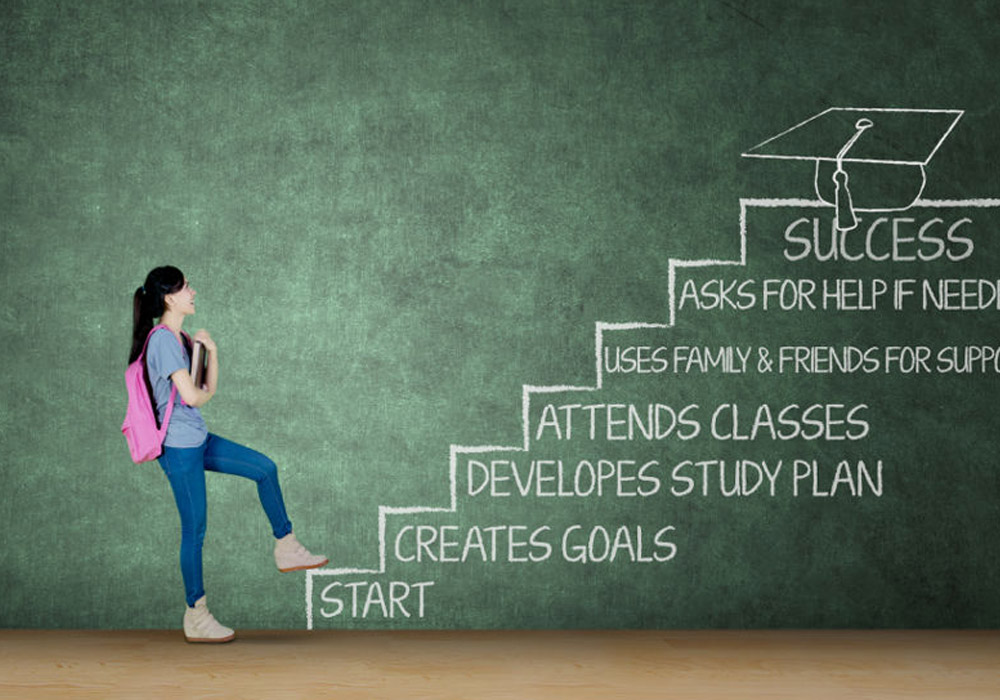
Student motivation doesn’t just happen on its own. Gallup’s student poll data shows engagement hovers around 76% in elementary school, but then drops to roughly 61% by middle school, and falls to about 44% by high school. The decline isn’t natural – it’s what happens when schools treat morale as a once-a-year assembly instead of a daily habit. The schools that buck this trend build student motivation with intentionality in layers of incremental care: small daily wins, weekly rituals, and occasional bigger resets.
Here are ten ways to do that, organized the way they actually need to function – not as a random list of fun activities, but as a system where each piece supports the others.
Start With Visible, Specific Recognition
A “win wall” is effective because it is visible and up-to-date. Put it up in a location where students walk by every day – the lunchroom, the main entrance – and update it weekly, not monthly. Monthly updates become outdated quickly; students will lose interest. Weekly updates will keep it relevant.
The quality of what goes on the wall matters more than how often you update it. “Good job, 4th grade!” doesn’t mean much. “Maria helped three classmates with their lab reports before the deadline” does. When a student gets specific feedback on the behavior that was recognized, they know exactly what to do to get recognized again. When it’s generic, they just know someone likes them, which is nice but doesn’t help form a solid habit.
Let The Kids Nominate Each Other
In addition to the win wall, let students nominate each other for “shout-outs” to be read over the loudspeaker during morning announcements. Have a form or a box where kids can drop names for things like kindness, effort, standing up for someone, etc., and read a few each week.
This is different from adult praise. When a teacher tells you you’ve done well, that’s their job – it’s expected. When a peer says it, it means something different. Recognition from someone who doesn’t have to give it carries more weight, and over time it builds a classroom culture where students are encouraged to look for positive things in each other outside of a competition setting.
Use Competition That Builds Community Instead Of Dividing It
Competitions that are like games, involving challenges between classes or grades, can certainly work in terms of motivation for students. However, the types of rewards given will impact whether the competition helps motivate students to succeed academically or causes other negative outcomes.
If the rewards are one class or grade winning something at the expense of another class or grade, the result can be competitive rather than cooperative motivation, and this may not be a good situation for the long-term. If the rewards benefit the entire class regardless of who wins or loses, it can be very motivating and fun.
Bring In Outside Voices At The Moments Internal Staff Can’t Reach
Students are constantly hearing from the same adults every day. So, by the time fall hits, perhaps the same beloved teacher’s pep talk bounces right off – not because the message is inaccurate, but because the source is too predictable. This is where external speakers should be used as part of the culture plan; not as a shiny new object, but as an intentional reset.
Three times are the easiest to pick out: the start of the year, the week before exams start, and that mid-year slump in late January or February. Those are when students (and staff) are most in need of an interrupt to their routine. This is also where schools should be selective rather than booking whoever’s available. Looking for experienced motivational speakers for schools who understand the culture a school is trying to build – not a generic “believe in yourself” act – makes the difference between an assembly students remember and one they forget by lunch.
A speaker aligned with a school’s actual values reinforces everything else happening in the building the other 179 days of the year. A student who’s tuned out every adult in the building for months will often sit up and listen to someone new, especially someone with a story that doesn’t sound like a lecture.
Give Students Something Real To Decide
Empowerment works in itself, regardless of the context in which it is used. For example, allowing students to vote on the themes of spirit days, the prizes they will receive at the end of a grading period, or even handle a real budget to organize an event gives them a kind of ownership that cannot be obtained from any external reward.
The important thing is that they must perceive it as real. A vote in which the result is already decided or giving them the “chance” to choose between two staff-proposed options does not count, and they can tell the difference. A real small budget, even if it is only $200 to organize a classroom celebration, determines real decisions and real priorities. This is where the sense of ownership begins.
The student voice project does not have to be too complicated. A student council that has real decision-making power about two or three specific aspects every six months is better than having a council just for the sake of it.
Build Structured Relationships Across Grade Levels
Peer-to-peer programs like buddy systems provide a sense of responsibility and leadership that young students would not receive working with an adult or even a teacher their age. Scheduled meetings between the students can foster a significant relationship where the younger child looks up and confides in their “buddy”, while the older child gets to experience the feeling of being counted on in a way that is not severe and stressful.
These pairings work best when they’re given real structure rather than left to develop on their own. A shared project, a regular weekly time slot, or a simple routine like reading together or checking in on how the week is going gives both students something concrete to build on. Without that structure, the relationship can fizzle into a once-a-semester novelty instead of the steady presence it’s meant to be.
Train Staff In Two Specific Feedback Habits
Research reviews on instruction consistently show that teacher-student relationships have the power to benefit or hinder a student’s learning and achievement. The trouble is that “you should build positive relationships with your students” isn’t actionable. It doesn’t tell a teacher what to do differently on a Tuesday morning. Two specific habits are actionable for just about any student, and training staff in both takes surprisingly little time to pay off.
The first is praising effort, process, and progress rather than just outcomes. “You worked on that equation for 20 minutes” isn’t especially motivating to a student, because it praises time spent, not the thinking behind it. A stronger version sounds like, “You tried three different approaches before this one worked.” Students are rarely praised for the steps they take along the way; almost all the praise they hear is reserved for the results they produce. Research shows that effort-focused praise raises a student’s internal motivation in a way that outcome-focused praise doesn’t, because it teaches students that the trying itself is worth noticing.
The second habit is giving recognition as close as possible to when the behavior actually happened. Researchers estimate that a week’s delay is already too long. By the time a report card comment, a parent conference, or a note sent home a week later reaches the student, the positive reinforcement effect has lost most of its power, and the behavior hasn’t been reinforced the way it needed to be. The standard to aim for is same-day: if a teacher can’t recognize the moment right when it happens, catching the student later that same day is the outer limit. Staff development on shifting recognition to a faster timeline is a minor investment of time, but it’s the kind of small shift that can change the entire learning culture of a building.
Let The Physical Space Say What The School Values
When you walk through a building with blank hallways and bare classroom walls, you get a certain feeling. When you walk through a school building covered in student-created murals, photo walls, and affirmations students wrote themselves, you get a very different one. The environment itself is a message, whether anyone intends it to be or not.
This doesn’t require a renovation budget. A hallway mural painted by an art class, a rotating photo wall of student work and events, handwritten affirmations posted outside classrooms – these are cheap, and they signal ownership. Students who helped make the space feel differently about walking through it every day.
Track Wellbeing With A Two-Minute Weekly Check-In
A simple routine – such as having students score their mood or energy level quickly on a scale of 1-5 once a week – gives teachers a kind of early warning tool they’d never otherwise have. It costs almost no class time, and it doesn’t need to be elaborate: a show of fingers, a sticky note, a tally mark, a one-button form.
The information alone is worth the effort. But the return really comes from what you do with it. A student who circles “1” three weeks in a row for energy level is a student worth a quiet check-in, without regard to curriculum or grades. That’s how you get a morale boost out of social-emotional learning, without treating SEL as a separate curriculum that must be bolted on to a well-burdened school week. Restorative practices fit naturally here too – when a simple check-in reveals a conflict or downturn, the response should be about reconnecting, not consequence-fetching.
Sequence It As A Plan, Not A Pile Of Tactics
Here’s the part that actually determines whether any of this works: isolated strategies don’t do much on their own. A win wall without peer recognition is perceived as a top-down measure. A guest speaker won’t be effective if there isn’t a daily culture of recognition to support one good hour and then nothing. Agency without relationships creates the effect of structure without support.
You can think of them in three layers. Daily: recognition and small rituals like check-ins. Weekly: the win wall update, peer shout-outs, gamified challenges. Occasional: guest speakers, spirit days, bigger community events timed to the moments energy naturally dips. Each layer keeps the others from going stale. The little daily routines make the occasional big moments land harder, because students already trust that the faculty notices them. The occasional big moments give the little daily routines a reason to not feel mundane.
The numbers on engagement decline aren’t a reason for panic. They’re a reminder that motivation needs upkeep the same way any relationship does. Pick two or three of these to start, build the rhythm, then layer in the rest. The compounding is the whole point – none of it needs to be perfect on day one, it just needs to keep happening.