When floors are dated, damaged, or just plain wrong, appraisers and buyers notice in a hurry. That golden oak from the ’80s, which seemed forever stylish at the time, now lies in a thousand scrapyards filled with the footsteps of enthusiastic renovators who tore it out as fast as they could. Shag carpet, wrought-iron foyer tiles, and peel-and-stick vinyl planks barely bear thinking about.
Installation Quality Determines Whether Any of This Pays Off
Here’s what nearly every trend article about flooring skips, and it’s really the most important part of the equation. The kind of materials you just read about won’t really matter if the installation job is shoddy. Uneven planks, visible seams that cause tips to catch and edges to lift, gaps left open so the floor can expand, and any threshold or transition not cut and laid precisely get flagged by an inspector’s fingernail and noted by open house guests’ shoes even faster.
Subfloor prep is the hidden X factor between a floor that looks and feels like a solid upgrade and one that looks alright in listing photos and falls apart when the buyers stare it down. If a subfloor isn’t perfectly level and flat, your investment in a nice set of plank floors suffers because the boards wick and rub against each other, squeaking or shifting with each step and showing gaps that grow in every seam. A problem like that shows up on an inspection report and gives buyers cause to negotiate your price down after they’ve already fallen in love and made an offer.
This is exactly where you hire a recommended flooring contractor: a firm like Wagner Floors will make subfloor leveling, moisture testing, and precise installation of any material you choose the reason why your beautiful new floor passes inspection and holds its value, rather than the reason why the buyer dissuades his spouse from making an offer. They know that a solid mid-range option installed by pros often outshines the priciest material in the showroom handled by amateurs, both in the look of the installed floor and in the back and forth of the inspection period.
Refinished Hardwood Still Wins, and it’s Not Close
Refinishing solid hardwood under the old shag carpet or the built-up grunge and grooves could well be the best money you spend before putting a house on the market. National Association of Realtors’ Remodeling Impact Report will tell you this costs about 100% of what you put into it. In terms of recouping that cash when you sell, the only interior project it ties with is new insulation in the attic. No other flooring upgrade even comes close.
This isn’t exactly a style “trend” as we’d usually define it. It’s more of a basic assumption kind of thing. Buyers pretty much expect to see wood floors in most parts of the house when they’re shopping in a certain price range. Original hardwood tells them a house is solidly built, and plenty of age in place means it has been well maintained. Uncover the floor, and strip it in accordance with updated color palettes. Then reseal with a modern, low-gloss topcoat and you will also be able to use the term “new floors” in the listing without expanding the square footage one single inch. Most owners think a decade-old scratched up pre-finished floor is due for replacement, and then are unnerved by how much a good sand and reseal extends the lifespan.
Luxury Vinyl Plank Has Earned its Place, and Buyers Know it
Vinyl flooring used to be viewed as a compromise. Now it’s a priority. Today’s technology used for printing and embossing luxury vinyl plank has become so advanced that in most cases buyers can’t visually differentiate it from real wood in a listing, and more and more often not even in person.
But the aesthetic appeal is no longer the primary reason for its skyrocketing sales. Stain resistance and water resistance are the real selling points, and sellers should market them that way rather than just leaning on the wood-look angle to get buyers interested. Families are drawn to this product, especially those with younger children. Anyone who owns pets, and those buyers who already have the added expense and stress from moving and don’t want to spend extra time on maintenance, will all be inclined to purchase a product that handles spills without a second thought. If you are renovating a rental or a flip where true hardwood isn’t in the budget, LVP is the product that can give you that same aesthetic look without the fragile abuse of tenants.
Wood-Look Porcelain Tile Solves the Rooms Hardwood Can’t Touch
Solid wood is easily damaged in wet areas of your house, such as the kitchen, bathroom, entryway, and mudroom. Moisture and temperature variations can cause boards to warp over time, and the finish to buckle. Wood-like porcelain tile allows you to maintain the look of hardwood flooring throughout the main floor, minus the risk in problem areas.
It will also have a bigger impact on resale than many sellers appreciate. Nothing tells prospective buyers that your hardwood floors are dated faster than a threshold into the kitchen and a completely different tile that screams “2002 tile”. Floors in good condition will still give the impression the house is unfinished or even unkempt if the inference buyers make is that corners were cut by the previous owner to not extend the hardwood into the adjoining room when it was installed.
Using porcelain tile to mimic wood in both shade and plank width of the adjoining hardwood has a chain reaction of making the room more photogenic and pulled-together while giving the impression this was all part of your design. It costs nothing in effort and material since you would need to replace whatever floor is there anyway if you change the adjoining room but prospective buyers will look at the final look and assume that it was done for a fraction of the cost of re-doing all the flooring on the main.
Wide Planks and Matte Finishes Read as “Recently Updated”
Thinner strip wood floors having a glossy finish is one of the easiest ways to peg a home as being constructed in the early aughts, even if those boards are in pristine condition. People pick up on scale and shine quicker than they consciously realize the cause for their bias that a room is out of fashion.
Wider plank boards, generally five inches or larger, have become the expectation in the last decade because fewer seams read as more premium and more current. Combine that with a matte or low sheen finish, or a textured hand-scraped pattern in a few regions, and the floor will just automatically tell potential buyers “this was recently renewed” without it having to put you in the position of having to oversell it in the online description. Gloss finishes can ping dust, footprints, and scratches in listing photos, which matters a shocking amount when people are swiping through twenty houses and determining if they’ll give yours a chance at a Sunday open.
Neutral Tones Expand Your Buyer Pool, and Dark Floors Shrink it
This is where a lot of well-intentioned renovations go sideways. Homeowners fall in love with a deep espresso stain or bold, high-contrast pattern because it looks striking in person, then discover at resale that it narrowed their buyer pool considerably.
Light oak, greige, and warm taupe tones are the safe zone for a reason. They photograph brighter in listing photos, they make rooms feel larger, and they don’t force a buyer to imagine ripping out flooring before they can picture their own furniture in the space. Dark floors show dust and pet hair more visibly, absorb light in rooms that already struggle with natural brightness, and can feel heavy in smaller homes. If you’re choosing flooring purely to sell, and not to live with for the next fifteen years, neutral and warm-toned finishes are almost always the better financial decision, even if they’re the more boring one.
Carpet Still Has a Place, But Only in One Room Type
Carpet used to be the most common flooring option for an entire house. Today, it is still acceptable as a bedroom floor. Comfort and sound absorption are important when it comes to bedrooms, and most buyers will not devalue a house for having carpeted bedrooms because they will expect to place a rug or two without some other form of flooring being there.
However, anywhere else in your home, carpet can become a liability. In reality, carpeted living rooms, halls, and stairs are all a bit old-fashioned and will be seen as a negative item on buyers’ must-change lists. This often means buyers will reduce their offer by more than the actual cost for replacement since many buyers will over-estimate how much and how difficult replacing old-style carpet will be. Remember that if you are selling and your house has carpet in living areas, the hall, and/or the stairwell, the surest way to reduce that mental math amount taken off the offered price is to update it with hardwood, LVP, or wood-look tile before listing.
Waterproof Claims Are Now a Searchable Decision-Maker
Families with young children or pets who are looking to buy a new home are becoming more and more interested in waterproof or water-resistant flooring, to the point where they are also actively searching for that specific term within listings and even asking their real estate agents about it.
In most cases, this type of flooring can make a massive difference for sellers when potential buyers are comparing two very similar homes. Buyers will ultimately choose the property with descriptions highlighting waterproof flooring in the kitchen and bathrooms or a water-resistant alternative throughout (even if both homes have products that are essentially equal). This is rapidly evolving from a nice-to-have upgrade to a legitimate search and sales term.
Don’t Over-Invest in Exotic Materials Expecting a Bigger Payoff
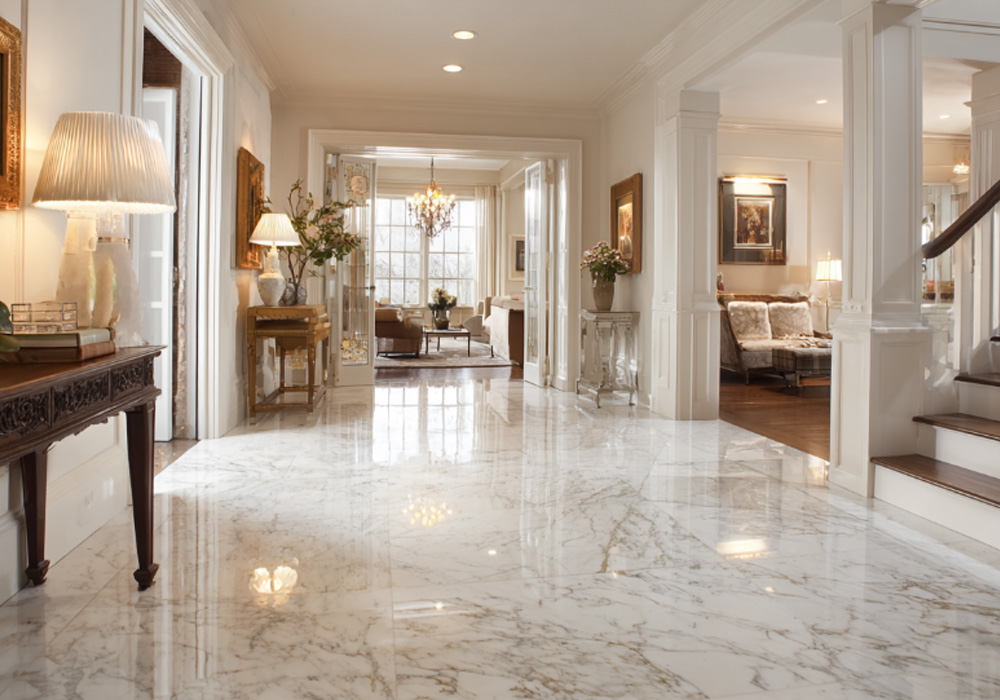
It might be tempting to conclude that if hardwood pays back 100% of its cost, then everything “more” must pay back even “more.” In other words, the premium species, the imported marble, the hand-scraped artisanal wood, these must be an even better investment. In reality, it’s diminishing returns. Your neighborhood and comparable sales can only justify a buyer spending so much for even the most beautiful materials and workmanship.
If your end game is selling in a few years, not decades, go with a nice mid-grade material and premium installation. That way you achieve a look and performance level similar to high-end flooring, but don’t risk pricing yourself out of your neighborhood. Leave the rare species and the marble to the luxury-dream-home-set.
Timing Your Flooring Decisions Around the Listing, Not the Renovation
One more thing to keep in mind, potential buyers who see your ad online will form their first impression in a matter of seconds, even before they visit the property in person. Therefore, if you’re planning a flooring renovation in preparation for selling the house, plan it in a way that allows for the floors to be completed, cleaned, and professionally photographed in good lighting before posting the ad. That way, the renovation won’t interfere with the sales process and potential buyers won’t see a messy half-renovated room, which generally makes a worse impression than an old but clean one.