Many individuals attempting to purchase a compact SUV for city life ask the wrong question in the beginning. They want to know which model appears most attractive or boasts the highest horsepower, but the important question is whether it will fit inside a parking garage, make a U-turn on a narrow one-way street, and guzzle a whole tank of gas just idling in traffic. Two SUVs with the same name can appeal to entirely different lifestyles.
What actually counts as a subcompact SUV
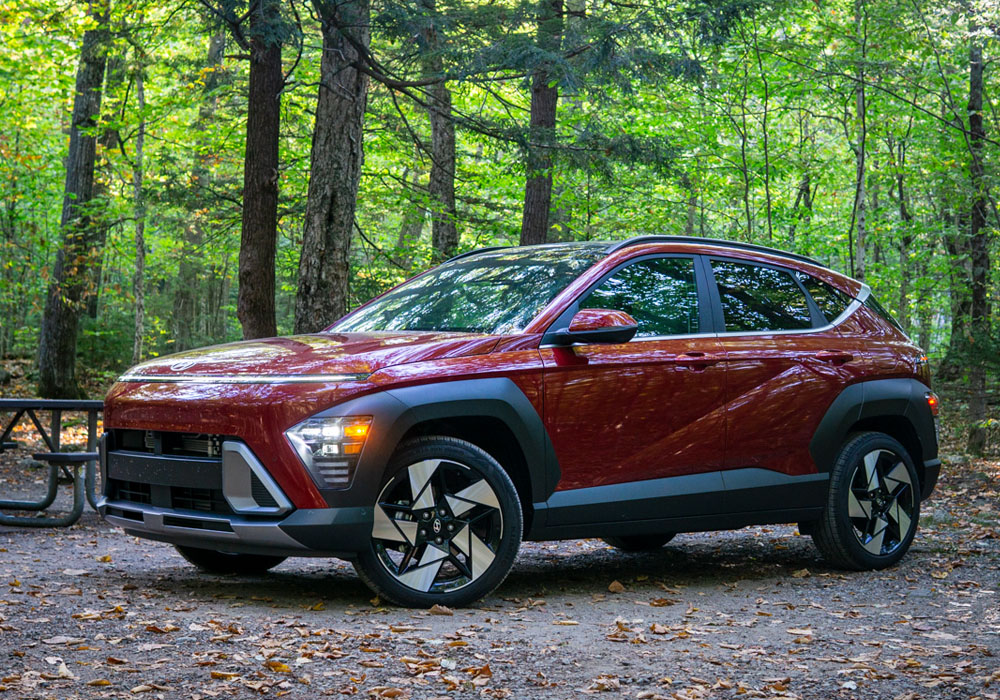
The subcompact crossover segment, or B-segment if you’re in the business of close-enough-to-make-no-difference shorthand, neatly slots in between small hatchbacks and compact SUVs. Lengths tend to be under 170 inches, capacities are for five, and the footprint’s small enough to slot into spaces a midsize SUV would bounce off twice trying to park. Honda HR-V, Toyota Corolla Cross, Hyundai Kona, Mazda CX-30, Chevrolet Trax; these aren’t miniature versions of larger SUVs, they’re a specific response to a specific problem: how do you get SUV seating height, cargo access, and general traffic visibility without the parking woes that arrive as standard on anything bigger.
This size sweet spot is vital, because the other options for city drivers fail them in particularly unpleasant ways. A big SUV makes every parking anxiety worse, and especially makes your life worse when it won’t quite fit into a parking space and hits the same low clearance garage entrance for the second time in a row. A small hatchback or sedan scythes off all your cargo options and that seat up high you like – it’s better for loading groceries or a stroller if it’s a little closer to hip height. Subcompact SUVs split the middle. And that’s why the segment’s growing like a weed. SUVs and crossovers made up about 51% of model year 2023 new vehicle production (EPA Automotive Trends Report) and most of that growth is in the smaller stuff, not the bigger stuff.
The spec that matters more than horsepower
If you ask any driver in the city, they’ll likely tell you that they value turning radius more than horsepower. It allows you to make a U-turn on a narrow street without having to reverse three times, or to loop through the parking garage ramp without hitting a pillar. Though manufacturers rarely highlight it, you can usually find it in the complete technical data or in the user’s instructions. This is a good number to have in mind before anything else.
This is a feature that you won’t be able to test during a typical trial in the dealership. To test it, you need a city and to see and live that difference, so it’s worth checking it on paper and confirming it later. For example, two SUVs with identical exteriors can vary up to 4 feet in the turning radius. And that marks the difference between one perfect U-turn and another that stays halfway through the maneuver with cars starting to accumulate behind you.
Why city MPG beats combined MPG
Fuel economy ratings are simplified to a single combined number on most vehicle stickers, but that number doesn’t mean much if you mostly drive in the city. Combined MPG averages highway cruising with stop-and-go traffic. If you spend most of your time in the city, the number is higher than what you’ll experience. The EPA city MPG is a more accurate reflection of everyday city driving: frequent acceleration, braking, and idling.
This is where subcompact SUVs differ more than you’d think. Some city numbers are only slightly better than a compact sedan, while the hybrid version of the same model jumps to the lead, as hybrid systems excel in stop-and-go driving. If you drive short distances with frequent stops, then a model’s city MPG should have a more significant impact on your decision-making process than the manufacturer’s total combined MPG ballpark.
Cargo space is about flexibility, not just cubic feet
When manufacturers advertise cargo capacity, they usually provide measurements in cubic feet with all seats up and with the backseats folded down. It’s easy to just compare the large numbers, but the actual capacity can be quite different depending on several factors. A low, flat load floor is very important for easily loading large or heavy items. If the floor isn’t low, this will make it harder to get your items inside. Also, how your seats fold is a good consideration. There are SUVs out there in which the backseats almost fold flat. Having inclined seats leaves gaps that can be dangerous if you’re carrying loose items that you don’t want to come flying towards the front.
Adding a cover in those situations can be expensive and won’t necessarily protect the backs of the chairs from wear or tear. Checking a Road SUV’s smallest SUV comparison can help you filter by the cargo specs that actually matter, but it’s still important to test them out yourself to see if you can realistically fit what is advertised.
Parking assist tech is worth paying for
No one goes to buy a car because it has parking sensors installed, yet once you get the wheels on the ground in any city that’s the first option in the showroom model you’ll beg the dealer for. 360-degree cameras, front and rear parking sensors, blind spot monitoring – all that stuff is incredibly helpful when you’re parallel parking on a busy street, or trying to back out of a spot with two vehicles on either side parked far too close to you.
What current owners will tell you is that most of that stuff isn’t distributed evenly through the available trim levels of a given model. This is the kind of detail you need to check the window sticker trim-by-trim for, because the difference between “this crossover has parking assist” and “this specific trim of this crossover has parking assist” can be a few thousand dollars and a completely different ownership experience.
AWD isn’t the upgrade you think it is
All-wheel drive gets marketed as the responsible, safer choice, and for buyers who deal with genuinely unplowed roads or steep rural driveways, it can be. But for most urban drivers, AWD is added weight, added cost, and a real fuel economy penalty in exchange for a capability they’ll rarely use. Cities plow their streets. Parking garages are flat. The scenario where AWD saves you is rare enough that front-wheel drive is often the smarter default.
The exception is straightforward: if you’re in a snow-belt city where side streets go unplowed for days, or you regularly drive to areas outside city limits with worse road maintenance, AWD earns its keep. Otherwise, you’re paying a recurring fuel penalty for a feature that mostly sits unused. It’s a reasonable upgrade to skip, and skipping it often unlocks a lower price point on the same trim.
Safety ratings matter more in dense traffic
Densely populated areas have more people walking and biking, and more situations where vehicles come to a sudden stop. That’s when IIHS safety ratings stop being a purely academic concept and start becoming a useful shopping tool. Specifically, aim for a Top Safety Pick. And make sure that automatic emergency braking with pedestrian detection is included as standard equipment on the base version of the car you’re interested in. Not an option. Not buried in some extra-cost upper trim or safety package.
This distinction trips people up constantly. A model can carry a strong overall safety rating while its base trim ships without the pedestrian detection system that actually matters for city driving. Read the trim-specific equipment list, not just the model’s overall safety score, before assuming you’re covered.
Total cost of ownership looks different in a city
The Manufacturer’s Suggested Retail Price is the number on the sticker, but it’s hardly ever the number that matters most when you’re buying a small SUV to use in the city. For one thing, insurance rates for compact and subcompact SUVs can come in surprisingly high, in part because they’re as likely to be targets for theft as their larger counterparts and because repair costs can escalate as well. In some cities, residential parking permits adjust according to the size of your car or what weight class it’s in – and those added fees are never included in the cost-of-ownership figures.
Also, proximity to a dealership or qualified service center matters more in a city, where towing a vehicle any distance for warranty work is its own hassle. Towing capacity, meanwhile, is a spec urban buyers tend to overvalue. Unless you’re regularly hauling a trailer or boat, which is rare for city dwellers without easy highway access, this number matters far less than turning radius or city MPG. It’s fine to ignore it entirely when comparing models for urban use.
Electrification is changing the calculus
The subcompact SUV segment is electrifying fast, and it’s something to think about before you buy. New hybrid versions, like the Corolla Cross Hybrid, or fully electric choices, like the Kona Electric, can make the cost of ownership pencil out in ways that particularly advantage people who stay in the city or who have short commutes. Lower fueling costs, fewer maintenance demands, and smoother performance in stop-and-go traffic are all arguments in favor of electrification in the city. The flip side is the charging calculus. If you’re a city apartment dweller with no guaranteed parking and thus no place to charge, your best bet may be a hybrid – you’ll see some real-world fuel-efficiency improvements without the need for an expensive piece of Level 2 charging equipment. Public charging can be spotty city to city, so this is where a bit of homework with your local EV owners’ club might help.
Building your shortlist the right way
Knowing the specs that are significant for you in your day-to-day driving life is half the battle when you’re making sure a new vehicle actually fits your needs. Most of the specs most magazines print or websites list tend to cover the highway and rough trails more than the city and parking spaces. Steer clear of the blank check question “What do you need all that space for?” by making sure your next vehicle doesn’t have more size than you’ll use.
Sit down with a piece of paper or open a document and sketch out the context your new vehicle needs to fit into. How big is a typical parking space at work or at home? Add the opening range of the driver’s door to the width of a parking spot and you have the minimum width you need to comfortably squeeze yourself in. How long is your typical commute in minutes or miles? How much is on the highway with the cruise control set, and how much is stop-and-go surface streets or 15-mph school zones? How long is your typical lunch break and how many blocks do you often drive during it? How tight is the spiral in your garage down to your space?
The bottom line for city buyers
The market for subcompact SUVs is highly competitive and most of the promotional content is targeted at customers who won’t use these cars as actual inhabitants of the city. You can ignore the details related to the engine power. Instead, pay attention to the turning radius, focus on the city mileage instead of the overall mileage, and personally fold the seats to see how it works and verify which safety functions are standard for the version you want to buy. The SUV that is the best choice for highway drivers, for example, is often not suitable for someone who needs to park on a narrow street. View and compare the specifications with the reality of your situation, and the decision will come immediately.