Key Takeaways
- Full-arch dental implants can replace most or all teeth in an upper or lower jaw with an implant-supported restoration.
- Eligibility depends on oral health, bone anatomy, medical history, bite forces, and the ability to maintain the restoration.
- Temporary teeth can be placed early in some cases, but healing and implant integration continue for months.
- A treatment plan should explain the restoration design, materials, follow-up schedule, maintenance needs, and potential additional costs.
- Long-term results rely on home cleaning, professional care, and timely attention to changes in comfort or fit.
For many people in San Antonio, widespread tooth loss or failing teeth can make everyday meals, conversations, and social occasions feel more difficult. Full-arch treatment may offer a more stable replacement option, but it is a significant clinical decision that deserves more than a quick comparison of advertisements or prices. Patients researching all on six dental implants San Antonio, TX, can review The Smile Institute’s explanation of a six-implant, full-arch approach for people with extensive tooth loss. Located in San Antonio, The Smile Institute outlines considerations for candidacy, consultation, implant placement, temporary teeth, healing, and follow-up, which are central topics for anyone evaluating full-arch care in the area.
Why Full-Arch Tooth Replacement Requires Careful Planning
Living with multiple missing, damaged, or loose teeth can affect food choices and comfort. Traditional dentures may help some patients, while others prefer a restoration supported by implants. Neither route is automatically right for every person. The best decision begins with a complete diagnosis, realistic goals, and an understanding that treatment involves surgery, healing, adjustment, and ongoing care. San Antonio’s busy pace, from family gatherings to workdays spent on the road, can make a dependable daily routine feel especially important. Still, the desire to eat and speak with greater confidence should be balanced with practical questions about health, recovery time, budget, and the commitment needed to protect the final result.
What Full-Arch Dental Implants Are Designed to Do
A full-arch restoration replaces most or all teeth in one jaw. Dental implants are small fixtures placed in the jawbone to support replacement teeth. Depending on the treatment plan, the final prosthesis may be fixed in place by the dental team or removable for professional or at-home care. Several parts work together in a full-arch case: the implant fixture is placed in the bone, an abutment, or connecting component, joins the implant to the restoration, and temporary teeth may be used while healing occurs. The final prosthesis is designed after the gums, bite, and implant foundation have stabilized. The process by which bone attaches to an implant is called osseointegration, and understanding how dental implants support replacement teeth can help patients ask more informed questions during a consultation.
Who May Be a Candidate?
A dentist may discuss full-arch treatment when a patient has several missing teeth, teeth that cannot be predictably restored, repeated restorative failures, severe wear, or dentures that move and cause discomfort. Age alone does not determine whether someone is eligible. Instead, a clinician evaluates factors such as gum condition, bone volume, bite pattern, oral hygiene, smoking, medications, diabetes management, and other health considerations. The ability to return for follow-up appointments also matters. Only an in-person examination and appropriate imaging can determine whether a particular implant design is suitable.
What Happens During the Evaluation?
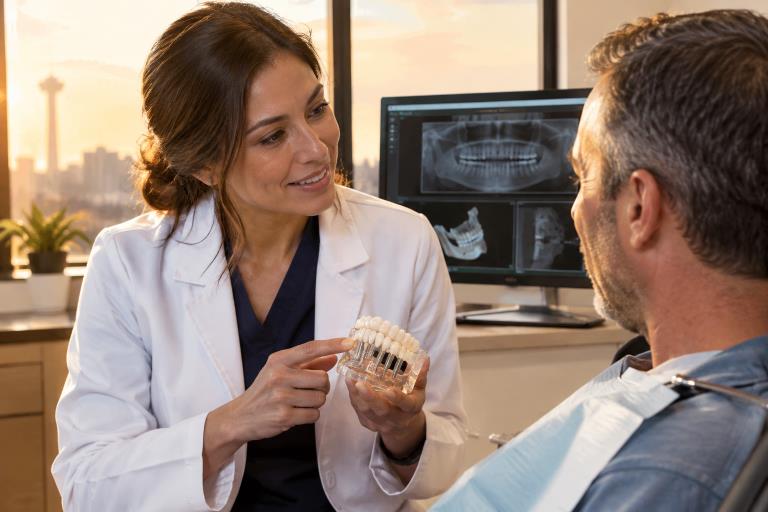
A thorough consultation typically includes a medical and dental history, a clinical examination, photographs, digital scans, and a bite assessment. Three-dimensional imaging may be used to evaluate jaw anatomy and help plan implant positions. The care team uses this information to consider available bone, restorative space, tooth display, and how upper and lower teeth will meet.
Questions the Evaluation Should Answer
- Which teeth need to be removed, restored, or replaced?
- Is the available bone appropriate for the proposed implant plan?
- Could grafting or another preparatory procedure be needed?
- Will the planned teeth be fixed or removable?
- What temporary restoration, if any, will be used during healing?
- When might the final restoration be made and delivered?
- How will future maintenance, repairs, and adjustments be handled?
Comparing Full-Arch Options
Full-arch plans vary. Some designs use a different number of implants, while others differ in prosthesis shape, material, retention method, and timing. A recommendation should reflect the patient’s anatomy and clinical needs rather than a one-size-fits-all package.
- Number of implants: This can affect how support and bite forces are distributed across the restoration.
- Fixed or removable design: This changes daily cleaning methods, feel, and how the prosthesis is accessed for care.
- Restoration material: Materials can differ in appearance, durability, repair approach, and cost.
- Bone condition: Bone quantity and quality may influence implant placement, staging, or the need for additional procedures.
Why Healing Time Still Matters
Receiving teeth soon after surgery, when clinically appropriate, does not mean treatment is complete. Early healing can involve swelling, tenderness, dietary restrictions, speech adjustments, and several check-in visits. Implant integration with the surrounding bone generally continues over a longer period before the final teeth are completed. Patients should share every relevant health detail with their dental team, including smoking, bone-health concerns, medications, diabetes, teeth grinding, and use of sleep apnea equipment. A reported case involving CPAP use during early implant healing illustrates why details that may seem unrelated can be important to a full-arch treatment plan.
A Simple Recovery Timeline
- Treatment day: Extractions, implant placement, and a temporary restoration may occur, depending on the plan.
- First few days: Rest, prescribed instructions, soft foods, and management of expected swelling or soreness are common priorities.
- First few weeks: Follow-up visits allow the team to monitor healing, hygiene, and the temporary restoration.
- Several months: The implants continue integrating with bone while the gums and bite are assessed.
- Final restoration stage: Permanent teeth are fabricated, tried in, adjusted, and delivered when the foundation is ready.
Daily Care After Treatment
Implant-supported teeth are not maintenance-free. Patients need to brush carefully, clean around and beneath the prosthesis with the tools recommended for their design, and attend regular professional visits. Bleeding, swelling, discomfort, looseness, odor, or a change in the bite should be reported promptly.
Helpful Maintenance Habits
- Follow the individual cleaning instructions provided after treatment.
- Use water flossers, interdental brushes, or other aids only as directed.
- Do not use sharp household objects to clean around the restoration.
- Wear a night guard if it is prescribed for clenching or grinding.
- Keep maintenance appointments even when the teeth feel comfortable.
Cost Questions and Final Considerations
Quotes can differ because treatment may include imaging, extractions, sedation, bone preparation, temporary teeth, laboratory work, final prosthetic materials, and follow-up care. Ask for a written plan that explains what is included, what may be billed separately, what happens if temporary teeth need repair, and how future maintenance is handled. A strong full-arch decision is not necessarily the fastest or least expensive one. For San Antonio patients, the most appropriate plan is the one that fits their health, jaw anatomy, goals, lifestyle, and ability to maintain the restoration over the years.
Conclusion
Full-arch dental implants can provide an implant-supported option for people with extensive tooth loss or failing teeth, but treatment requires careful evaluation and long-term planning. Candidacy depends on factors such as bone and gum health, medical history, bite forces, oral hygiene, and the ability to maintain the restoration after treatment. Patients should understand each stage of care, including any extractions or preparation, implant placement, temporary teeth, healing, and delivery of the final restoration. It is also important to compare the complete cost rather than focusing only on an advertised starting price. For San Antonio patients considering full-arch treatment, a detailed consultation can help clarify available options, expected recovery, maintenance requirements, and potential additional procedures. With realistic expectations and consistent home and professional care, patients can better assess whether a particular full-arch approach fits their oral health needs, daily routine, and long-term goals.