A bottomless portafilter won’t fix bad espresso on its own. It shows you what’s happening under the basket so you can adjust your prep. Ask the right questions first and you’ll avoid buying one that doesn’t fit your machine or suit your routine.
Will it lock into your machine?
Basket diameter alone doesn’t tell you if a portafilter fits. What matters is how the lugs lock into your group head. Their thickness and angle vary between makers.
A 58mm basket size isn’t a promise that the surrounding portafilter body will fit every machine using that size. Listings may offer separate versions for different machine families despite sharing a nominal basket diameter. Don’t rely on photos alone: small differences in the locking tabs can be hard to see. A listing that names your machine is more useful than one that simply says ‘universal’.
Check your exact machine model and, where relevant, its year or version before you order. Compare lug count and position against your current portafilter, then ask the seller to confirm the fit. The new handle should seat securely in the position your machine’s instructions describe, without excessive force. Keep the group head and gasket clean so trapped grounds don’t affect the seal.
Never force a tight fit.
Does it come with a basket that matches your dose?
A handle without a basket is only half the purchase. Some bottomless portafilters ship with a basket fitted and others come as a body only. The listing should make that clear. If you brew mostly doubles, match the basket to that dose and leave room for the coffee to swell.
If a basket is included, note its diameter and recommended dose range. A basket labelled 18g is a starting point, not a demand that every coffee must weigh exactly 18g: follow the basket guidance and check headspace. Your tamper must suit the basket’s internal dimensions too, moving freely without binding. Don’t assume your old basket will drop in, as rim shape and depth also matter. Confirm that the retaining spring holds it securely.
Listings vary in how much detail they give. That’s why finding compatible coffee equipment is easier when pages state exact model fit and what’s in the box. Basket size should be named as a separate spec, not guessed from photos.
Will the handle and materials suit daily use?
Check the body material and any finish rather than judging quality by shine alone. Ask for care instructions, especially if the handle is wood or the body has a coating. The rim should hold the basket evenly, with no rough edges where you handle or clean it. Weight and balance are personal preferences: a substantial handle isn’t automatically more comfortable.
Think about how you tamp, too. Does the handle rest securely on your tamping mat, or will you need a support? For cleaning, follow the maker’s instructions on detergent, soaking and dishwasher use. Don’t assume a removable metal basket and an attached wooden handle can receive the same treatment. Dry the assembly as directed and avoid abrasive pads on delicate finishes.
Will it change your workflow and clearance?
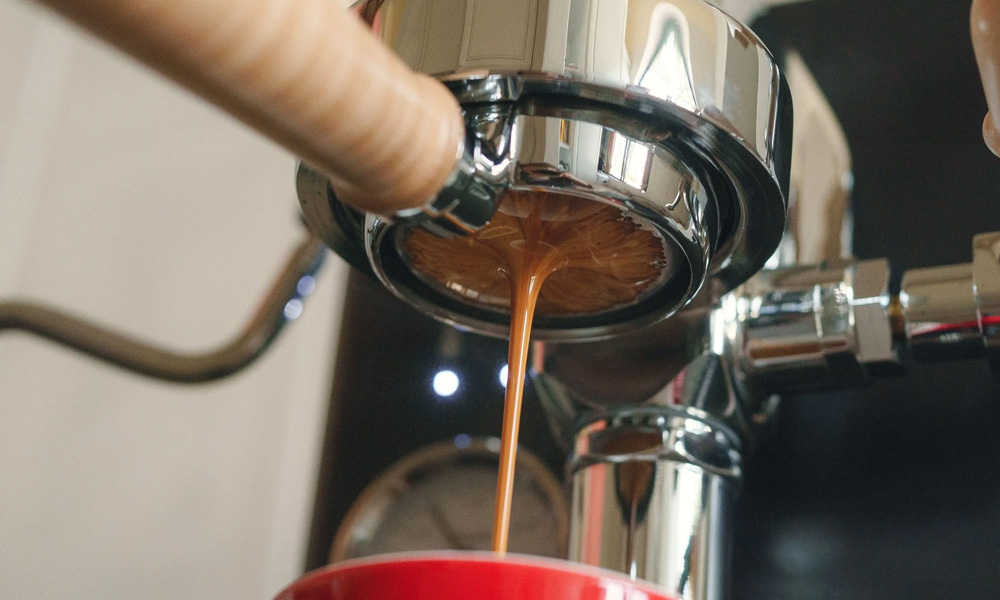
A bottomless won’t make espresso taste better by itself. It lets you see uneven flow as it happens.
You can see spurting or uneven flow that spouts would otherwise hide. These patterns give you reasons to review grind, distribution and tamping, but they aren’t a complete diagnosis. Change one variable at a time and compare the result in the cup. Attractive flow doesn’t prove that extraction is ideal, and watching the basket cannot measure extraction yield. Use taste alongside your usual dose, yield and time measurements.
Expect a bit more mess while you learn. Without spouts there’s nothing to guide stray drops, so keep a cloth close. Removing spouts often frees up room for a cup and scales, but the basket doesn’t always sit lower. Measure your assembled setup with your usual cup in place. Put the scales and cup in position first, then lock in the portafilter to check clearance.
What should you confirm before you order?
Good listings for speciality coffee spare parts and accessories give you clear specs to work with. Confirm your exact model and year with the seller, not just basket size. Ask whether the basket is included and what dose it takes. Check the returns terms for an unused item if the fit feels wrong. A quick message with your model and year can save you a return.
Run through this short check before you pay:
- Exact machine model and year
- Lug count and lock position
- Basket diameter and nominal dose
- Tamper fit in that basket
- Cup and scale clearance
- What’s in the box and returns terms for an unused item
Gasket condition matters too. If an otherwise compatible portafilter leaks, a dirty or worn group gasket is one possible cause. Don’t force the handle tighter to compensate. Follow the machine’s troubleshooting guidance and arrange a suitable replacement or service when needed. Once fit is confirmed, test with water before brewing coffee.
Buy for useful feedback, not just for looks. Choose a portafilter with confirmed fit, a suitable basket and care instructions you can follow. Then give yourself time to learn what its view of the extraction tells you, without expecting it to replace careful preparation.