Key Takeaways
- Active leaks, sewage backups, and water near electrical equipment require fast, safety-first action.
- Knowing how to shut off water can reduce damage while professional help is arranged.
- Photos, notes, and a clear description of the problem can support repairs and insurance documentation.
- Slow drains, stains, odors, and unexplained water use can point to problems before they become emergencies.
A plumbing emergency can turn a quiet evening in Wake Forest into a stressful cleanup in minutes. Whether a supply line fails in a utility room, a toilet overflows upstairs, or water appears in a crawl space, the priority is to protect people first and limit the flow only when it is safe to do so.
For a burst pipe, major leak, or sewage problem that cannot wait, contacting an Emergency Plumber can help homeowners address the source of the issue after taking immediate safety steps. Fast decisions matter, but no amount of property damage is worth risking electric shock, exposure to contamination, or a fall.
What Counts as a Plumbing Emergency?
The difference between an emergency and a routine repair is usually the immediate risk of water damage, contamination, lost water service, or injury. A dripping faucet may be annoying, but a pipe spraying water, a bulging ceiling, or sewage coming up through a drain needs urgent attention.
- Burst, cracked, or actively leaking pipes
- Water spreading across floors, walls, or ceilings
- Sewage backing up into tubs, toilets, or floor drains
- A water heater leaking heavily or pooling water nearby
- No water throughout the home when a private supply issue is possible
- Water close to outlets, appliances, extension cords, or an electrical panel
A single slow drain, one minor drip, or a small stain that is not changing may be suitable for a standard appointment. Still, monitor it closely because small symptoms can become larger repairs if they are ignored.
What To Do in the First Few Minutes
- Keep children and pets away from the affected area.
- Turn off the fixture-level valve if the problem is isolated to a toilet, sink, washing machine, or similar appliance.
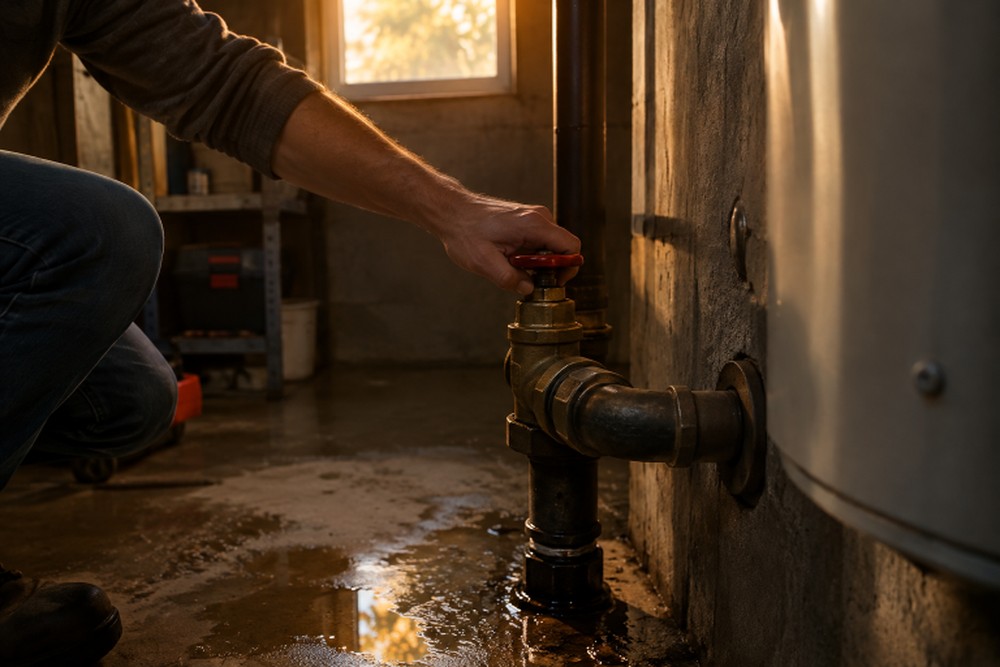
- Shut off the home’s main water supply if water continues flowing or the source is unclear.
- Move electronics, furniture, and valuables away from water if you can do so without entering a hazardous area.
- Take photos and video before cleanup, when safe.
- Call the appropriate plumbing professional and describe the location, water source, and visible damage.
Never walk through standing water when outlets, cords, appliances, or electrical equipment might be energized.
How To Find and Use Water Shutoff Valves
In Wake Forest homes, the main water shutoff may be near the point where the service line enters the house, in a garage, utility room, basement, crawl space access area, or near the water meter. Individual fixture valves are commonly located behind toilets, under sinks, and beside washing machines or water heaters.
Find these valves before a crisis occurs. Clear stored items away, make sure household members know the main valve’s location, and test accessible valves carefully once or twice a year. A stuck valve can make an otherwise manageable leak much more difficult to control.
Common Plumbing Emergencies and Safe Responses
Burst Pipes
Turn off the main water supply promptly. Even a small split can release substantial water while the line remains pressurized. Open a cold-water faucet at a low point in the home after shutting off the main, if it is safe, to relieve remaining pressure.
Overflowing Toilets
Stop flushing. Close the small shutoff valve behind or beside the toilet by turning it clockwise. If the bowl is near overflowing, remove the tank lid and lift the flapper into its closed position if you can do so safely.
Water Heater Leaks
If the water supply valve above the unit is easily accessible from a dry area, turn it off. Avoid wet electrical connections, gas controls, and hot metal surfaces. A leaking tank, valve, or connection should be inspected rather than ignored.
Sewage Backups and Loss of Water
If several drains back up at once, stop using sinks, showers, toilets, dishwashers, and washing machines. Sewage-contaminated water can create a health hazard. For a whole-home water loss, check whether a valve was closed and whether nearby homes are affected before assuming the issue is in your plumbing system.
When Water, Electricity, or Sewage Mix
Water near a panel, outlet, power strip, appliance, or exposed wiring is a safety emergency. Leave the area and turn off the power only from a dry location if doing so does not require approaching the water. If there is an immediate threat to life or fire safety, call emergency services.
Do not enter sewage-contaminated water without appropriate protection. Keep people away, prevent tracking contamination through the home, and allow trained professionals to advise on cleanup and repairs.
Signs of a Hidden Leak
Not every leak creates a visible puddle. Watch for musty odors, peeling paint, soft drywall, warm or damp flooring, recurring water stains, unexplained sounds behind walls, or a water meter that moves when every fixture is off. The EPA notes that household leaks can waste thousands of gallons of water annually, making monitoring household leaks worthwhile even when damage is not obvious.
How Cold Weather Can Cause Pipe Damage
Winter cold snaps can affect exposed plumbing in garages, crawl spaces, exterior walls, attics, and outdoor hose connections. Water expands as it freezes, placing pressure on pipes and fittings. Disconnect outdoor hoses, insulate vulnerable exposed pipes, maintain indoor heat, and open cabinet doors along exterior walls during severe cold. The American Red Cross offers practical guidance on preventing and safely thawing frozen pipes.
What To Do Before Professional Help Arrives
- Write down when the problem started and what changed.
- Note whether the water is clean, cloudy, hot, or contaminated.
- Identify which fixtures still work and which ones are affected.
- Keep access to the shutoff valve and affected area as clear as possible.
- Save photos, video, receipts, and notes about prior repairs or recurring symptoms.
Avoid cutting pipes, opening walls, using open flames, or pouring chemical drain cleaners into a system when the cause is uncertain.
Ways To Reduce Future Plumbing Risks
Build a simple maintenance routine: inspect under sinks and around appliances, check supply hoses for cracking or bulging, look for corrosion around the water heater, and address repeated clogs or slow drains. Leak alarms near washing machines, water heaters, and sump pumps can provide an early warning. Preparation will not prevent every problem, but knowing where to shut off water and when to step back can make a plumbing emergency far less overwhelming.