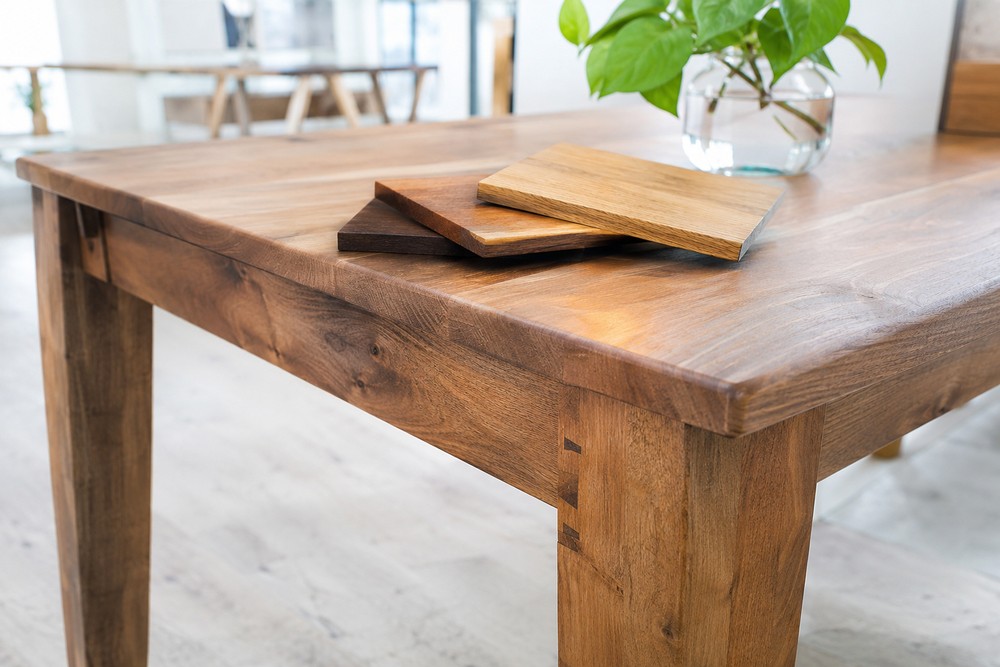
Ordering handcrafted wood furniture involves choices that are easy to miss in a showroom photo. The species, construction, dimensions, and finish all affect how a piece will look and function at home. A useful conversation with the maker turns those choices into a clear order.
Whether you are considering a dining table, kitchen island, or storage cabinet, bring measurements and a short list of priorities. The following questions will help you compare options and understand what you are buying.
What materials are used in each part?
Ask which wood species is used and where it appears in the piece. The top, frame, drawer boxes, and cabinet back may have different construction, so a description of the main surface does not necessarily explain everything.
Solid wood, plywood, and veneer each have applications in furniture. Rather than judging a piece by one label, ask the maker to explain the material choices and how they suit the design. If solid wood throughout is a priority, be specific about which components you mean.
Also discuss appearance. Grain pattern, knots, color variation, and other natural features can look different across boards. Ask for examples of completed pieces so you can describe the character you like without expecting every board to look identical.
How is the piece built for everyday use?
Explain how the furniture will be used. A dining table that hosts daily family meals has different practical demands from a narrow console in an entryway. A storage cabinet needs to accommodate the objects you actually plan to put inside it.
Ask how the frame is joined, how shelves are supported, and what hardware is used where relevant. The maker should be able to describe the construction without requiring you to become a woodworker. No single joint name tells the whole story; the design and its intended use belong in the conversation too.
For solid wood pieces, ask how the construction allows for seasonal wood movement. For a table, that might include an explanation of how the top attaches to its base. For a cabinet, discuss door and drawer operation as well as overall dimensions.
Which measurements can be customized?
Start by distinguishing a standard model from a modified or fully custom order. Ask which dimensions and details can change, and whether those changes affect the design or price.
Length and width are only part of the picture. For a table, confirm height, leg placement, and the space available for chairs. For an island, consider countertop height, overhang, and storage access. For a sideboard, check interior shelf dimensions against the dishes or serving pieces it will hold.
Browsing a maker such as Vintage Mill Werks can help you identify the furniture styles and proportions you want to discuss. Save the model name and write down requested changes rather than relying on a photograph alone.
Can samples help with the finish choice?
Ask whether finish samples are available and what they represent. View them beside the flooring, upholstery, and other wood furniture that will surround the new piece. A finish can look different under a warm pendant light than beside a bright window.
Discuss sheen as well as color. If the design combines finishes, request a clear description of which finish goes on each component.
Then ask for care guidance for the actual finish being applied. Find out which cleaning methods are recommended, whether coasters or protective pads are advised, and what to do about small marks. Do not test a sample with water or cleaning products unless the maker recommends that test. A useful sample should help you choose, not leave you guessing about maintenance.
What will the written order include?
Before approving the purchase, gather the agreed details in one place. Include the model, overall dimensions, materials, finish, hardware, and any modifications. A drawing or reference image can help when a change is difficult to describe in words.
Ask for the complete price and an explanation of any separate delivery or assembly charges. Confirm the payment stages and when the specifications become final. If a detail is important enough to influence your decision, it belongs in the written record.
Keep that record alongside any approved sample information. It provides a shared reference for later conversations and makes it easier to confirm that everyone is discussing the same version of the piece.
How will delivery and aftercare work?
Ask for the current production estimate and how delivery is arranged. Establish whether the service includes carrying the furniture inside, placing it in the room, or assembling components. Share information about stairs, narrow doors, and other access constraints before booking.
Finally, ask whom to contact about care, replacement hardware, or future repairs. Read any warranty provided and keep it with the order details. Knowing the contact process is useful long after the furniture arrives.
Choose with the details in view
The best questions connect the design you like with the way you live. Clear answers about materials, construction, fit, finish, and delivery let you order with a realistic picture of the finished piece. Put the decisions in writing, then enjoy choosing furniture made to suit your home.