Clear aligners straighten teeth with a series of removable plastic trays, and treatment works best when it fits around your actual life. The right choice depends on how your days run: your meals, your commute, your travel, and how you prefer to deal with a clinic.
What clear aligners are and how treatment works
Aligners belong to a group called removable orthodontic appliances. Unlike fixed metal braces, they can be taken out for eating and cleaning. They can correct malocclusion, the clinical term for misaligned teeth such as crowding, gaps, overbites and underbites.
Treatment starts with a 3D digital scan, a radiation-free imaging process that builds a precise map of your teeth. From that map, an orthodontist designs a treatment plan that predicts how each tooth will move, stage by stage. Many patients also get attachments, small tooth-colored bumps bonded to certain teeth so the trays can grip and apply force where it’s needed.
Each tray in the series is worn for a set period before the next one takes over, and every new tray shifts the teeth a small, planned amount. The plan maps out how many trays a case involves and how long each stage lasts. It also covers retention, the phase after active treatment in which a retainer holds the result while the teeth settle.
Why specialist oversight matters
An orthodontist is a dental specialist trained to diagnose bite problems and supervise tooth movement. A first consultation covers your individual goals for your smile and an assessment of whether aligners suit your case.
Some clinics offer a dental monitoring app alongside regular appointments, letting you submit progress photos or scans of your teeth from home. How the review process works varies between providers, so it is worth asking before you commit. A clinic can explain how often a specialist checks your progress and how appointments fit around work, study or travel.
When comparing providers, ask who designs and reviews the plan. If you’re considering clear aligners in melbourne, ask whether the provider combines specialist oversight with remote check-ins. That arrangement suits people balancing work, study, family or frequent travel.
Wear expectations and your daily schedule
Aligners only move teeth while you wear them. Your clinician sets the wear expectations for your plan, and those expectations shape how much of the day the trays stay in. Before starting, you can ask how that guidance fits around an ordinary day of meals, drinks and snacks.
People who graze through the day can find wear time harder to reach, since every snack means taking the trays out. Everyday snacking and coffee habits are useful things to raise when discussing how a clinician’s individual plan fits the day.
Social events need the same planning. You can take aligners out for a long dinner, but the hours add up across a week. Trays wrapped in a napkin are easy to lose, so carry the case everywhere.
Travel needs its own plan. Time zones and long flights disrupt meal patterns. Frequent flyers do well to keep their kit in a carry-on and reset the routine on landing.
Keeping your teeth clean on the go
The care routine your treating team explains works best when you have a convenient place to do it. Before starting treatment, think about where that would be at work or on travel days.
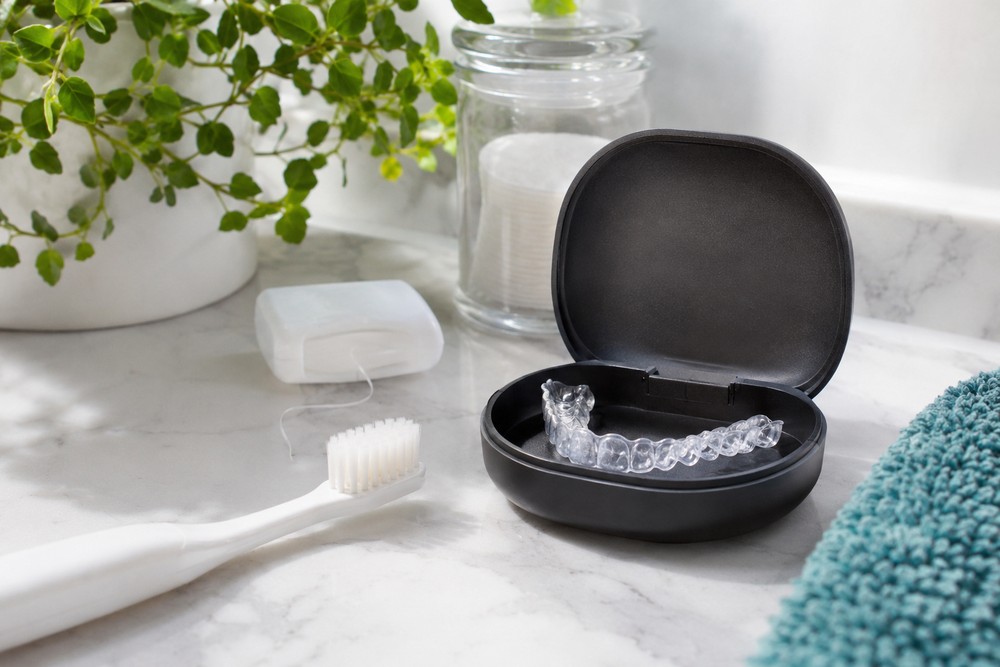
A compact kit fits easily into a work bag or desk drawer: a travel toothbrush, floss picks and the aligner case take up little room. The treating team can recommend which care items suit your routine, and keeping them within reach makes the daily habit easier to keep. The trays need their own cleaning too.
Whether aligners suit you often depends on this routine. Someone who eats lunch at a desk may find it easier to keep up with. Someone with client lunches four days a week needs a plan before committing.
The confidence factor
Clear aligners are often called invisible braces because they can be hard to spot in conversation. That discretion can appeal to adults considering orthodontic treatment.
For professionals, the appeal is simple: no metal in client meetings or event photos. Teens get the same benefit in social settings. Even attachments are tooth-colored and small, so cases that need them stay low-key.
Expect a short adjustment period for speech. You may notice a slight lisp at first as your tongue adapts to the trays.
An honest look at your routine is the best starting point. If you can structure your meals and stay on top of the wear time, aligners fit into a busy life. A consultation with a specialist is the practical first step. A 3D scan can help the specialist assess whether aligners suit your case and estimate your timeline.