Key Takeaways
- Medical care and immediate safety come before evidence collection.
- Truck crashes can involve more parties and records than ordinary car collisions.
- Photographs, witnesses, medical records, vehicle data, and trucking-company documents may all matter.
- Preserving original records early can help prevent important details from being lost.
- Every claim depends on the facts, available evidence, insurance coverage, and applicable law.
A collision with a commercial truck can leave a Red Bank resident facing painful injuries, missed work, vehicle damage, and unanswered questions. Whether the crash occurs near busy local corridors, on the Garden State Parkway, or while traveling through Monmouth County, a truck accident injury claim may involve issues that are more complex than a typical passenger-vehicle insurance claim.
Large trucks are often operated for a carrier, loaded by another company, maintained by a separate provider, and insured through commercial policies. That means a careful claim may require more than an exchange of insurance information. It may also require prompt medical documentation, a clear record of the crash, and attention to evidence controlled by others.
Why Evidence Matters After a Truck Crash
Evidence helps establish a reliable account of what happened. Photos of vehicle damage, a witness statement, police observations, roadway markings, and video from a nearby business may each reveal a different part of the event. Together, they may help clarify vehicle positions, traffic conditions, visibility, timing, and the extent of the impact.
Evidence is not the same as proof of fault. A police report may be important, but it may not answer every question. Likewise, one photograph or data point rarely resolves an entire claim. A complete review considers the available records in context.
What To Do in the First Few Hours
- Move away from traffic and hazards if it is safe to do so.
- Call 911 and follow directions from emergency personnel.
- Accept medical evaluation, even if symptoms seem manageable at first.
- Exchange information when it is safe and practical.
- Ask a passenger or trusted person to take notes or photos if injuries prevent you from doing so.
- Avoid arguing about fault or guessing about what caused the collision.
Some injuries, including neck, back, and soft-tissue injuries, may not feel severe in the immediate aftermath. For example, a person may notice neck stiffness only after the adrenaline of a crash wears off later that day. Accurate medical notes and follow-up care can protect both health and documentation.
Scene Evidence and Commercial Truck Records
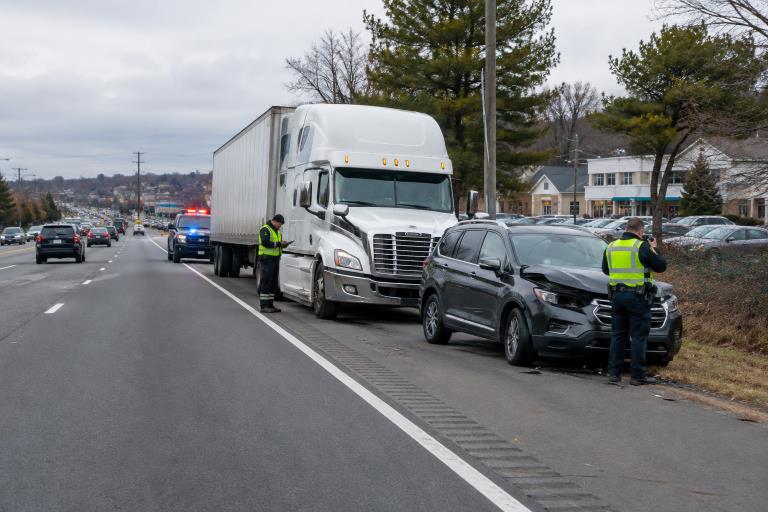
Without entering traffic or interfering with first responders, preserve what you can safely observe. Photograph vehicle positions, visible damage, debris, skid marks, road signs, lane markings, weather conditions, and lighting. Record the truck’s company name, license plate, trailer number, and any identifying markings. If witnesses are willing, obtain their names and contact information.
Commercial vehicles may also generate records beyond those available in a routine car crash. Depending on the circumstances, relevant materials may include driver duty status records, dispatch communications, routing information, pre-trip inspection reports, maintenance files, brake or tire service records, cargo documents, driver qualification records, and, when applicable, post-crash testing records.
Those materials may be held by the driver, motor carrier, truck owner, maintenance vendor, shipper, broker, insurer, or technology provider. An injured person generally should not assume that every relevant record will remain available indefinitely or that a single company controls all of it.
Electronic Data, Logs, and Video
Modern commercial trucks may contain several types of digital evidence. An electronic logging device can record duty-status information, while engine or vehicle data may capture details related to vehicle operation. Dash cameras may show traffic conditions or events before impact, and GPS or telematics systems may help identify location, routing, and timing.
The Federal Motor Carrier Safety Administration explains that electronic logging devices synchronize with a vehicle’s engine to help track driving time and duty status. The agency also states that motor carriers must generally retain duty-status records and supporting documents for 6 months, as described in its guidance on retaining duty-status records.
Access to private electronic records may require a formal request or legal process. The existence of data also does not automatically establish responsibility. It must be reviewed alongside other evidence.
Medical Records and Injury Documentation
Keep emergency-room records, imaging results, prescriptions, therapy notes, work restrictions, discharge instructions, appointment records, and medical bills. A simple dated journal may also help document pain levels, sleep problems, mobility limitations, missed work, and activities that have become difficult.
Accuracy matters. Describe symptoms honestly, attend recommended follow-up appointments when possible, and do not exaggerate limitations. Clear and consistent records are more useful than broad estimates made months after the crash.
Evidence Mistakes To Avoid
- Posting detailed opinions about the crash on social media.
- Deleting photographs, texts, emails, call logs, or voicemail messages.
- Repairing, selling, or disposing of a damaged vehicle before it is adequately documented.
- Throwing away damaged clothing, helmets, child seats, or other personal property.
- Guessing about speed, distance, fault, or the expected length of recovery.
- Waiting too long to identify nearby businesses or homes that may have video footage.
Preservation Requests and a Family Checklist
A preservation request is a written notice that asks a person or company to retain potentially relevant records and physical evidence. It may identify items such as vehicle data, video, driver logs, maintenance records, inspection reports, dispatch messages, cargo records, and the truck itself. Such a request does not guarantee that evidence exists or proves liability, but it can be an important step when records are controlled by third parties.
Family Evidence Checklist
- Obtain the police report number.
- Save original photos and videos in a dated folder.
- Write down witness contact information.
- Record truck and trailer identifiers.
- Keep medical paperwork, bills, prescriptions, and work records.
- Photograph damaged personal property before disposal or repair.
- Note possible camera locations near the crash scene.
- Avoid online comments that assign fault or discuss settlement expectations.
Common Questions About Truck Crash Evidence
How soon should evidence be collected?
As soon as it can be done safely. Scene conditions change, witnesses leave, video may be overwritten, and vehicles may be repaired. Medical treatment should always remain the first priority.
Can an injured person obtain truck data?
Possibly, but the carrier, vehicle owner, manufacturer, or technology provider may control it. Obtaining private records can require a formal request or legal procedure.
Should a damaged car be repaired immediately?
Transportation needs may make repairs necessary. When possible, first obtain thorough photographs, repair estimates, and any needed inspections.
Conclusion
Truck accident injury claims in Red Bank often require careful organization from the beginning. Focus first on safety and medical care, preserve original records, document what can be documented without risk, and avoid assumptions about fault. A well-organized record can help insurers, investigators, and courts evaluate what happened more accurately.