What Winter Actually Does to Hardscapes
Winter is a slow sculptor. It moves water in and out of pores, pushes on the tiniest fissures, and leaves behind residue that is only obvious when the sun turns up in April. Meltwater carries dissolved minerals from concrete and mortar. Those minerals migrate to the surface and crystallize as a pale haze. Organic matter breaks down and feeds a slimy biofilm. Repeated freeze-thaw cycles roughen once smooth finishes, which then collect even more grime. The result is a surface that seems to age overnight even if it sat untouched for weeks.
This is not neglect. It is physics, chemistry, and a bit of biology at work.
Material by Material: How Different Patios Suffer
Not all patios weather in the same way. The material under your feet determines the most likely springtime surprises.
- Concrete slab: Prone to scaling and microspalling if deicing salts were used nearby. Efflorescence often shows up as a chalky film. Hairline cracks can telegraph darker lines as dirt settles into them.
- Clay brick and concrete pavers: Joint sand washes out or becomes colonized by weeds and ants. Polymeric sand that was not activated evenly can leave dusty residue. Color appears uneven when some bricks stay damp longer than others.
- Natural stone: Limestone and sandstone absorb deeply and hold tannins and rust. Softer stones can etch if cleaned too aggressively. Dense stones like granite resist staining but still grow algae in shade.
- Porcelain pavers: Less porous, so they reveal surface films and mineral spots clearly. Slipperiness becomes obvious in algae prone corners.
- Wood and composite deck-adjacent areas: Tannins and iron from fasteners bleed onto adjacent pavers or concrete, creating rings and streaks.
Understanding the substrate helps you pick the right cleaning approach and avoid damaging the surface.
The Silent Culprits You Might Not Expect
The obvious suspects are snow and leaves, yet subtler sources quietly do their part.
- Deicing products: Sodium chloride accelerates scaling on concrete. Calcium chloride can leave a dark, oily look. Granules carried by boots grind into the surface and leave halos as they dissolve.
- Metal furniture and planters: Iron feet and steel screws leave orange rust blooms. Moist saucers under planters trap water and imprint rings.
- Irrigation overspray: Winterized or not, occasional leaks or misdirected heads leave mineral freckles that build up into crusty bands.
- Grill grease and winter fireplace ash: A splash here and a spill there. Fats oxidize and darken. Ash is alkaline and can burn into concrete when it gets wet.
When these combine with shade, wind patterns, and uneven drainage, the patio turns mottled and dull.
A Smart Spring Assessment Plan
Before you haul out a washer or a bucket, map the battlefield.
- Walk the perimeter after two dry days. Mark persistent damp zones, green patches, white chalky areas, and oily stains.
- Check the slope with a long level or a straight board. Aim for at least a 1 percent fall away from the house. Puddles mean low spots or settled bedding.
- Probe paver joints with a small screwdriver. If sand is soft or missing, plan for resanding after cleaning.
- Note nearby trees and gutters. Shade and downspouts predict where stains return fastest.
- Test a small, hidden spot with the intended cleaner. Watch for color change or etched texture before scaling up.
A half hour spent diagnosing often saves a full day of rework.
Deep Cleaning That Works
Choose cleaning tactics by stain type and material instead of reaching for one do it all solution.
- General grime and algae: Use a nonionic detergent or an oxygenated cleaner based on sodium percarbonate. Mix with warm water. Apply generously. Let it dwell 10 to 15 minutes. Agitate with a stiff nylon brush. Rinse thoroughly.
- Tannins from leaves and wood: Oxalic acid solutions can reduce brown shadows on many stones and concrete. Work in small sections. Neutralize and rinse well. Always test first.
- Efflorescence on concrete and clay: Use a masonry safe acid such as sulfamic acid crystals dissolved in water. Prewet the surface. Apply the solution and scrub lightly. Rinse until runoff is clear. Do not use acid on limestone or marble.
- Grease and barbecue drips: Alkaline degreasers designed for masonry break oils apart. Scrub and blot. Rinse hot if available.
- Rust spots: Oxalic acid or specialized rust removers can lift orange stains. Avoid wire brushes on stone or concrete. They shed particles that cause new rust.
Pressure washing accelerates elimination. Stay in control. Maintain a steady distance and make even, overlapping passes with a 25–40 degree fan tip. About 1500 to 2500 psi is enough for concrete. Stay low for soft stone and old brick. Too much pressure etches the surface, creating worse striping than the stain.
Protect plants by wetting them before and after you work. Keep runoff away from fish ponds. Ventilate if you work under a covered area.
Bring Back the Joints and Edges
Clean joints are the backbone of a tidy paver patio. After everything is dry, restore them so the surface sheds water and resists weeds.
- Blow or vacuum dust from joints. They must be clean and dry.
- Add new joint sand or polymeric sand. Start at one edge and sweep diagonally to pack the gaps.
- Vibrate the surface with a plate compactor fitted with a protective pad for interlocking pavers. This settles sand deep. Sweep and top up as needed.
- If using polymeric sand, lightly mist according to the product directions. Too much water flushes out binders. Too little leaves a dusty film.
Check edge restraints. If borders have shifted or heaved, reset them now. Strong edges keep the field of pavers from creeping and opening new gaps.
Sealers That Help Without Trapping Trouble
A good sealer reduces water absorption, limits freeze damage, and makes future cleaning easier. The right choice depends on the material and your goals.
- Penetrating sealers: Silane or siloxane blends soak into concrete, brick, and some stones. They repel water while allowing vapor to escape. This reduces scaling and efflorescence without changing the appearance.
- Film forming sealers: Acrylics add sheen and deepen color on pavers. They can highlight the pattern and make the surface easier to rinse. Choose breathable formulas and add traction grit where slip risk is high.
Only seal a clean, fully dry patio. After deep cleaning, wait several sunny days. Trapped moisture under a film produces hazing and blushing. For new installations, allow a cure period before sealing so construction moisture can escape.
Design Tweaks That Keep Patios Drier
Small design changes can cut recurring stains and shorten your spring checklist.
- Redirect downspouts with splash blocks or buried extensions so water does not dump on the patio.
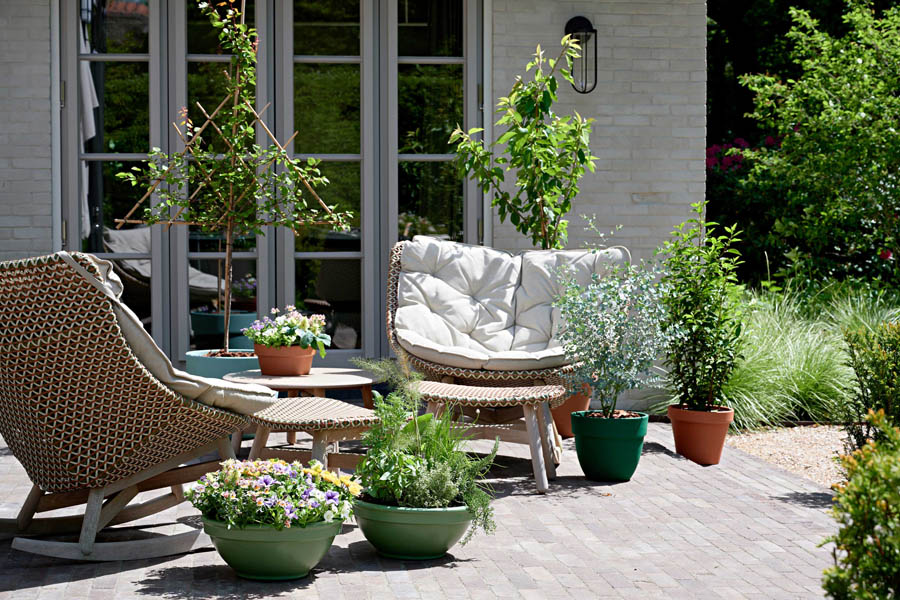
- Lift planters on feet to let air circulate and prevent rings. Choose bases that do not rust.
- Keep a 3 to 6 inch gravel border at the house wall to reduce splashback and green growth on siding and pavers.
- Thin dense shrubs that throw deep shade on corners. A little more sun means faster drying and less algae.
- Use outdoor rugs that breathe. Avoid rubber backed mats that trap moisture against stone or concrete.
A patio that dries quickly stays brighter and more consistent week to week.
A Simple Seasonal Maintenance Calendar
A little rhythm goes a long way. Fold these steps into your year.
- Late fall: Blow off leaves, scrub fresh stains, empty and elevate planters, store cushions, and check gutters and downspouts.
- Winter: Use sand or calcium magnesium acetate for traction in icy weather. Avoid rock salt on concrete. Shovel with plastic edges to prevent gouging.
- Early spring: Inspect after two dry days, treat stains by type, wash gently but thoroughly, restore joint sand, and seal if needed.
- Monthly in warm weather: Broom and quick rinse, clear plant litter, and trim back growth that shades the patio.
Consistency keeps the spring cleanup shorter and the surface looking intentionally cared for.
FAQ
Is pressure washing safe for every patio material?
Pressure washers are tools, not cures. Moderate pressure and a large fan tip make it safe on many concrete slabs and hard pavers. It can etch soft stone and ancient brick if too close or high pressure. Always start at the lowest effective pressure, move the nozzle, and test a small area.
What is the white powdery film that appears after winter?
That is usually efflorescence. Water dissolves salts within concrete or mortar, then wicks to the surface and leaves crystals as it evaporates. Use a masonry safe efflorescence remover, prewet the area, scrub lightly, and rinse well. Penetrating water repellents can reduce future occurrences.
How do I deal with green or black patches in shaded corners?
That is typically algae or mildew living on dirt and moisture. Clean with an oxygenated cleaner or a cleaner labeled for organic staining. Allow dwell time, scrub with a stiff nylon brush, and rinse. Improve airflow and sunlight if possible so those areas dry faster after rain.
I used ice melt on a nearby walkway. Can I fix the damage on my patio?
First, flood clean the patio to eliminate salts. Check for scaling or flaking after drying. Soft cleaning removes residue. Penetrating concrete and masonry water repellents prevent salt damage. Keep granules off the terrace and avoid rock salt next winter.
My paver joints keep washing out. What should I change?
Focus on two things. Drainage and edge restraint. Make sure the patio slopes away from the house to prevent water from pooling or flowing along joints. If borders move, reset them. After washing, pack fresh sand into joints. When properly laid and activated with a little mist, polymeric sand can withstand washout.
Do sealers always make patios shiny and slippery?
No. Penetrating sealers leave the surface looking natural while reducing water absorption. Film forming sealers can add sheen, but many offer matte versions and traction additives. Choose the finish you want and test a small area before committing.
Why do rusty rings keep appearing under my planters and furniture?
Moisture sits under flat bases and reacts with uncoated metal. That leaches iron that stains porous surfaces. Raise planters on non staining feet and use furniture with sealed or stainless hardware. Move heavy pieces occasionally so damp footprints do not become permanent marks.
Can I clean everything in one day and seal the next?
Only if the weather is good and the surface dries. Many patios, especially shady ones, retain moisture in joints and pores. Rapidly applying sealer to a damp surface absorbs water and generates white spots. Best results come from several dry, bright days between intensive cleaning and sealing.