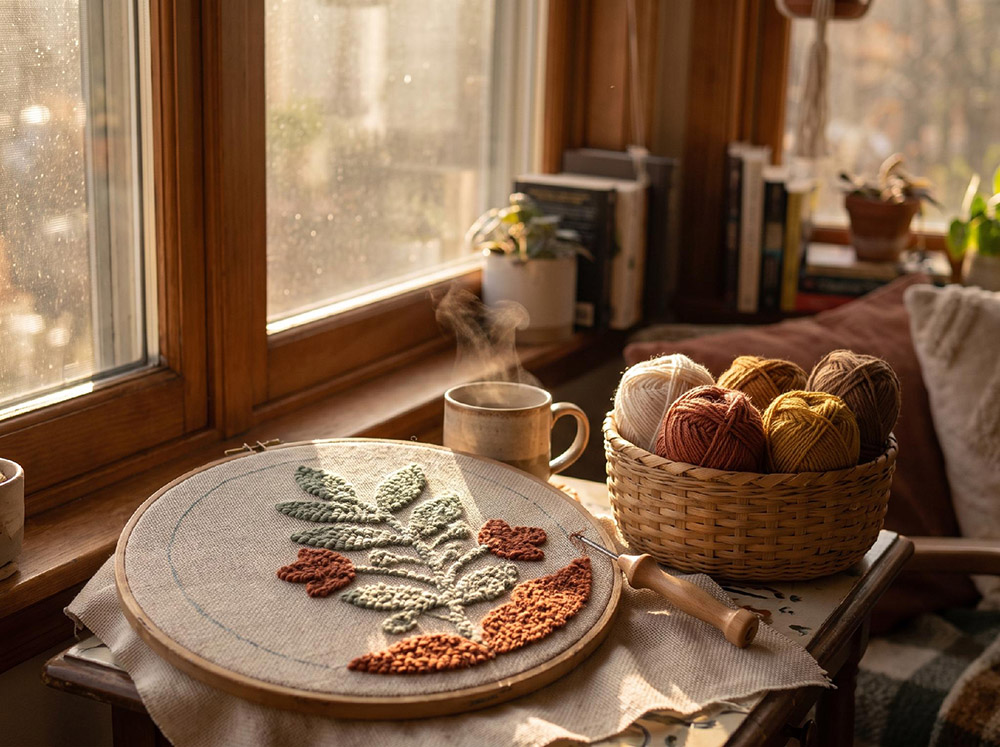
Punch needle combines embroidery, texture, and painting into one craft, and it’s a lot easier to pick up than it looks. If you’ve scrolled past dozens of cozy, textured wall hangings lately and wondered how people are making them, you’re not imagining the trend. Crafting has quietly turned into one of the go-to ways adults unwind, and the punch needle sits right at the center of it.
There’s something satisfying about working with your hands after a day spent staring at screens. No prior sewing experience required, no expensive setup, just a needle, some yarn, and a stretch of fabric. That’s part of why this particular craft has exploded among total beginners rather than staying a niche hobby for experienced fiber artists.
Why Punch Needle Is Having a Moment
Crafting isn’t a fringe activity anymore. According to Mintel’s “US Arts and Crafts Consumer Report 2025,” cited by Craft Industry Alliance, 73% of U.S. adults took part in a crafting project in the past year, and nearly half said they craft specifically to manage stress. That’s not a coincidence. A 2024 scoping review published in Issues in Mental Health Nursing analyzed 25 studies and found needlecraft has an overwhelmingly positive effect on mental health, linking the repetitive stitching motion to measurable drops in heart rate and anxiety.
Punch needle, in particular, has found its audience online. The craft has racked up nearly 1 billion views on TikTok and more than 884,000 Instagram posts, placing it among the most-searched crafts heading into 2026. Etsy’s 2025 trend data even named tufted and punch-needle textures among the top-searched wall decor styles, which suggests this process isn’t a niche pursuit anymore. It’s crossed over from hobby to home decor purchasing trend.
Part of what makes a punch needle so approachable is how people are getting started. Demand for ready-to-go DIY craft kits grew 35% in 2024, reflecting how beginners prefer an all-in-one entry point over sourcing individual supplies piece by piece. Instead of guessing which needle size or fabric weight to buy, most newcomers are reaching for punch needle kits for beginners that bundle the needle, hoop, cloth, and yarn together, so the only decision left is what to make first.
Craft Industry Alliance’s coverage of needlework trends backs this up: the category shows no slowdown in sight, with kit-based entry points continuing to widen the on-ramp for total beginners heading into 2026.
What You Need to Get Started
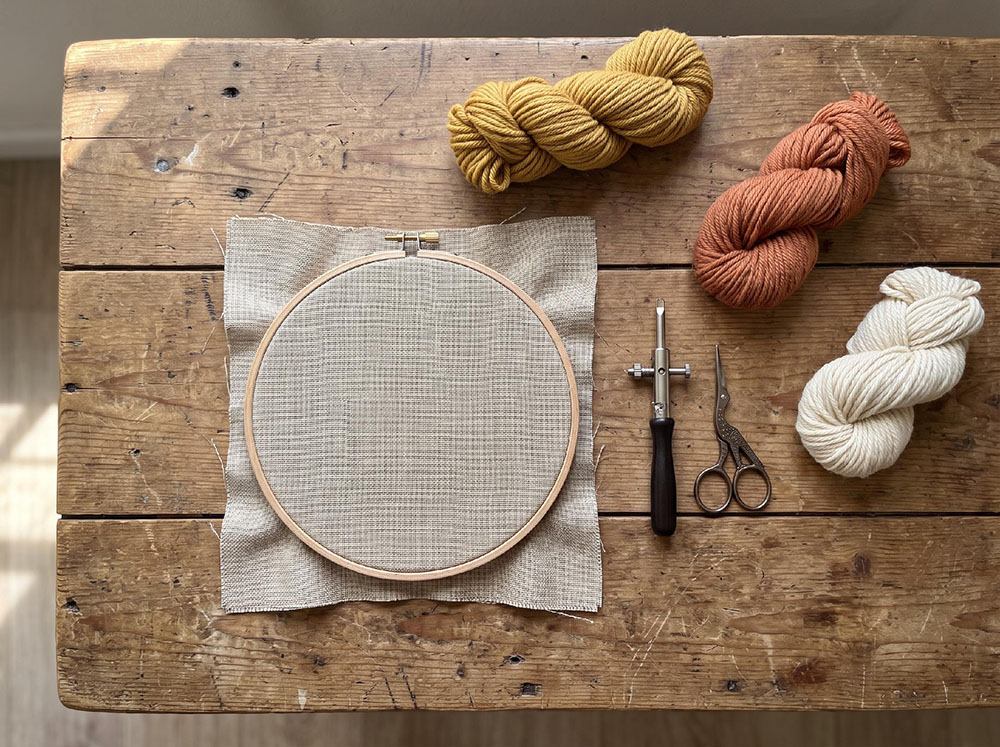
The tool list is shorter than most crafts. You’ll need a punch needle (start with a chunky, adjustable one since it’s the most forgiving for first attempts), a piece of monk’s cloth or weaver’s cloth stretched drum-tight in a no-slip hoop, a pair of sharp scissors, and yarn or embroidery floss in whatever colors you’re drawn to.
Fabric tension matters more than most beginners expect. Loose fabric causes skipped stitches and uneven loops, so the cloth needs to feel like a drum before you punch a single stitch. According to Craft Industry Alliance’s Needlepoint’s New Wave, kit-based entry points have lowered the cost barrier for newcomers considerably, since a bundled kit already pairs the right needle size with the right cloth weight rather than leaving that guesswork to a first-timer.
Once you’ve got a small finished piece, don’t underestimate it as decor. A round coaster or a mini hoop makes a genuinely nice addition to a shelf or gallery wall, and it’s a low-effort way to try our own take on simple home decor upgrades without committing to a full room refresh.
Your First Punch Needle Project, Step by Step
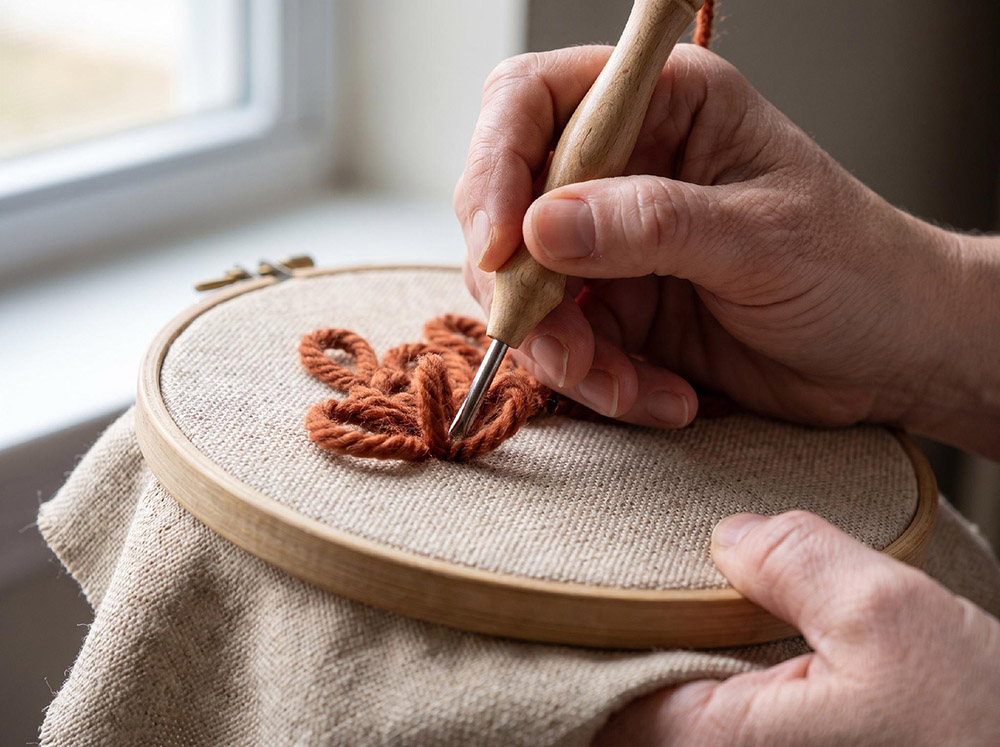
Start by hooping your fabric so it’s taut on all sides, then sketch or trace a simple geometric shape (a triangle or a circle works best) directly onto the cloth with a fabric pen. Thread your needle according to the manufacturer’s instructions; most beginner needles use a wire threader that slides yarn through a hollow shaft.
Hold the needle like a pencil, with the beveled opening facing the direction you’re moving. Punch straight down through the fabric until the handle touches the cloth, then glide the needle back up without lifting it off the surface, and slide it over to the next spot. Keep every stitch the same depth for even loops.
Fill your shape row by row, working from the outside edge inward. It’s a slower rhythm than most people expect at first, and that’s kind of the point. Carving out an hour for something tactile is one small way of making time for outdoor and creative pursuits and other offline hobbies that pull you away from a screen for a bit.
Common Beginner Mistakes (and How to Fix Them)
Loose fabric tension is the number one culprit behind frustrating first projects. If your hoop feels the least bit slack, re-tighten it before you punch another stitch. Uneven loop height usually comes from inconsistent needle depth, so aim to bottom out the handle against the fabric every single time rather than eyeballing it.
Choosing the wrong needle-to-yarn pairing trips up plenty of beginners, too. A needle sized for chunky yarn will look sparse and gappy with thin embroidery floss, and a fine needle will jam if you force thick yarn through it. Craft Industry Alliance’s 2025 Craft Trends Guide notes that correctly sized tools are one of the biggest predictors of whether a beginner sticks with a new craft beyond the first project, which is exactly why matched kits reduce early trial and error.
If your loops keep pulling out from the back, you’re likely punching at an angle instead of straight down. Slow down, check the bevel direction, and keep the needle perpendicular to the fabric.
Getting Started
Punch needle is one of the most accessible entry points into the fiber-craft revival, driving the 2026 slow-living trend. It costs less than most hobbies, the learning curve is short, and the mental-health upside is backed by real research rather than wellness marketing. There’s also a growing, visible community sharing projects, troubleshooting tips, and finished pieces every day.
None of that requires special skills or years of sewing background. It just takes an hour, a hoop, and a willingness to make something a little wonky the first time around. If you’re weighing this against other pursuits, our guide to finding a hobby that fits your lifestyle is a good next step once you’ve got your first punch-needle piece off the hoop.
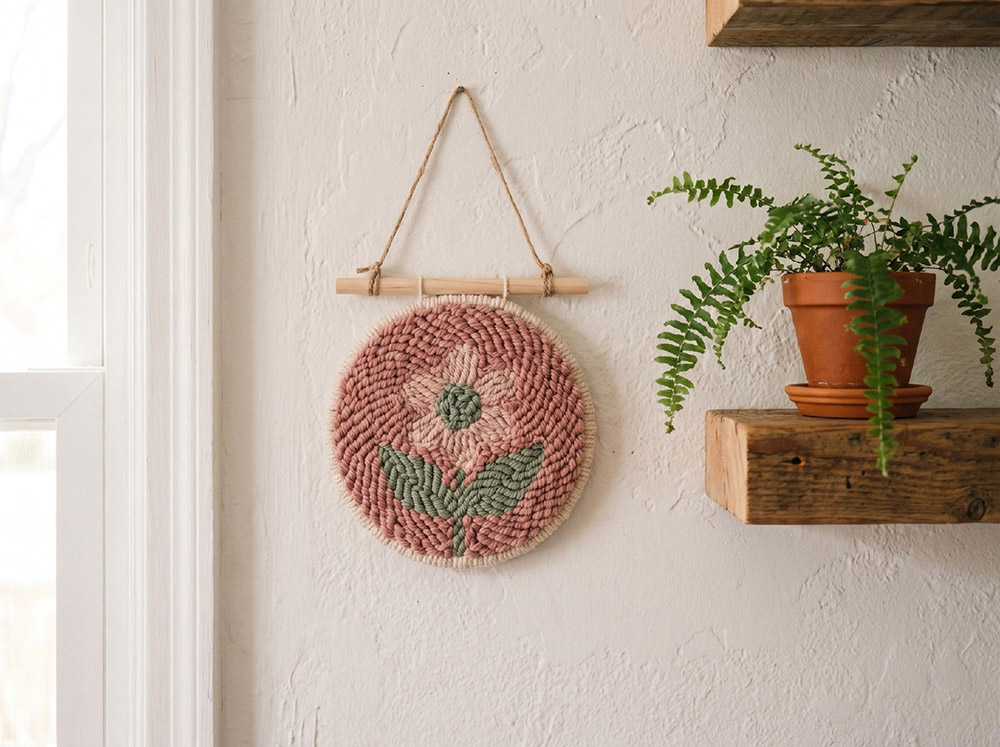
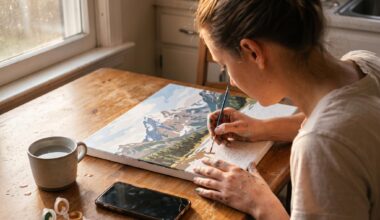
A finished punch needle piece, ready to display as handmade home decor.