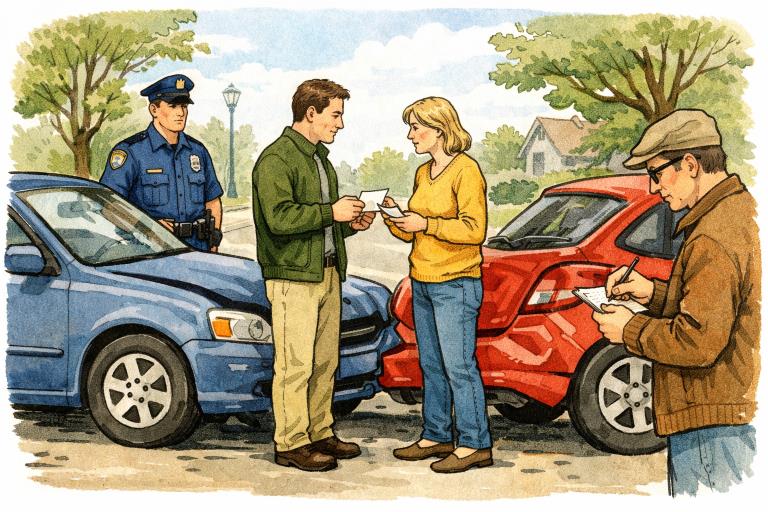
Experiencing a car accident can be confusing and stressful, but knowing how to respond can make a significant difference in protecting your health, rights, and legal standing. Whether you are seriously injured or seem unhurt, your next actions matter for insurance, recovery, and any legal claim that might follow. Contacting a Norwood car accident lawyer early can provide critical guidance on how to proceed.
Even minor accidents can lead to unexpected complications. Taking the right steps at the scene and in the days that follow helps ensure you aren’t left with unexpected costs or liability. This guide provides a clear overview of the essential actions to take for your well-being and to strengthen your potential case if legal action becomes necessary.
Immediate Steps to Take at the Scene
Your safety comes first after a car collision. If the vehicles are drivable and there are no life-threatening injuries, move the cars to a safe location. Check yourself, your passengers, and others involved for injuries. If anyone is hurt, call 911 immediately for emergency help. Massachusetts law requires drivers to stop at the scene and exchange personal information, such as names, addresses, and insurance details, with each party involved.
It is important to avoid leaving the scene before exchanging information, as this can lead to severe penalties. Adhering to these requirements is essential to avoid fines or a potential license suspension, as outlined by local regulations.
Reporting the Accident to Authorities
Once everyone is safe, contact the local police or the Norwood Police Department to report the accident. Official police reports are vital documents for insurance claims and future legal matters. Provide an accurate account of the incident, but avoid admitting fault or making speculative comments. Request a copy of the police report for your records after it is filed.
In some cases, police may not respond to minor fender-benders. However, you should still file a report with the Massachusetts Registry of Motor Vehicles (RMV) if the accident has resulted in injury, death, or property damage exceeding $1,000. Having documentation on file can help demonstrate your willingness to fulfill all legal responsibilities and support your account of the event if discrepancies arise during future investigations or insurance claims.
Seeking Medical Attention
Scientific studies show that many car accident injuries do not show symptoms for hours or even days. Even if you feel fine, seek a prompt medical evaluation to detect hidden injuries like whiplash, concussions, or internal trauma. Rapid medical attention also generates timely medical documentation, which supports future insurance or legal claims.
In addition, getting checked by a professional early can catch seemingly minor injuries that may worsen without appropriate care. Always follow your doctor’s recommendations and do not disregard symptoms, as even delayed-onset conditions may be related to the accident. Retaining all medical bills and records is useful if you eventually need to prove the link between the collision and your health issues.
Documenting the Incident
- Take photos of vehicle damage, skid marks, accident debris, and surrounding road conditions.
- Photograph all vehicles involved, license plates, relevant street signs, and traffic lights.
- Gather names, contact details, and insurance information from all involved drivers and passengers.
- Ask bystanders for their contact information as potential witnesses. Their perspectives may be important if liability is in dispute.
Thorough documentation strengthens your position with insurance providers and in potential future legal action.
Notifying Your Insurance Company
Notify your insurance provider as soon as possible after the accident. Share only the facts and details collected at the scene, and avoid discussing who was at fault until all facts have been reviewed and clarified. Your insurer will assign an adjuster who may contact you for additional details and will explain the claims process. Prompt notification helps avoid issues with claim denials or delays. Guidance on dealing with insurance after a crash can also be found in resources shared by Consumer Reports.
Many insurance companies have specific deadlines for filing a claim. Delaying notice or failing to report promptly can jeopardize your eligibility for compensation. Keeping detailed notes of your conversations with insurance representatives may help clarify disputed details later.
Understanding Massachusetts Car Accident Laws
Massachusetts follows a “no-fault” auto insurance system. Under this policy, your own insurance covers your medical bills and lost wages (through Personal Injury Protection or PIP) regardless of who caused the crash. However, if your medical costs exceed the state’s threshold or you suffer serious injuries, you may be eligible to pursue a claim or lawsuit against the at-fault driver. Understanding your rights and the applicable thresholds ensures you get the full benefits and compensation allowed by law. For more information, refer to the Massachusetts law about automobiles.
This legal framework can be complex, especially if multiple parties are involved or there is uncertainty regarding fault. Consulting with a legal professional who understands Massachusetts law may be crucial to navigating these complexities. Being aware of statutes of limitation and other deadlines is also important for protecting your legal rights.
Consulting with a Legal Professional
Depending on the complexity of your case, consulting an experienced Massachusetts car accident attorney can be a crucial step. A qualified legal professional can help you understand your rights, review settlement offers from insurers, ensure all deadlines are met, and represent you in court if necessary. Legal counsel gives you the support needed to avoid common pitfalls and can improve your chances of obtaining fair compensation for injuries, property damage, and other losses.
Attorneys can also handle negotiations with insurance adjusters, preventing you from inadvertently accepting a settlement that is lower than what you are entitled to. Many lawyers offer free consultations and only get paid if you win your case, so seeking advice often involves little financial risk upfront.
Preserving Evidence for Your Case
Maintain copies of all accident-related records, medical bills, police reports, repair estimates, and any correspondence with insurers. These documents serve as critical evidence in disputes regarding liability or the value of your damages. Keeping a personal journal of your injuries, pain levels, and treatment process can also prove invaluable if your recovery is long or your case proceeds to litigation.
Additionally, make periodic backups, either digital or paper, of your collected evidence to account for unexpected data loss. Don’t discard vehicle parts or damaged items until your claim is resolved; these may serve as physical proof of your losses. Taking deliberate steps after an accident protects your rights and strengthens your recovery. By remaining proactive and informed, you give yourself the best chance for a successful resolution after a car accident in Norwood, Massachusetts.