Key Takeaways:
- Environmental test chambers simulate real-world conditions to assess product durability and reliability.
- These chambers are essential across various industries, including electronics, automotive, aerospace, and pharmaceuticals.
- Advancements in test chamber technology enhance product quality and compliance with industry standards.
Introduction to Environmental Test Chambers
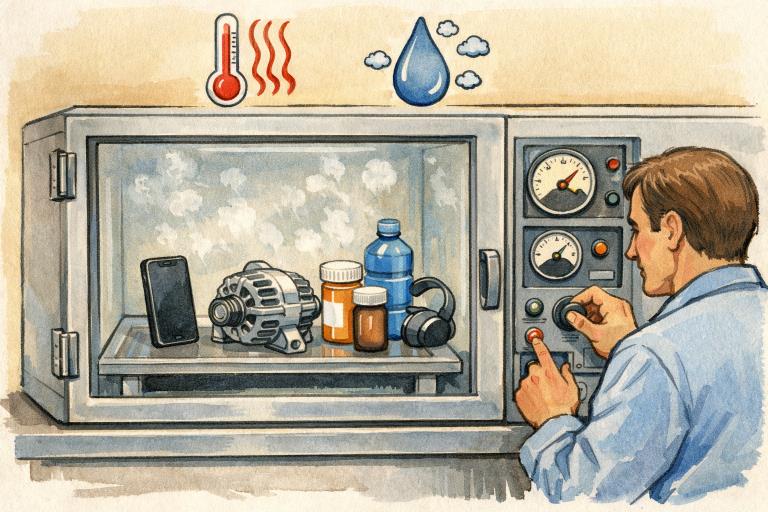
Reliability is a cornerstone of product success, regardless of industry. The ability to guarantee that equipment, components, and materials can withstand a range of real-world environments saves companies from costly recalls and reputational damage. One of the most essential tools that enables this high level of assurance is the environmental test chamber. By expertly replicating factors like temperature, humidity, pressure, and vibration, an environmental test chamber provides manufacturers with powerful insights into product performance long before a product reaches the market. environmental chamber from AES is among the industry’s most recognized solutions, serving as a benchmark for rigorous product assessment.
Manufacturers rely on environmental test chambers for everything from basic quality control to advanced product development. These specialized chambers deliver vital data that can determine if a product will fail due to extreme cold, prolonged humidity exposure, or rapid changes in conditions. By integrating these tests early in the development cycle, organizations are well-positioned to minimize risks and maximize customer satisfaction.
Given the pace of technological advancements and customer expectations for resilient products, environmental test chambers have become pivotal in shaping reliable consumer goods, industrial machinery, and sensitive medical devices. Testing a new electronic sensor or a complex car part under simulated stress, for example, has become a standardized approach for innovation-driven companies aiming for global market entry.
The importance of environmental testing is recognized by engineers and designers worldwide. These chambers facilitate compliance with industry-specific standards, helping organizations meet ISO, IEC, and other international guidelines. Reliable environmental simulated testing is not just about meeting requirements—it is also about establishing brand trust and reducing liability.
Applications Across Industries
Environmental test chambers are integral to ensuring safety, quality, and reliability in diverse sectors:
- Electronics:Product reliability in the electronics industry relies heavily on identifying weaknesses in circuit boards, sensors, and integrated systems. Test chambers allow companies to simulate thermal shock, cyclic temperature changes, and humidity exposure, making certain that products can withstand harsh operating environments.
- Automotive:In the automotive sector, every component, from batteries to vehicle interiors, undergoes exhaustive testing for heat resistance, cold tolerance, and vibrations. These simulations are essential for ensuring parts do not fail in real-world scenarios such as extreme winter cold or intense summer heat.
- Aerospace:Aerospace components must survive high altitudes, rapid pressure changes, and significant temperature gradients. Environmental chambers provide the settings needed to validate safety and performance before integration into aircraft and satellites, maintaining the highest industry standards.
- Pharmaceuticals:Integrity is critical when it comes to pharmaceuticals. Stability testing within environmental chambers confirms that drugs maintain their efficacy, potency, and safety during storage or shipment, regardless of external conditions. Guidance from organizations like the S. Food & Drug Administration (FDA) helps ensure pharmaceutical compliance worldwide.
Advancements in Test Chamber Technology
Modern technology has vastly expanded the capabilities of environmental test chambers. Early models were limited in their simulation of temperature and humidity, but current solutions can recreate a variety of complex environmental scenarios with remarkable precision. For example, extended temperature ranges now routinely reach from -70°C up to +200°C, with advanced ramp rates and finely controlled humidity settings. These features allow for aerospace-level qualification tests or accelerated life testing of consumer electronics.
Sophisticated control software enables real-time data logging, automated test cycles, and remote monitoring, which increases efficiency while reducing the risk of human error. By shortening the product qualification timeline, manufacturers can accelerate time-to-market and maintain an edge in competitive industries.
The evolution of these chambers is closely aligned with increasing regulatory demands. Many state-of-the-art models come equipped with options for shock, vibration, and multi-stressor testing to comply with demanding global standards such as MIL-STD, ASTM, or IEC. These technological advancements assure both complete documentation for regulatory submissions and rock-solid data for evidence-based product improvements.
Benefits of Environmental Testing
- Early Detection of Design Flaws:Environmental testing can reveal weaknesses during the design and prototyping phases, allowing teams to resolve problems before they scale to costly production runs.
- Compliance with Standards:Testing ensures products meet tough requirements set by industry bodies, paving the way for regulatory approval and international market access.
- Enhanced Product Reliability:By subjecting products to rigorous simulations, manufacturers can confidently launch items that will endure extended use, adverse weather, and shipping challenges.
These advantages combine to reduce recall rates, protect end-users, and contribute to a company’s long-term success. Well-documented testing processes can also enhance a brand’s reputation and serve as a marketing advantage in crowded marketplaces.
Choosing the Right Test Chamber
The selection of an environmental test chamber should be informed by present product needs and anticipated future developments. Key considerations include chamber size, the testing environment’s specific parameters (such as maximum and minimum temperature or humidity levels), and compatibility with industry certifications. Scalability is also critical, as evolving product lines may require expanded capabilities in subsequent years.
Collaborating with experienced suppliers when specifying a chamber can lead to better outcomes, particularly when navigating regulatory landscapes or integrating new testing methodologies. With the continual evolution of product requirements and standards, flexibility and adaptability in test chamber design deliver lasting value.
Conclusion
Environmental test chambers are foundational tools in the journey to bring dependable products to market. They empower manufacturers to predict performance, ensure regulatory compliance, and continuously improve product robustness. By using these chambers, companies gain not only technical data but also trust in delivering goods that perform reliably and safely in the hands of end users.