Key Takeaways
- Ordinary routines create natural chances to practice communication, independence, and social participation.
- One clear, meaningful goal is easier to teach and monitor than several broad goals at once.
- Visual tools, simple choices, and consistent language can make daily expectations easier to understand.
- Children benefit from practicing skills in more than one place, with support adjusted for each setting.
- Families can use simple notes to spot progress and decide when a strategy needs to change.
For families in Raleigh, Durham, Cary, Chapel Hill, Garner, and nearby North Carolina communities, everyday routines can become practical opportunities for autistic children to build useful skills. Support from providers such as Triangle ABA can help families identify goals that matter at home, in school, and throughout the community, while keeping the child’s comfort, communication style, and strengths at the center of the plan.
Learning does not need to mean turning every afternoon into a formal lesson. A short interaction during breakfast, getting dressed, a visit to a neighborhood park, or preparation for bedtime can offer repeated chances to practice communication, independence, flexibility, and participation. The most sustainable strategies are usually the ones that fit naturally into family life.
Why Everyday Routines Matter
Daily activities have built-in structure. Mealtimes involve choices, dressing involves a sequence of steps, and errands involve waiting, moving between places, and asking for help. Because these activities happen often, they give children familiar opportunities to practice without adding another major demand to the day.
For example, a child might request a snack, choose between two shirts, place a toy in a bin before starting something new, take a turn in a game, or use a greeting at the library. These are small actions, but they can support greater participation over time. The goal is not perfect performance. It is helping the child access routines in a way that is meaningful and manageable.
Start With One Meaningful Goal
Choose a goal that solves a real daily problem or supports something the child enjoys. Broad aims such as “improve communication” are difficult to teach because they do not explain what adults should do or what progress looks like. A more useful goal might be: “During snack, use a word, gesture, picture, or device to request help opening a container.”
Questions to Ask When Choosing a Goal
- What part of the day is hardest for the child right now?
- Which skill would make that routine easier or more enjoyable?
- How does the child already communicate wants, needs, or discomfort?
- What support can be used consistently by caregivers?
- What would progress look like in observable terms?
Build Communication Into Familiar Activities
Communication is not limited to spoken words. Children may communicate through speech, pointing, gestures, facial expressions, signs, pictures, writing, or a communication device. Augmentative and alternative communication can support a person’s ability to express wants, needs, feelings, and ideas when speech alone is not reliable or preferred.
During a routine, pause briefly before stepping in so the child has time to respond. Offer two clear choices, model a short phrase or symbol, and acknowledge safe, meaningful attempts to communicate. Keep a picture board, device, or other needed tool within reach. The focus should be useful self-expression, not requiring eye contact, speech, or one specific type of response.
Use Visual Supports to Make Routines Clear
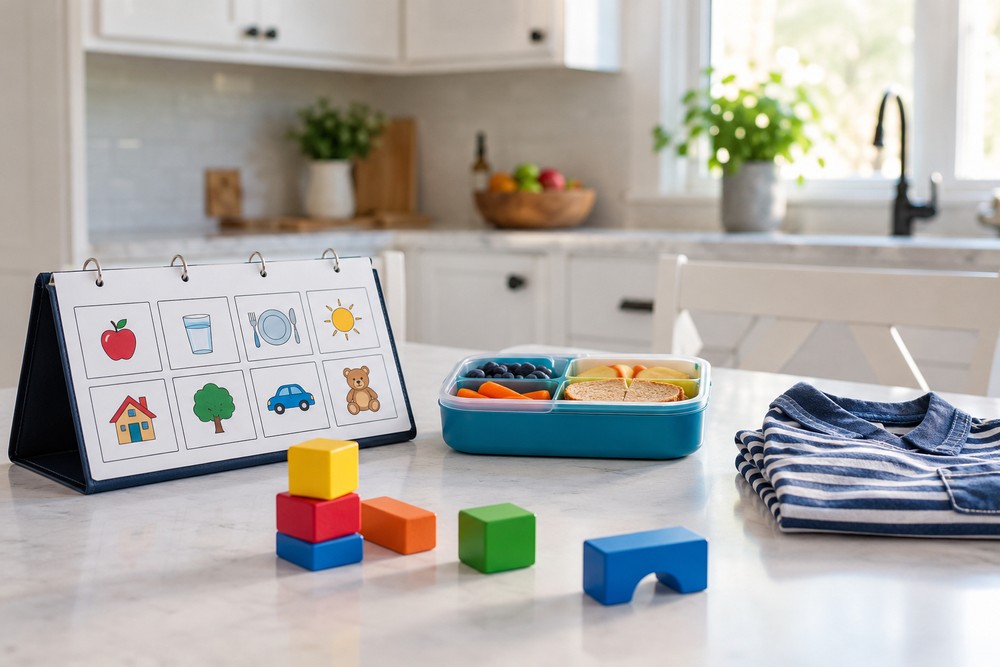
Visual schedules, first-then boards, checklists, pictures, and timers can make routines easier to predict. The use of written or drawn daily routines in clear view is one way educational environments can pair visual information with verbal directions. At home, the same idea can reduce the need to repeat lengthy instructions during busy moments.
A bedtime chart, for instance, may show: put on pajamas, brush teeth, choose a book, read, then turn out the light. A child does not need to master every step immediately. The chart simply provides a consistent reference point that caregivers can use together with calm reminders and encouragement.
Teach Independence One Step at a Time
Many daily living tasks involve several smaller actions. Breaking a routine into steps helps families identify where support is truly needed. For handwashing, a first goal may be turning on the water, getting soap, or rubbing hands together. As that step becomes more familiar, adults can gradually reduce prompts and shift attention to the next step.
- Choose one routine that matters to the family.
- List the steps in the order they occur.
- Identify the step where the child needs the most help.
- Use the least amount of prompting needed for success.
- Offer specific praise for effort, participation, or completion.
- Reduce support gradually when the child is ready.
Practice Skills Across Settings
A skill learned at the kitchen table may look different in a preschool classroom, a grocery store, or a crowded Triangle community event. Noise, people, materials, timing, and expectations can all change. Families can help by practicing the same skill in calm settings first, then changing one detail at a time.
A simple generalization plan may begin with requesting help at home, using the same visual cue with a teacher, and then trying it during a short community outing. Sharing the child’s successful wording, pictures, or device access method with trusted adults can create more consistency without expecting every setting to look identical.
Support School Readiness Without Pressure
School readiness is more than recognizing letters or numbers. It can include moving between activities, following a short visual routine, asking for a break, opening a lunch container, cleaning up materials, waiting briefly, and joining a small-group activity in a way that works for the child.
Families can make an upcoming transition less unfamiliar by visiting the school when possible, looking at photos of the building or classroom, practicing the route, and discussing helpful supports with school staff. A child may benefit from knowing where a backpack goes, who can help, and how to communicate when something feels difficult.
Use Data Without Losing the Human Side
Simple notes can help caregivers see patterns without making family life feel clinical. Record the activity, the support used, and what happened. For instance, a parent might note whether a child requested help independently, needed a gesture prompt, or became distressed during an unexpected change.
Track information that helps with decisions: how often a skill occurs, how much prompting is needed, which routines go smoothly, and whether the skill appears in another setting. Numbers do not define a child. Progress can also mean greater comfort, clearer self-advocacy, safer communication, or more willing participation.
Choose Support That Fits the Family
When reviewing therapy, parent coaching, communication services, or school supports, ask how goals are selected, how caregivers are included, how progress is measured, and how plans change if a strategy is not helping. Families should also ask how providers respect the child’s communication preferences and support the use of skills beyond structured sessions.
Common Family Questions
How much practice is enough? Short, regular opportunities during daily routines may be more realistic than long practice sessions. What if my child does not use spoken words? Work with qualified professionals to consider gestures, pictures, signs, writing, or AAC. What if a strategy works at home but not at school? Compare routines, cues, materials, and expectations, then adjust the plan together.
Conclusion: Small Moments Can Build Useful Skills
Meaningful learning can happen during ordinary parts of the day across the North Carolina Triangle. When families focus on practical goals, honor each child’s communication style, use clear supports, and practice skills in real settings, progress becomes easier to recognize and use. The strongest plan is one that supports the child while fitting the family’s actual life.